How to Apply for a Study Permit: Complete Guide 2026

Studying abroad is one of the most transformative experiences you can have, opening doors to world-class education, cultural diversity, and exciting career opportunities. However, navigating the study permit application process can feel overwhelming, especially with the significant changes implemented in 2025.
This comprehensive guide will walk you through every step of the application process, from initial research to arrival at your destination, ensuring you have all the tools and knowledge needed for a successful application.
What is a Study Permit?
A study permit is an official document issued by immigration authorities that allows international students to study at designated educational institutions in their chosen country. Unlike a tourist visa, a study permit grants you temporary residence status specifically for educational purposes and often includes additional benefits such as work rights during studies and post-graduation work opportunities.
Study permits are required for most international students planning to study for more than six months, though specific requirements vary by country. The permit not only authorizes your stay but also serves as proof of your legitimate student status to employers, banks, and other institutions.
Major Changes in 2025
The 2025 academic year has brought significant updates to study permit requirements across major destinations. Canada has implemented a cap of 550,162 study permit applications and made Provincial Attestation Letters (PAL) mandatory for most applicants. Australia now requires Confirmation of Enrolment (CoE) from January 2025, replacing the previous acceptance letter system, and has increased visa fees to AUD $2,000. The UK has raised financial requirements to £1,483 per month for London students and £1,136 for other areas. Meanwhile, the US has streamlined its process with mandatory DS-160 form submission before interview scheduling.
These changes aim to strengthen the integrity of international education systems while ensuring genuine students can pursue their academic goals.
Complete Application Process Overview
The study permit application process follows a systematic approach regardless of your chosen destination. Understanding this process early will help you plan effectively and avoid common pitfalls that lead to delays or rejections.


Study Permit Application Process Flowchart – A comprehensive guide showing the step-by-step process for applying to study in different countries
The flowchart above illustrates the complete application journey, branching into country-specific requirements after the initial universal steps. Each pathway has distinct documentation and procedural requirements, but all share common foundational elements such as acceptance from accredited institutions and proof of financial capacity.
Country-Specific Requirements Comparison
Different countries have varying requirements, fees, and processing procedures. Understanding these differences is crucial for making informed decisions about your study destination.
| Requirement | Canada | UK | Australia | US |
|---|---|---|---|---|
| Application Fee | CAD $150 | £524 | AUD $2,000 (increased in 2025) | $350 (F-1) + SEVIS $510 |
| Biometrics Fee | CAD $85 (single) / $170 (family) | Included in application fee | Included | Not required |
| Financial Proof Required | CAD $20,635/year (outside Quebec) | £1,483/month (London), £1,136/month (outside) | AUD $29,710/year | Varies by institution + living costs |
| English Language Test | IELTS/TOEFL/PTE | IELTS/TOEFL/PTE | IELTS/TOEFL/PTE | TOEFL/IELTS |
| Minimum English Score | IELTS 6.0 overall, 5.5 each band | IELTS 4.0-6.0 (depends on level) | IELTS 6.0 overall, 5.5 each band | TOEFL 61-80, IELTS 6.0-6.5 |
| Letter of Acceptance | Letter of Acceptance + PAL/TAL | Confirmation of Acceptance (CAS) | Confirmation of Enrolment (CoE) | I-20 (F-1) or DS-2019 (J-1) |
| Processing Time | 3-4 weeks (within Canada), varies outside | 3 weeks (outside UK), 8 weeks (inside) | 75% in 28 days, 90% in 48 days | 3-5 weeks after interview |
| Medical Exam Required | If from certain countries or >6 months | Required for some countries | Required for most applicants | Not usually required |
| Age Restrictions | No minimum age | 16+ years | No minimum age | No minimum age |
| Work While Studying | 20 hours/week (on-campus unlimited) | 20 hours/week during studies | 48 hours/fortnight during studies | On-campus 20 hours/week |
| Post-Study Work Rights | PGWP (up to 3 years) | Graduate visa (2-3 years) | Post-Study Work Stream (2-4 years) | Optional Practical Training (1-3 years) |
| Application Platform | IRCC Secure Account | Gov.uk online application | ImmiAccount | DS-160 online + Embassy interview |
| When to Apply | As soon as you get acceptance + PAL | Up to 6 months before course starts | Up to 124 days before course | 120 days before program start |
Canada 🇨🇦
Canada requires applicants to obtain both a Letter of Acceptance from a Designated Learning Institution (DLI) and a Provincial Attestation Letter (PAL) or Territorial Attestation Letter (TAL). The financial requirement has increased to CAD $20,635 per year (outside Quebec) plus tuition fees. Applications must be submitted through the IRCC Secure Account platform, and processing times vary significantly based on your country of residence.
United Kingdom 🇬🇧
UK student visa applications require a Confirmation of Acceptance for Studies (CAS) from your chosen institution. Financial requirements have increased substantially in 2025, with London students needing £1,483 per month and students outside London requiring £1,136 per month. The application fee is £524, and biometrics are included in this cost.
Australia 🇦🇺
Australia has implemented the most significant changes for 2025, requiring Confirmation of Enrolment (CoE) before application submission. The financial capacity requirement is now AUD $29,710 annually, and visa application fees have doubled to AUD $2,000. The Genuine Student Test has replaced the previous Genuine Temporary Entrant requirement.
United States 🇺🇸
US student visa applications require Form I-20 (F-1) or DS-2019 (J-1) from your institution, plus SEVIS fee payment of $510. The DS-160 form must be completed before scheduling your embassy interview. Processing typically takes 3-5 weeks after the interview.
Document Requirements and Preparation
Proper documentation is critical for application success. Missing or incorrect documents are among the leading causes of study permit rejections. Each country requires specific documents, but universal requirements include a valid passport, acceptance letter, financial proof, and language proficiency test results.
Essential Documents for All Countries
Identity and Travel Documents:
- Valid passport with at least 6 months remaining validity
- Passport-sized photographs meeting specific requirements
- Previous travel history documentation (if applicable)
Academic Documentation:
- Official transcripts from previous educational institutions
- Degree certificates or diplomas (certified translations if not in English)
- Standardized test scores (SAT, GRE, GMAT) where required
Language Proficiency:
- IELTS, TOEFL, or PTE test results meeting minimum score requirements
- Some institutions may waive this requirement for students from English-speaking countries
Financial Documentation Requirements
Demonstrating sufficient financial resources is perhaps the most critical aspect of your application. Immigration authorities need assurance that you can support yourself throughout your studies without becoming a burden on public resources.
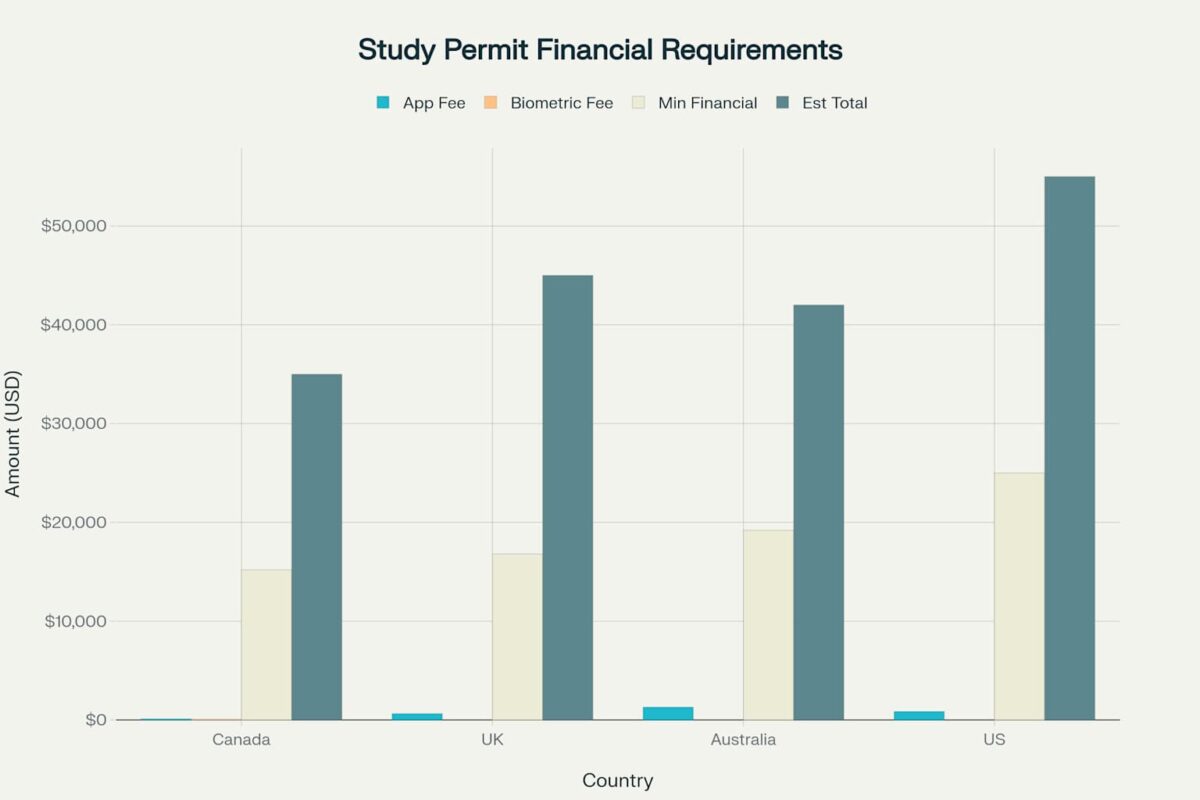
Financial Requirements Comparison for Study Permits 2025 – Breakdown of application fees, biometrics costs, financial proof requirements, and estimated total first-year costs across major study destinations (all amounts in USD)
Acceptable Forms of Financial Proof:
- Bank statements for the past 4-6 months showing consistent balances
- Official bank letters confirming account balances and good standing
- Guaranteed Investment Certificates (GIC) for Canadian applications
- Education loan approval letters with terms and conditions
- Scholarship award letters detailing coverage amounts
- Sponsor letters with financial commitment declarations
The financial requirements have increased significantly across all major destinations in 2025, reflecting rising living costs and inflation. Students must demonstrate not only tuition coverage but also living expenses, accommodation, and return transportation costs.
Application Timeline and Planning
Successful study permit applications require careful timeline planning, typically starting 12 months before your intended study commencement. Early preparation allows adequate time for document gathering, test taking, and addressing any unexpected delays.
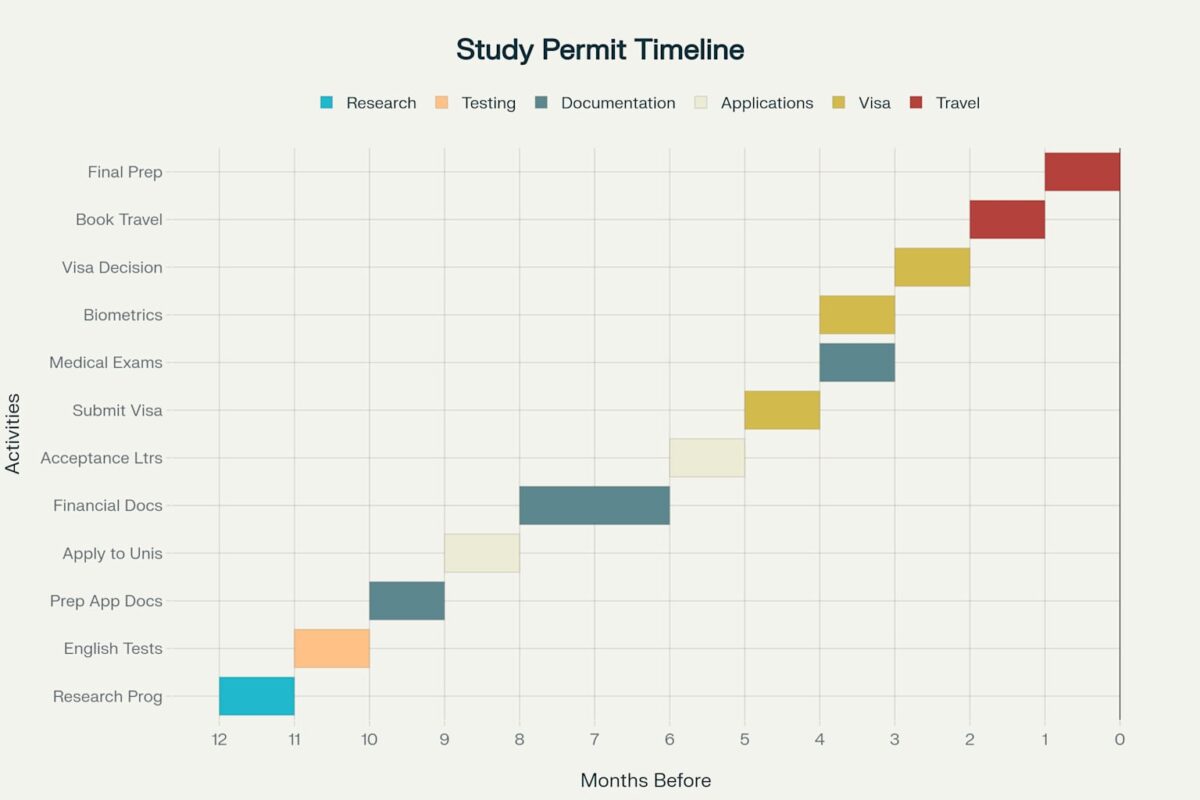
Study Permit Application Timeline – A 12-month planning guide showing key milestones and deadlines for international students applying for study permits
12-Month Timeline Breakdown
12 Months Before: Begin researching programs, countries, and universities. Start preparing for English language tests and gathering preliminary financial documentation.
8-10 Months Before: Submit university applications and prepare supporting documents like transcripts and recommendation letters. Complete standardized tests if required.
6-8 Months Before: Receive acceptance letters and begin gathering comprehensive financial documentation. Research specific visa requirements for your chosen destination.
4-6 Months Before: Submit study permit applications immediately upon receiving acceptance letters. Schedule and complete medical examinations if required.
2-4 Months Before: Attend biometrics appointments and visa interviews as scheduled. Monitor application status and respond promptly to any additional requests.
1-2 Months Before: Receive visa decisions and begin travel preparations including flight booking and accommodation arrangements. Purchase health insurance and arrange currency exchange.
Biometrics and Medical Examinations
Most countries now require biometric data collection as part of the security screening process. This typically involves fingerprint scanning and digital photography at designated Visa Application Centres.
Biometrics Process
Biometrics are required for most study permit applicants, with fees ranging from CAD $85 in Canada to being included in application fees for other countries. You must schedule an appointment at an authorized Visa Application Centre within your region. The process typically takes 15-30 minutes and involves providing fingerprints from all ten fingers and a digital photograph.
Medical Examination Requirements
Medical examinations are mandatory for students from certain countries or those planning to study for extended periods. The requirements vary by destination and your country of origin.
When Medical Exams are Required:
- Students from designated countries with higher health risks
- Programs lasting more than six months in most destinations
- Medical and healthcare-related programs
- Students planning to work in proximity to children or elderly populations
Medical examinations must be conducted by panel physicians authorized by the respective immigration authorities. Costs vary by location and physician, typically ranging from $200-500 USD.
Interview Process and Preparation
While not all countries require interviews, the United States and some other destinations mandate in-person interviews as part of the application process. Proper preparation can significantly impact your success rate.
Interview Preparation Strategies
- Documentation Review: Thoroughly review all submitted documents and be prepared to discuss any aspect of your application. Bring original documents to the interview for verification.
- Program Knowledge: Demonstrate detailed knowledge about your chosen program, institution, and how it aligns with your career goals. Research the institution’s reputation, faculty, and specific program features.
- Financial Clarity: Be prepared to explain your funding sources and demonstrate genuine access to required funds. If sponsored, understand the sponsor’s financial situation and relationship to you.
- Post-Graduation Plans: Articulate clear intentions to return to your home country after studies, while acknowledging potential for legitimate post-study work opportunities.
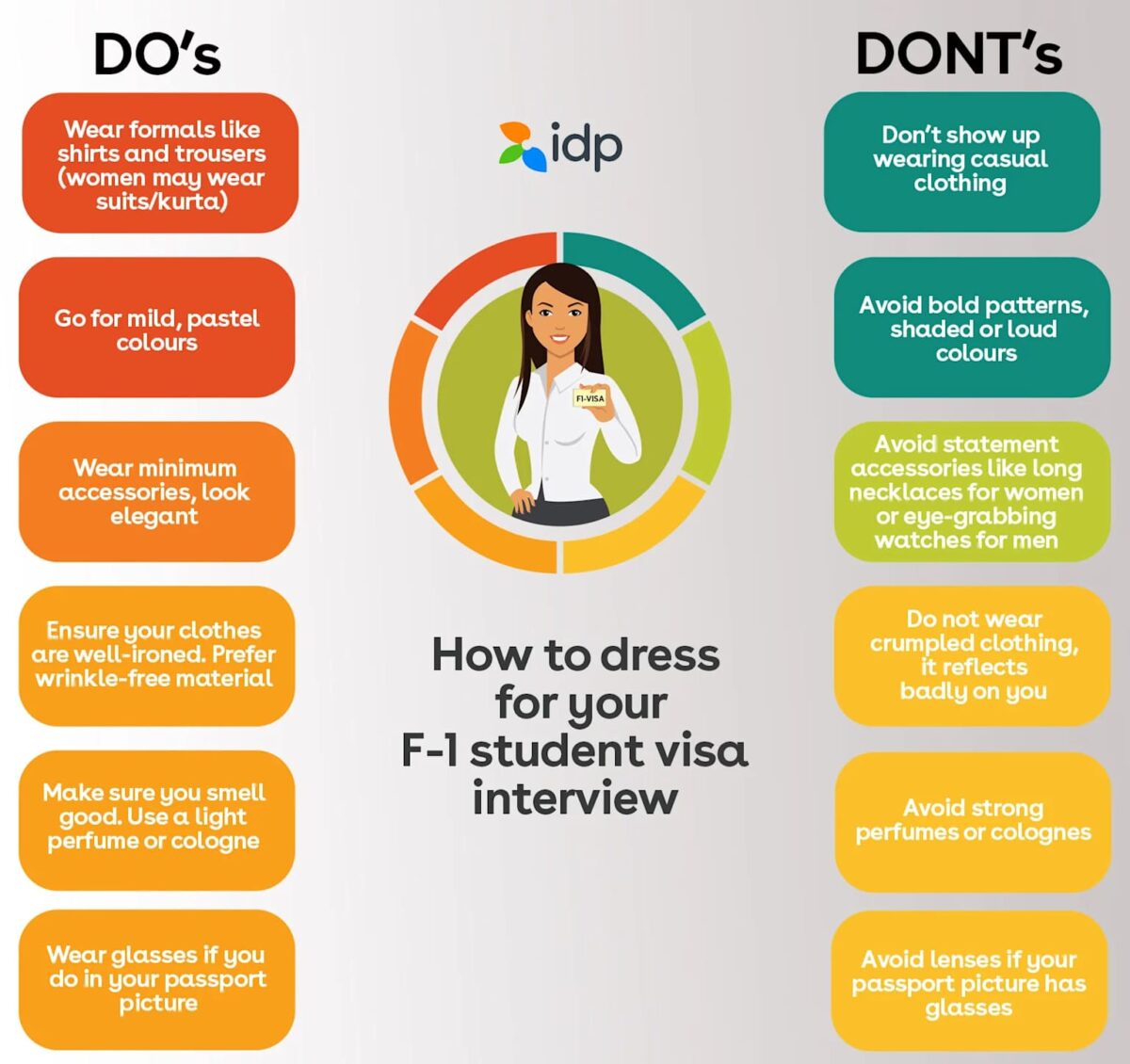
Infographic detailing appropriate dress code and presentation for an F-1 student visa interview
Professional appearance and demeanor during interviews can significantly impact the officer’s perception of your application. Dress formally, arrive early, and maintain polite, confident communication throughout the process.
Processing Times and Status Monitoring
Processing times vary significantly by country, application volume, and time of year. Understanding typical timeframes helps with planning and managing expectations.
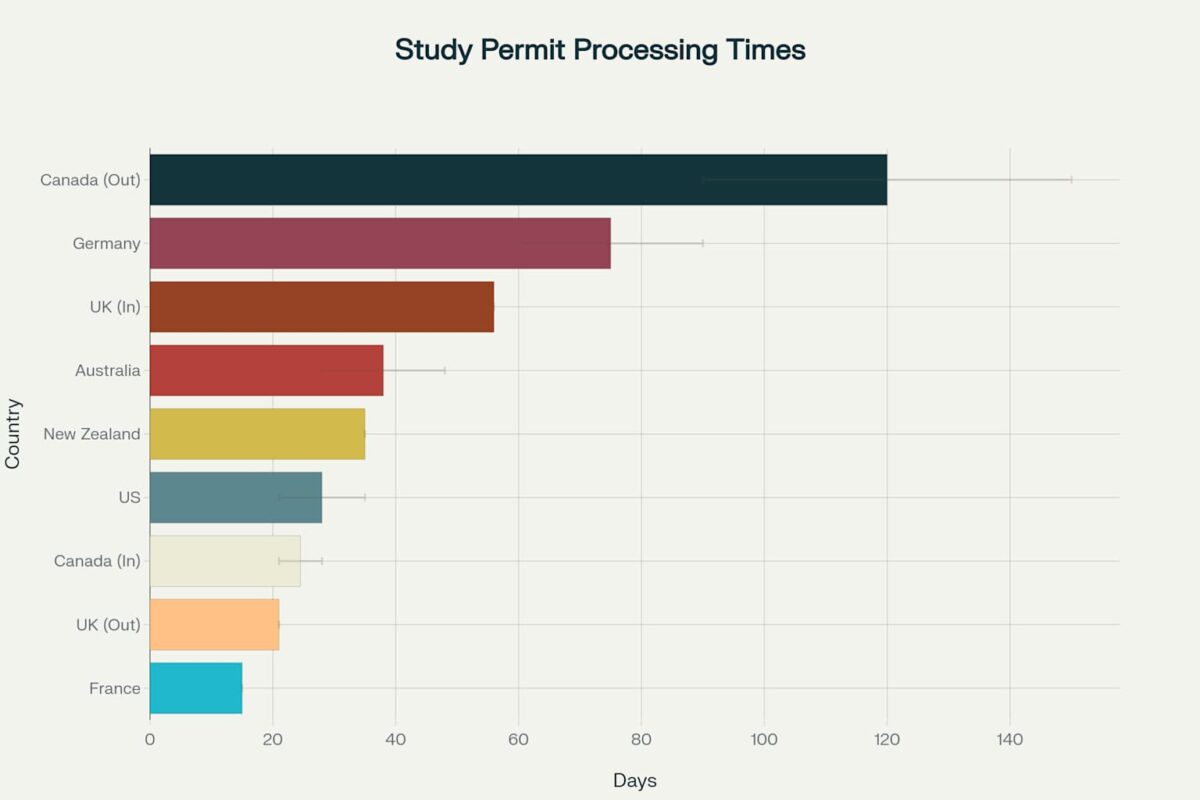
Study Permit Processing Times by Country (2025) – Shows the range of processing times for study permit applications across major study destinations
Peak application periods, typically preceding fall semester intakes, can result in longer processing times. Applications submitted during off-peak periods often receive faster processing. Some countries offer expedited processing for additional fees, though availability is limited.
Monitoring Your Application
Most countries provide online tracking systems for monitoring application status. Regular monitoring is essential, as immigration offices may request additional documentation or schedule interviews with short notice. Ensure your contact information remains current throughout the process.
Common Mistakes and How to Avoid Them
Understanding frequent application errors can help you avoid costly delays and rejections. Immigration officers process thousands of applications, making attention to detail crucial for standing out positively.
Most Common Rejection Reasons
- Insufficient Financial Proof: This remains the leading cause of study permit rejections globally. Ensure your financial documentation shows consistent balances over extended periods and clearly demonstrates the source of funds.
- Incomplete Documentation: Missing documents or providing incorrect formats can result in immediate rejection. Double-check all requirements and ensure documents meet specific format and size requirements.
- Weak Statement of Purpose: Generic or poorly written study plans fail to convince officers of genuine study intentions. Craft personalized statements that clearly connect your background, chosen program, and future goals.
- Academic Inconsistencies: Significant gaps in education or choosing programs that don’t align with previous studies raise red flags. Address any inconsistencies proactively with explanatory letters.
Study Permit Application Checklist 2025
✅ Pre-Application Checklist
Research Phase
- Research study destinations and programs
- Compare visa requirements for different countries
- Check university rankings and accreditation
- Estimate total costs (tuition + living expenses)
- Review post-study work opportunities
School Application
- Apply to minimum 3-5 universities/colleges
- Prepare academic transcripts (certified/notarized)
- Write compelling personal statements
- Secure recommendation letters (2-3)
- Take required standardized tests (SAT, GRE, GMAT if needed)
✅ Country-Specific Requirements
Canada 🇨🇦
- Letter of Acceptance from Designated Learning Institution (DLI)
- Provincial Attestation Letter (PAL) or Territorial Attestation Letter (TAL)
- Financial Proof: CAD $20,635/year (outside Quebec) + tuition
- English Language Test: IELTS 6.0 overall, 5.5 each band
- Valid Passport (at least 6 months validity)
- Digital Photos meeting IRCC specifications
- Medical Exam (if from certain countries or studying >6 months)
- Police Clearance Certificate (if required)
- Proof of Relationship (if accompanied by family)
- Custodian Declaration (if under 18)
United Kingdom 🇬🇧
- Confirmation of Acceptance for Studies (CAS)
- Financial Proof: £1,483/month (London) or £1,136/month (outside London)
- English Language Test: IELTS 4.0-6.0 (depends on course level)
- Valid Passport
- Academic Transcripts and qualifications
- TB Test Certificate (if from certain countries)
- Parental Consent (if 16-17 years old)
- ATAS Certificate (if required for certain subjects)
Australia 🇦🇺
- Confirmation of Enrolment (CoE) – Mandatory from Jan 2025
- Financial Capacity: AUD $29,710/year
- English Language Test: IELTS 6.0 overall, 5.5 each band
- Genuine Student Test responses
- Overseas Student Health Cover (OSHC)
- Valid Passport
- Academic Documents
- Medical Examination
- Character Requirements (police clearance)
United States 🇺🇸
- Form I-20 (F-1) or DS-2019 (J-1)
- SEVIS Fee Payment ($510)
- DS-160 Form completed online
- Financial Documentation (bank statements, sponsor letters)
- English Proficiency: TOEFL 61-80 or IELTS 6.0-6.5
- Academic Transcripts
- Embassy Interview Appointment
- Passport Photos (2 recent)
✅ Financial Documentation Checklist
Bank Statements
- 4-6 months of bank statements
- Official bank letters confirming account balance
- Currency conversion to destination country currency
- Proof of income source (salary slips, tax returns)
Alternative Financial Proof
- Canada: Guaranteed Investment Certificate (GIC)
- Education Loan approval letters and documents
- Scholarship award letters
- Sponsor Letters with financial commitments
- Property Valuations (if applicable)
- Fixed Deposits certificates
✅ Application Process Checklist
Before Submitting
- Create online account on respective platform
- Complete application form carefully
- Upload all documents in correct format (PDF, JPEG)
- Verify document file sizes (usually <4MB each)
- Double-check all information for accuracy
- Pay application fees
- Save application reference number
Biometrics Appointment
- Book biometrics appointment at Visa Application Centre
- Bring appointment confirmation
- Arrive 15 minutes early
- Bring required documents and passport
- Pay biometrics fee (if applicable)
After Submission
- Check application status regularly
- Respond promptly to any additional document requests
- Book medical exam if required
- Attend interview if scheduled
- Prepare for possible delays during peak seasons
✅ Timeline Planning Checklist
12 Months Before
- Research programs and countries
- Take English language tests
- Start preparing financial documentation
8-10 Months Before
- Apply to universities/colleges
- Gather academic documents
- Prepare application essays
4-6 Months Before
- Receive acceptance letters
- Apply for study permit immediately
- Book and complete medical exams
- Arrange financial proof
2-3 Months Before
- Receive study permit decision
- Book flight tickets
- Arrange accommodation
- Purchase health insurance
1 Month Before
- Prepare for departure
- Inform banks about international travel
- Pack essential documents in carry-on
- Download important apps and contacts
✅ Common Mistakes to Avoid
- Don’t wait until the last minute to apply
- Don’t submit incomplete applications
- Don’t provide false or misleading information
- Don’t ignore email communications from visa office
- Don’t book flights before getting visa approval
- Don’t forget to maintain funds in account (28+ days)
- Don’t use low-quality scanned documents
- Don’t mix up different application platforms
- Don’t apply to non-accredited institutions
✅ Final Pre-Travel Checklist
- Study permit approval received
- Passport validity >6 months
- Flight tickets booked
- Accommodation arranged
- Health insurance purchased
- Bank notified of international travel
- Important documents photocopied
- Emergency contacts list prepared
- Currency exchange arranged
- Airport transfer planned
📞 Important Contact Information
Canada
- IRCC Contact Centre: 1-888-242-2100
- Website: canada.ca/study-permit
UK
- UKVI Contact: +44 (0)300 123 2241
- Website: gov.uk/student-visa
Australia
- Immigration Help: 131 881
- Website: homeaffairs.gov.au
US
- Student Visa Info: +1-703-520-2239
- Website: travel.state.gov
💡 Pro Tip: Start your application process at least 6 months before your intended study start date to allow for processing time and potential delays.
⚠️ Disclaimer: Visa requirements can change frequently. Always check the official government websites for the most current information before applying.
Processing After Submission
Once you’ve submitted your application, the waiting period begins. During this time, remain accessible and responsive to any communications from immigration authorities. Avoid making significant travel plans until you receive your study permit approval.
What to Expect
Immigration officers will review your application against eligibility criteria, verify submitted documents, and may conduct background security checks. Some applications undergo additional administrative processing, which can extend timelines beyond standard processing periods.
If approved, you’ll receive either a physical permit or electronic notification depending on your destination. This document will specify your study period, institution, and any conditions such as work restrictions.
Final Preparation and Departure
Receiving your study permit approval marks the beginning of final preparation for your international study journey. This phase requires careful attention to travel documentation, accommodation, and orientation preparation.
Pre-Departure Essentials
- Travel Documentation: Ensure your passport validity extends beyond your intended study period. Some countries require specific entry stamps or additional documentation upon arrival.
- Financial Preparation: Notify your bank about international travel and study plans. Research banking options in your destination country and consider opening accounts before departure.
- Health Insurance: Purchase comprehensive health insurance covering your entire study period. Some countries mandate specific insurance requirements or offer national health coverage for international students.
- Accommodation: Finalize housing arrangements before departure, whether through university residence halls or private accommodation. Understand lease terms and payment procedures for your chosen option.
Conclusion and Next Steps
Applying for a study permit in 2025 requires careful planning, attention to detail, and understanding of evolving requirements across different countries. While the process may seem complex, following systematic approaches and utilizing available resources significantly increases your chances of success.
Remember that study permit approval is just the beginning of your international education journey. Once approved, focus on academic preparation, cultural orientation, and building networks that will enhance your study abroad experience.
Stay informed about policy changes and maintain communication with your chosen institution’s international student services. They provide ongoing support throughout your application process and beyond, helping ensure your transition to international study is as smooth as possible.
The investment in time and effort required for study permit applications pays dividends through access to world-class education, international networking opportunities, and enhanced career prospects. Start early, stay organized, and approach the process systematically for the best chance of success.
Related reading: Study Permit Documents: Complete Checklist and Requirements — a closer look at this topic.