
Working While Studying: Rules and Restrictions Explained

Many students today are balancing academic responsibilities with part-time or full-time work commitments . Understanding the rules, restrictions, and best practices for working while studying can help you make informed decisions and successfully manage both aspects of your life .
Global Trends in Student Employment
Worldwide, a significant percentage of students work while pursuing their education, though the numbers vary considerably by country . In the United States, a remarkable 85% of college students work while studying, making it the country with the highest percentage of working students .
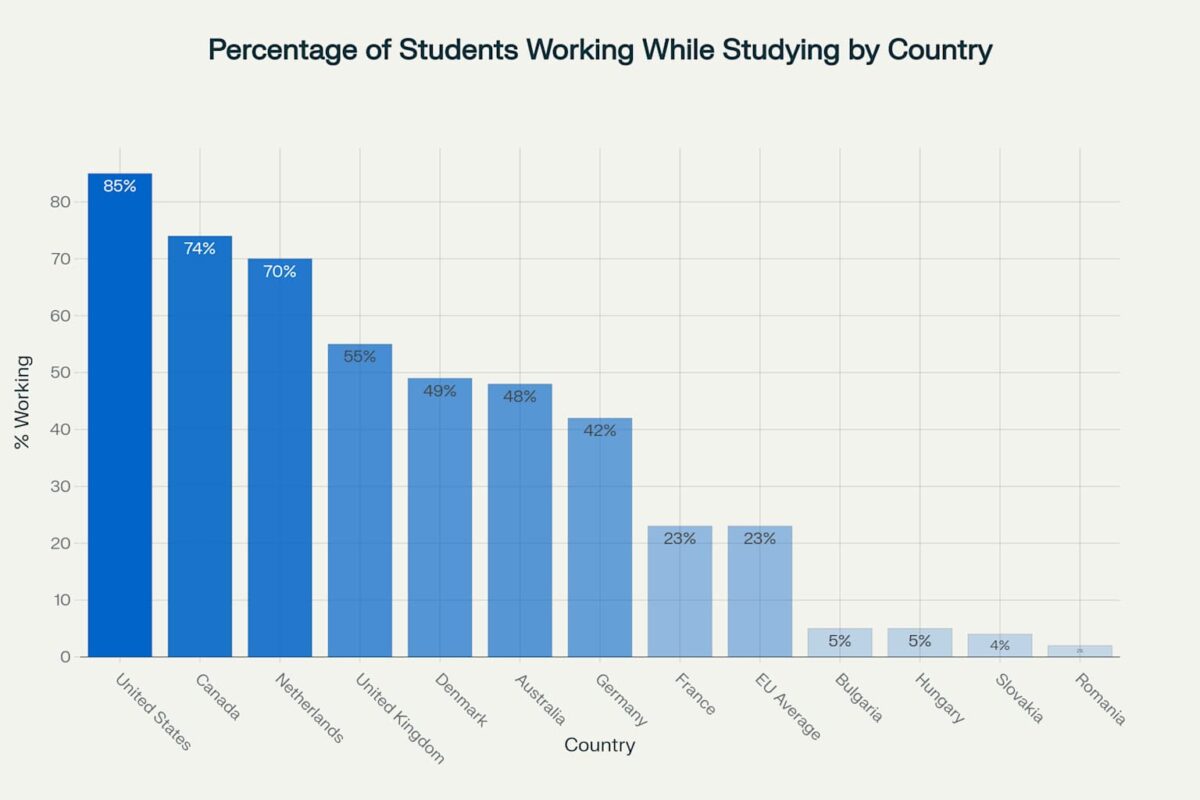

Percentage of students who work while studying across different countries
The trend of working while studying has been increasing globally in recent years, with more students seeking employment to cover rising educational costs and gain practical experience . In Europe, the Netherlands leads with 70% of students working, while countries like Romania have much lower rates at just 2% .
Work Restrictions for Students
Domestic Students
For domestic students, work restrictions typically vary based on age and educational level . High school students under 16 years old face stricter limitations than older students, with most countries regulating both the number of hours and the types of jobs permitted .
- United States: Students aged 14-15 can work up to 16 hours per week during school weeks, while those 16-17 can work up to 20 hours per week
- Working hours: Most regulations prohibit school-night work after certain hours (typically 7 PM for younger students, 10 PM for older teens)
- Parental permission: Many jurisdictions require parental consent and school authorization forms for minors to work legally
College students typically have fewer restrictions, though some academic institutions may limit on-campus employment hours to ensure academic success .
International Students
International students face additional restrictions based on their visa status and host country regulations . Work permits or authorizations are often required, and exceeding permitted hours can result in serious visa violations .
| Country | Term-time Work Limit | Holiday Work Limit | Minimum Wage (2025) |
|---|---|---|---|
| United States | 20 hours/week (on-campus only first year) | Full-time allowed | $7.25-$15/hour (state dependent) |
| United Kingdom | 20 hours/week | Full-time allowed | £6-£11/hour (age dependent) |
| Canada | 24 hours/week | Full-time allowed | CAD 15-17/hour (province dependent) |
| Australia | 48 hours/fortnight | Unlimited hours | AUD 23.23/hour |
| France | 964 hours/year (~18.5 hours/week) | Included in annual limit | Varies by region |
| Germany | 120 days or 240 half days annually | Included in annual limit | Varies by region |
| New Zealand | 20 hours/week | Full-time allowed | NZD 22.70/hour |
| Japan | Separate work permit required | With permit only | JPY 1,000-1,200/hour (region dependent) |
Key considerations for international students include :
- Visa conditions: Different visa types have different work rights (e.g., F1, J1, and M1 visas in the USA have varying work permissions)
- On-campus vs. off-campus work: Many countries initially restrict international students to on-campus work only
- Term-time limitations: Most countries limit term-time work to 20-24 hours per week
- Holiday periods: Many countries allow full-time work during official university breaks
Impact on Academic Performance
Research consistently shows a correlation between working hours and academic performance . Students working excessive hours often experience negative impacts on their grades and overall academic achievement .
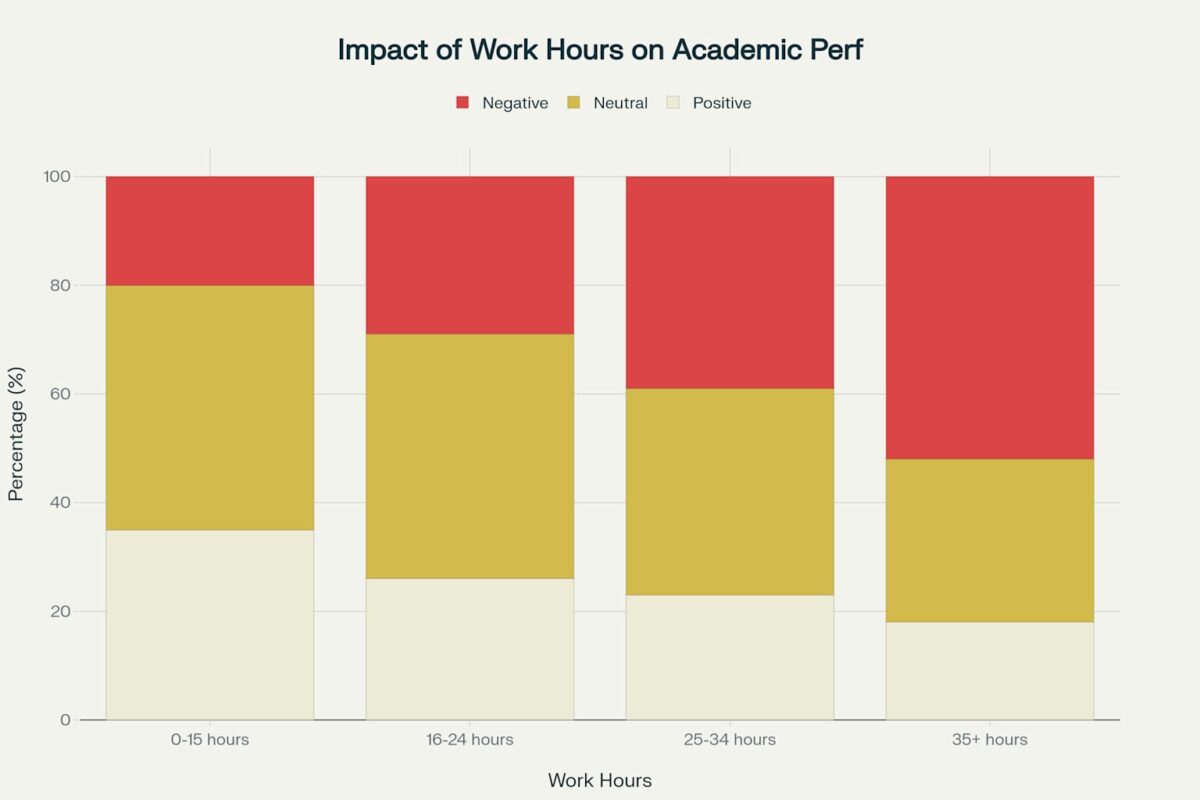
Impact of working hours on students’ academic performance
Studies indicate that :
- Working 0-15 hours per week has minimal negative impact and can even benefit students academically through improved time management skills
- The 25-hour threshold appears to be a tipping point, after which academic performance typically begins to decline more significantly
- Students working more than 35 hours weekly are most likely to experience substantial negative impacts on their studies
Managing Your Time Effectively
Working students face unique time management challenges, needing to balance classes, study time, work shifts, and personal activities . On average, working students spend 4.2 hours per day on employment-related activities, which exceeds their time spent in classes (2.3 hours) or studying at home (2.8 hours) .

Average daily time allocation for working students
Successful working students typically follow these time management strategies :
- Plan and prioritize: Create weekly schedules that block time for classes, studying, work, and personal needs
- Know when to say “no”: Recognize when taking on additional responsibilities will compromise academic success
- Use technology: Utilize calendar apps, task managers, and study tools to maximize productivity
- Communicate with employers: Be upfront about your academic schedule and exam periods
- Batch similar tasks: Group similar activities together to minimize context-switching and increase efficiency
Best Jobs for Students
Some jobs are more compatible with student life than others, offering flexible scheduling, decent pay, and valuable experience . The ideal student job provides a balance of income, flexibility, and skills development relevant to future career goals .
Most Popular Student Jobs
When choosing a part-time job as a student, it’s important to balance income potential with your academic schedule and personal goals. The type of work you choose can also help build valuable skills and experience for future careers.
| Job | Average Hourly Wage | Flexibility Score | Key Benefits |
|---|---|---|---|
| Retail Sales | $15 | 6/10 | Regular hours, customer service skills |
| Food Service/Barista | $14 | 7/10 | Flexible shifts, tips potential |
| Tutor/Teaching Assistant | $20 | 8/10 | Subject mastery, teaching experience |
| Administrative Assistant | $17 | 5/10 | Professional environment, office skills |
| Virtual Assistant | $17 | 10/10 | Remote work, flexible hours |
On-Campus vs. Off-Campus Employment
Both on-campus and off-campus jobs offer distinct advantages for students :
On-Campus Jobs:
- Located conveniently on your campus
- Usually more accommodating of academic schedules
- Often directly related to university operations or academic departments
- May offer tuition assistance or other student-specific benefits
Off-Campus Jobs:
- Typically higher pay rates than on-campus positions
- Greater variety of opportunities and industries
- More potential for advancement and professional networking
- Less competition than limited on-campus positions
Federal Work-Study Program
For eligible students in the United States, the Federal Work-Study Program provides part-time employment opportunities to help finance education costs . This program is available to both undergraduate and graduate students who demonstrate financial need .
Key features of the Work-Study Program include :
- Jobs are typically on-campus, though some off-campus opportunities with nonprofit organizations exist
- Students earn at least federal minimum wage, paid directly through regular paychecks
- Hours are limited (usually 10-20 per week) to ensure academic success
- Positions often align with students’ course of study or career interests
- Unlike loans, work-study earnings do not need to be repaid
Making the Decision: Should You Work While Studying?
Deciding whether to work while studying requires careful consideration of multiple factors . Your financial needs, academic demands, personal circumstances, and career goals all play important roles in this decision .
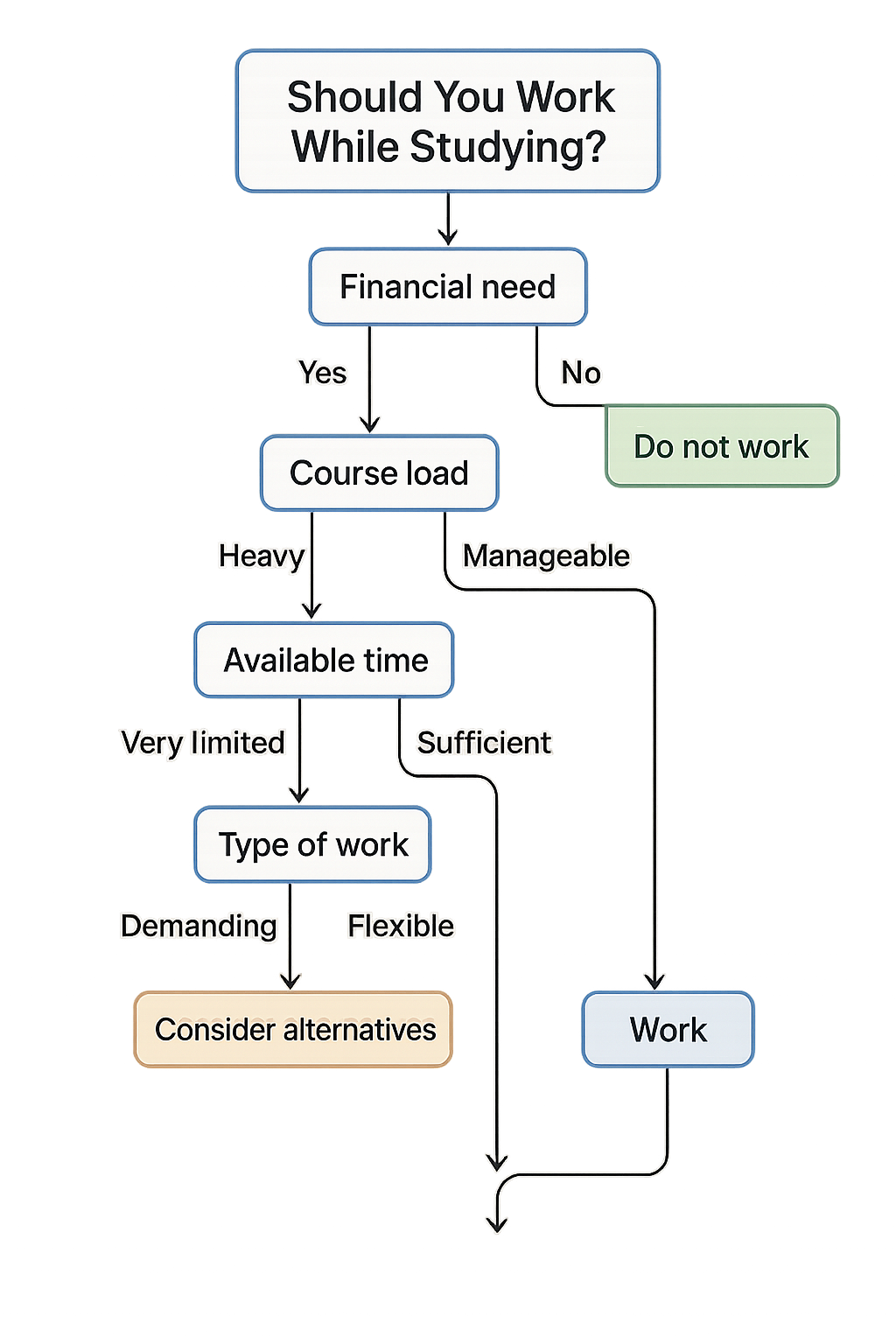
Decision flowchart for students considering working while studying
When making this decision, consider :
- Financial necessity: Do you need income to cover essential expenses?
- Course load: How demanding is your academic program?
- Time availability: Can you realistically fit work hours into your schedule?
- Work relevance: Will the job provide experience related to your field of study?
- Academic impact: How might working affect your grades and learning?
Pros and Cons of Working While Studying
Advantages
Working while studying offers several benefits beyond just financial support :
- Financial independence: Earn money to cover expenses and reduce student loan debt
- Practical experience: Gain real-world skills that complement your academic learning
- Resume building: Develop a work history that makes you more employable after graduation
- Networking opportunities: Build professional connections that may lead to future opportunities
- Time management skills: Learn to prioritize tasks and use time efficiently
Disadvantages
However, working while studying also comes with potential challenges :
- Academic strain: Less time for studying and completing assignments
- Physical and mental fatigue: Juggling multiple responsibilities can lead to burnout
- Reduced campus involvement: Less time for extracurricular activities and social events
- Scheduling conflicts: Work shifts may occasionally clash with academic requirements
- Stress management challenges: Balancing multiple priorities can increase stress levels
Financial Planning for Working Students
Effective financial management is crucial for working students to maximize the benefits of their employment . Creating and following a budget helps ensure your earnings support both immediate needs and longer-term goals .
Budgeting Tips
- Track income and expenses: Monitor where your money comes from and goes to identify patterns and opportunities for saving
- Prioritize essential expenses: Focus first on tuition, books, housing, food, and transportation
- Set up automatic savings: Direct a portion of each paycheck into savings before spending on non-essentials
- Plan for tax obligations: Understand your tax liabilities as a working student
- Build an emergency fund: Aim to save at least one month of essential expenses for unexpected situations
Tax Implications for Working Students
Understanding the tax implications of student employment helps you maximize your take-home pay and avoid surprises at tax time . Working students need to be aware of filing requirements, potential deductions, and special student tax provisions .
Key tax considerations include :
- Income thresholds: Students may not need to file a tax return if earnings fall below certain thresholds
- Tax withholding: Check that the appropriate amount is being withheld from your paychecks
- Education tax credits: The American Opportunity Credit and Lifetime Learning Credit may reduce your tax liability
- Student loan interest deduction: Interest paid on qualifying student loans may be tax-deductible
- International student considerations: Non-resident students have different tax obligations and treaties may apply
Health and Wellbeing for Working Students
Balancing work and study can take a toll on physical and mental health without proper self-care strategies . Research indicates that working students, especially those working longer hours, experience higher levels of stress and fatigue .
To maintain wellbeing while working and studying :
- Prioritize sleep: Aim for 7-8 hours of quality sleep each night
- Schedule regular breaks: Build short rest periods into your daily schedule
- Stay physically active: Even brief exercise sessions boost energy and reduce stress
- Practice stress management: Use techniques like deep breathing, meditation, or journaling
- Seek support when needed: Don’t hesitate to use campus mental health resources
Working Student Checklist
To help you navigate the journey of working while studying, here’s a comprehensive checklist covering key considerations before starting a job, during the academic term, for financial management, health and wellbeing, and career development .
Before Starting a Job
- Research your local work regulations and restrictions
- Check your visa/permit requirements (if international student)
- Discuss your work plans with academic advisor
- Calculate maximum hours you can work without affecting studies
- Update your resume and prepare for interviews
- Research potential employers that offer flexible schedules
- Set up a budget to determine your income needs
During Academic Term
- Maintain a detailed calendar with both work and school commitments
- Communicate your class schedule to your employer
- Set aside dedicated study time that won’t be compromised
- Track your working hours to stay within legal/visa limits
- Monitor impact on your grades and well-being
- Schedule regular self-care time for rest and relaxation
- Save important academic and work documents
Financial Management
- Open a student bank account with low/no fees
- Set up automatic savings from each paycheck
- Track all income and expenses
- Create an emergency fund (aim for at least 1 month’s expenses)
- Research and apply for relevant tax benefits/exemptions
- Keep receipts for work-related expenses
- Plan for major expenses in advance (tuition, books, rent)
Health & Wellbeing
- Schedule regular sleep hours (aim for 7-8 hours nightly)
- Plan healthy meals in advance to avoid unhealthy options
- Build in physical activity time (even brief walks)
- Monitor stress levels and seek help when needed
- Take regular short breaks during long study/work sessions
- Maintain social connections outside of work and school
- Know when to scale back work hours if overwhelmed
Career Development
- Seek jobs that align with your career goals when possible
- Document skills gained through your employment
- Request feedback from supervisors regularly
- Build professional relationships at your workplace
- Update your resume with new skills and experiences
- Ask for letters of recommendation from good employers
- Look for advancement opportunities that fit your schedule
Conclusion
Working while studying presents both opportunities and challenges for students around the world . With thoughtful planning, clear understanding of applicable rules and restrictions, and effective time management strategies, you can successfully balance employment and education .
Remember that the optimal work arrangement varies based on individual circumstances, including financial needs, academic demands, and personal capacity for managing multiple responsibilities . For most students, limiting work hours during academic terms (ideally under 20 hours weekly) helps maintain academic performance while still providing valuable income and experience .
By following the guidelines and strategies outlined in this article, you can make informed decisions about working while studying and develop valuable skills that will benefit you throughout your academic journey and beyond .
Related reading: Work Permit for International Students: Rules and Restrictio — a closer look at this topic.