Canada’s 5% Population Cap Strategy 2026: Impact on Temporary Workers Explained
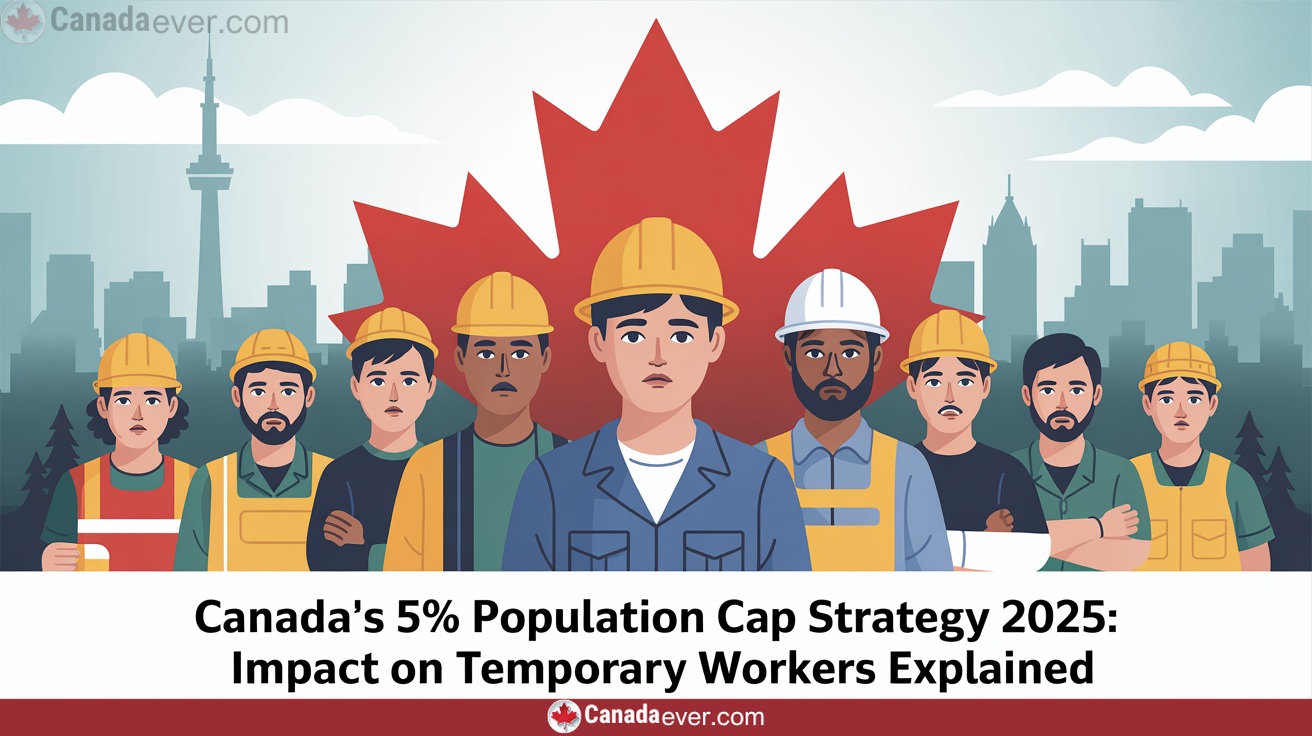
Canada has implemented its most significant immigration policy shift in decades with the introduction of a 5% population cap on temporary residents. This landmark strategy aims to reduce the proportion of temporary residents from the current 7.25% to just 5% of Canada’s total population by 2027. The policy directly affects hundreds of thousands of temporary foreign workers, international students, and asylum seekers currently in Canada.
What is Canada’s 5% Population Cap Strategy?
The 5% population cap represents Canada’s first-ever limit on temporary residents in the country’s immigration history. Currently, temporary residents make up over 7% of Canada’s population (approximately 3.02 million people), but this number is expected to decrease significantly through stricter approvals, expiring permits, and reduced new admissions.
Key Objectives:
- Alleviate pressure on housing markets
- Reduce strain on healthcare and infrastructure
- Ensure sustainable population growth
- Maintain economic stability while managing labor shortages
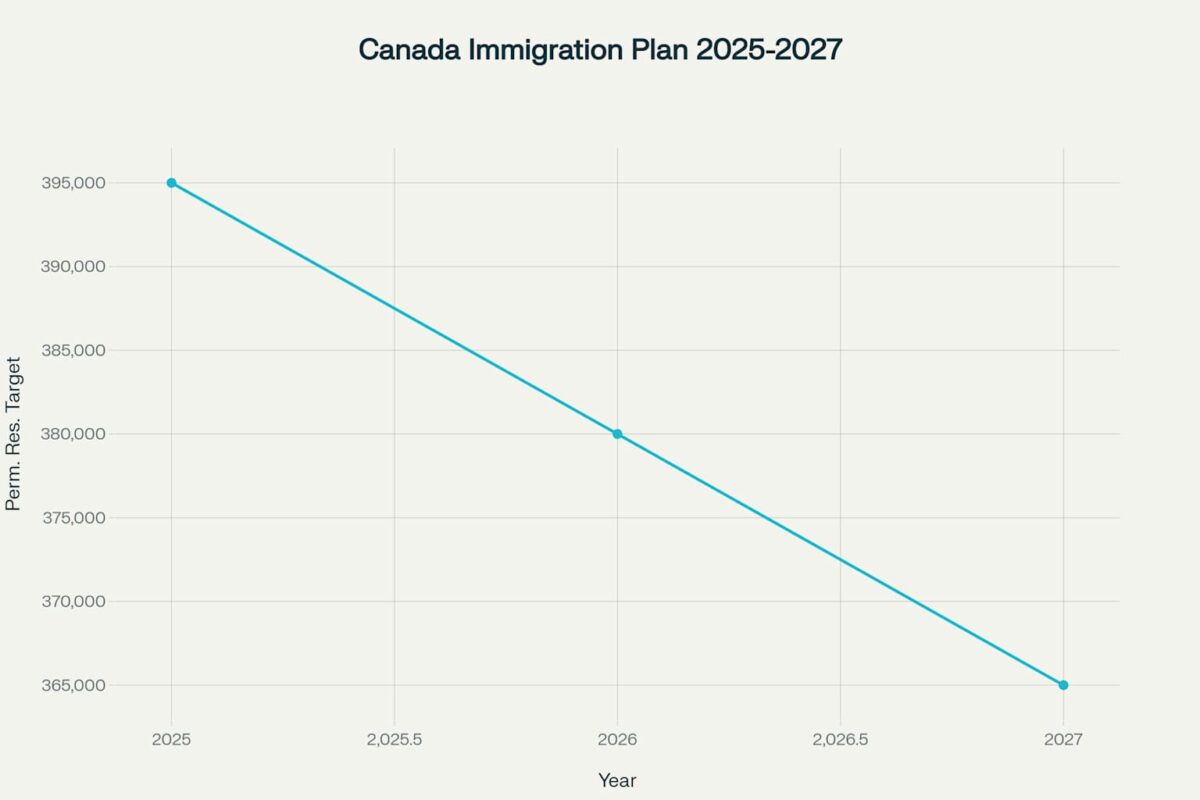

Canada’s Immigration Levels Plan 2025-2027: Permanent and Temporary Resident Targets
Major Changes for Temporary Foreign Workers
Stricter LMIA Requirements
Starting May 2025, Canadian employers face significantly tougher requirements when hiring temporary foreign workers:
- Faster Proof Requirements: Businesses must prove more quickly that no Canadian citizen or permanent resident can fill positions
- Regional Restrictions: Low-wage LMIA applications suspended in areas with unemployment rates exceeding 6%
- Higher Wage Thresholds: Updated provincial wage requirements for high-wage vs. low-wage classifications
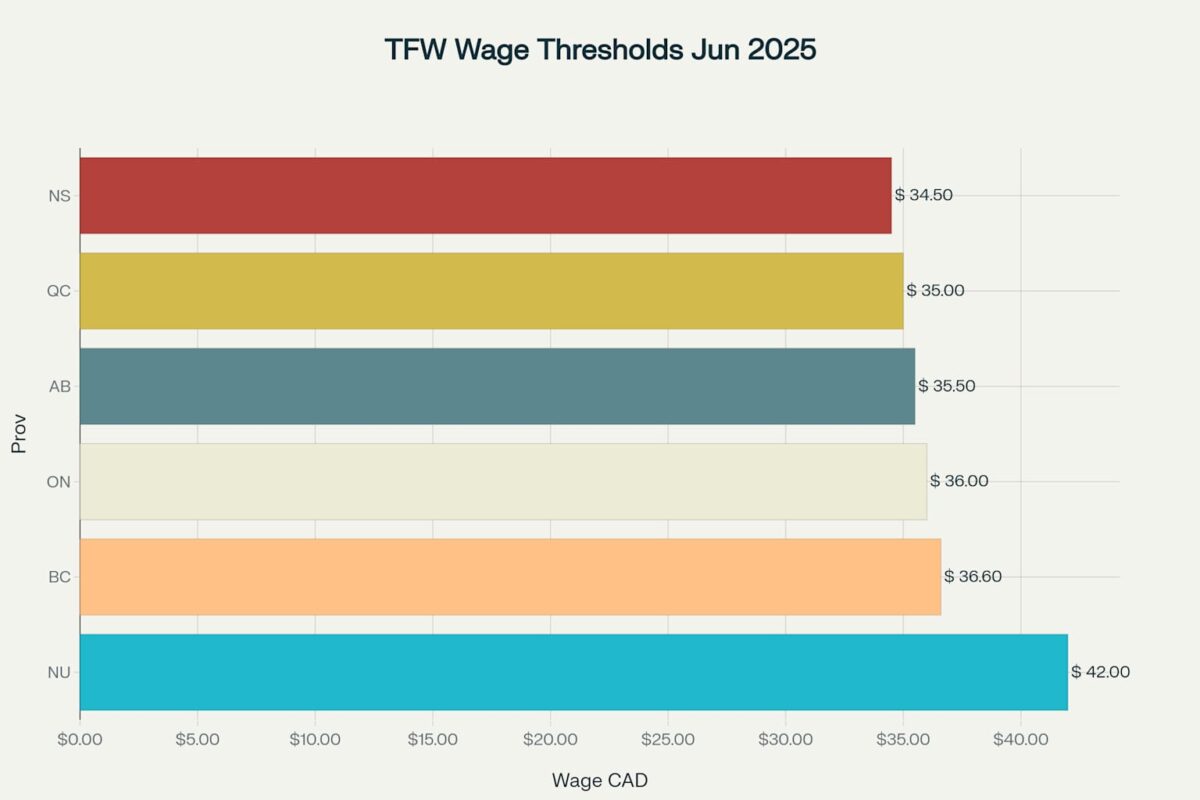
2025 TFWP Wage Thresholds by Province/Territory (CAD per hour)
Sector-Specific Exemptions
Healthcare and Construction Workers benefit from special exemptions:
- Healthcare: Continued exemption from restrictions due to critical labor shortages
- Construction: New study permit exemptions for apprenticeship programs and dedicated PR pathways
- Exemption Period: Both sectors protected until at least August 31, 2025
Impact on Different Worker Categories
International Students
The cap significantly affects study permit holders:
- 35% Reduction: Study permits decreased from 560,000+ in 2023 to approximately 437,000 in 2025
- Graduate Students Included: Master’s and doctoral students now subject to caps (previously exempt)
- Provincial Allocation: Permits distributed among provinces based on population and capacity
Temporary Foreign Workers
Workers face a mixed impact depending on their sector and skill level:
Positive Changes:
- Job Flexibility: New policy allows workers to start new jobs while permit applications are pending
- Faster Transitions: Reduced waiting periods for employer changes
Challenges:
- Stricter Approvals: Harder to obtain initial work permits
- Regional Limitations: Restrictions in high-unemployment areas
- Wage Requirements: Higher minimum wage thresholds in most provinces
Pathways to Permanent Residence
The strategy emphasizes transitioning existing temporary residents to permanent status:
- TR to PR Programs: Renewed focus on temporary-to-permanent pathways
- In-Canada Focus: Priority given to candidates already in Canada with work experience
- Construction Worker PR: New dedicated pathway for up to 6,000 construction workers
Implementation Timeline
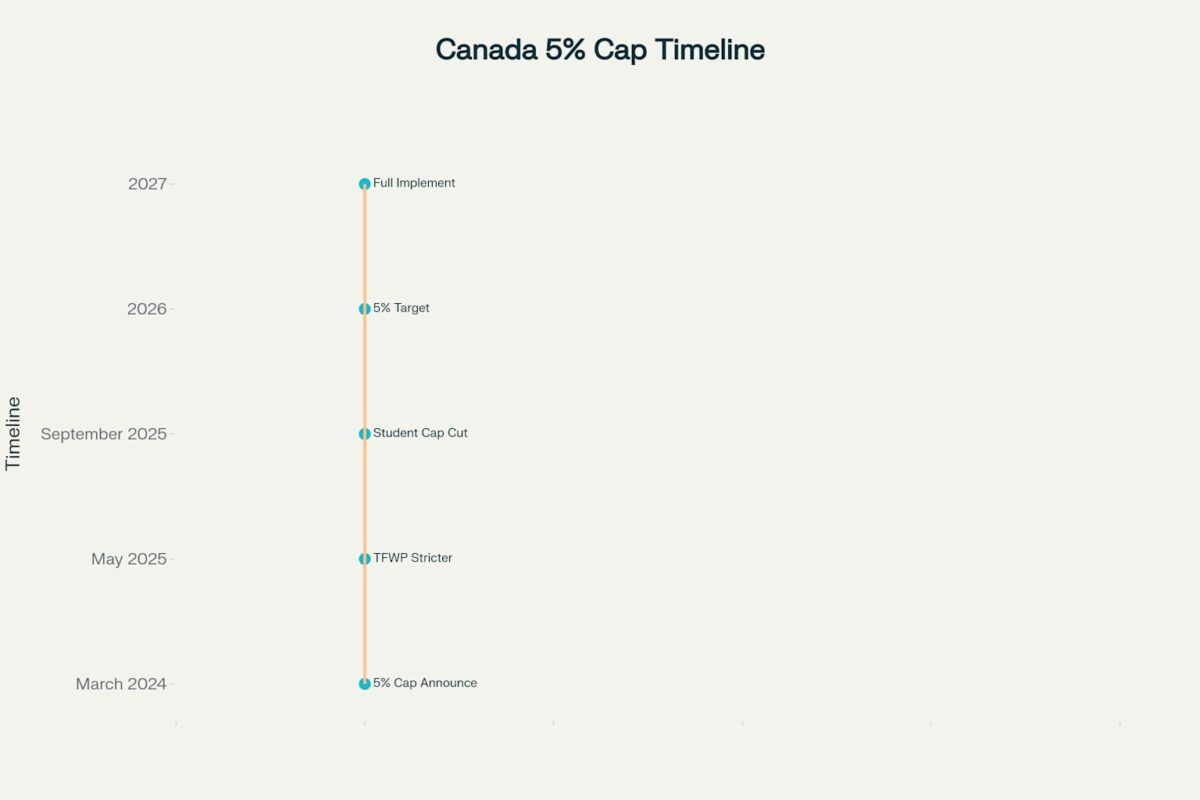
Timeline of Canada’s 5% Population Cap Strategy Implementation
Key Dates and Milestones
2024-2025:
- March 2024: Initial 5% cap announcement
- May 2025: Stricter TFWP requirements implemented
- September 2025: International student cap reductions begin
2026-2027:
- End of 2026: Target to achieve 5% temporary resident population
- 2027: Full implementation of reduced immigration levels
What Temporary Workers Need to Know
Immediate Action Items
For Current Workers:
- Renew Early: Submit permit renewals well before expiration
- Explore PR Options: Investigate permanent residence pathways
- Sector Check: Verify if your occupation qualifies for exemptions
For Prospective Workers:
- Higher Standards: Prepare for more competitive application processes
- Regional Research: Check unemployment rates in target areas
- Skill Assessment: Focus on high-demand occupations
Rights and Protections
Despite tighter restrictions, temporary workers retain important protections:
- Same Rights: Equal treatment as Canadian workers under labor laws
- Union Support: Access to union representation and advocacy
- Health Coverage: Continued access to healthcare services during valid status
Economic and Social Implications
Housing Market Relief
The cap aims to address Canada’s housing crisis by reducing competition for rental units:
- Estimated Relief: Potential for 670,000 additional housing units to become available
- Regional Impact: Greatest relief expected in major urban centers like Toronto and Vancouver
- Timeline: Benefits may take 2-3 years to fully materialize
Labor Market Balance
Economists warn of potential labor shortages in key sectors:
- Skills Gap: Risk of unfilled positions in healthcare, construction, and agriculture
- Wage Pressure: Possible wage increases due to reduced worker supply
- Regional Variations: Different impacts across provinces and territories
Criticism and Support
Industry Concerns
Business Groups express worry about labor shortages:
- Construction industry facing severe worker shortages
- Healthcare systems already strained
- Agricultural sector dependent on seasonal workers
Support for the Policy
Advocates cite necessary balance:
- Housing affordability improvements
- Better integration support for permanent residents
- Sustainable population growth management
Future Outlook
The 5% cap strategy represents a fundamental shift in Canada’s immigration approach, moving from growth-focused to sustainability-focused policy. Success will depend on:
- Effective Implementation: Smooth transition without severe labor disruptions
- Regional Adaptation: Customized approaches for different provinces and territories
- Economic Monitoring: Ongoing assessment of labor market impacts
Expected Outcomes by 2027:
- Temporary resident population stabilized at 5% of total population
- Improved housing affordability in major cities
- More streamlined permanent residence pathways for existing temporary residents
Related reading: Discover 2025’s Key Canada Immigration Policy Changes & — a closer look at this topic.