Discover 2026’s Key Canada Immigration Policy Changes & What They Mean

Canada’s immigration landscape is undergoing its most significant transformation in decades. The federal government has announced sweeping changes to immigration policy for 2025, marking a decisive shift from the previous decade’s expansion-focused approach to a more controlled, sustainable model. These changes affect virtually every pathway to Canadian immigration, from Express Entry and Provincial Nominee Programs to international student permits and temporary worker visas.
Canada’s immigration landscape is undergoing its most significant transformation in decades. The federal government has announced sweeping changes to immigration policy for 2025, marking a decisive shift from the previous decade’s expansion-focused approach to a more controlled, sustainable model.
The most dramatic change is the reduction in immigration targets from 485,000 permanent residents in 2024 to just 395,000 in 2025 – a decrease of 90,000 newcomers.
This 18.5% reduction represents the largest year-over-year decrease in Canada’s modern immigration history, driven by concerns over housing affordability, healthcare capacity, and public service strain.
📊 The Big Picture: Immigration Targets Slashed
Canada’s new Immigration Levels Plan for 2025-2027 shows a clear downward trajectory that will continue for the next three years. The government aims to stabilize immigration at less than 1% of Canada’s population annually after 2027.
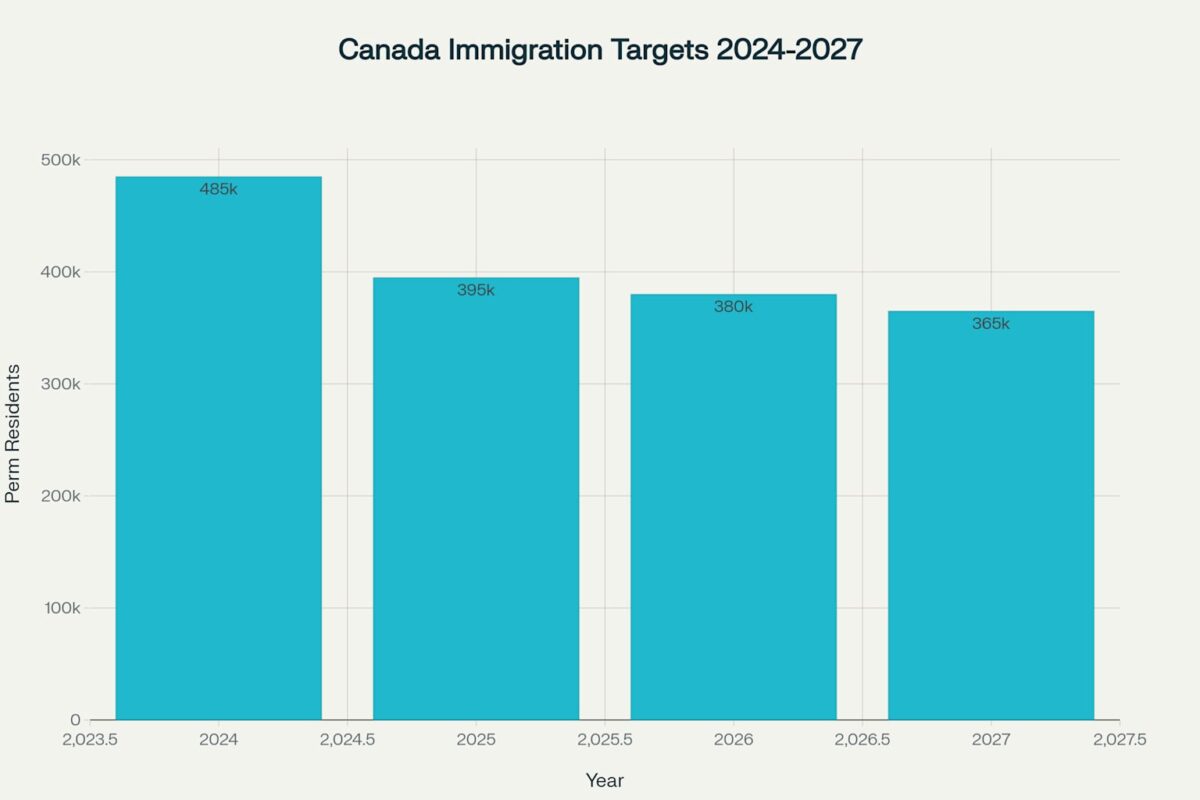

Canada’s Immigration Targets showing the significant reduction from 2024 to 2027
Immigration Breakdown by Category (2025)
| Immigration Category | 2025 Target | Percentage |
|---|---|---|
| Economic Class | 232,150 | 58.8% |
| Family Class | 94,500 | 23.9% |
| Refugees & Protected Persons | 68,350 | 17.3% |
| French-speaking admissions (outside Quebec) | 29,325 | 7.4% |
| Total | 395,000 | 100% |
The economic class remains the largest category, emphasizing Canada’s continued focus on skilled workers who can contribute immediately to the economy.
🎯 Express Entry: The End of All-Program Draws
Express Entry, Canada’s flagship immigration system, has undergone perhaps the most dramatic transformation. For the first time since its 2015 launch, the system went five full months without a single all-program draw in 2025.
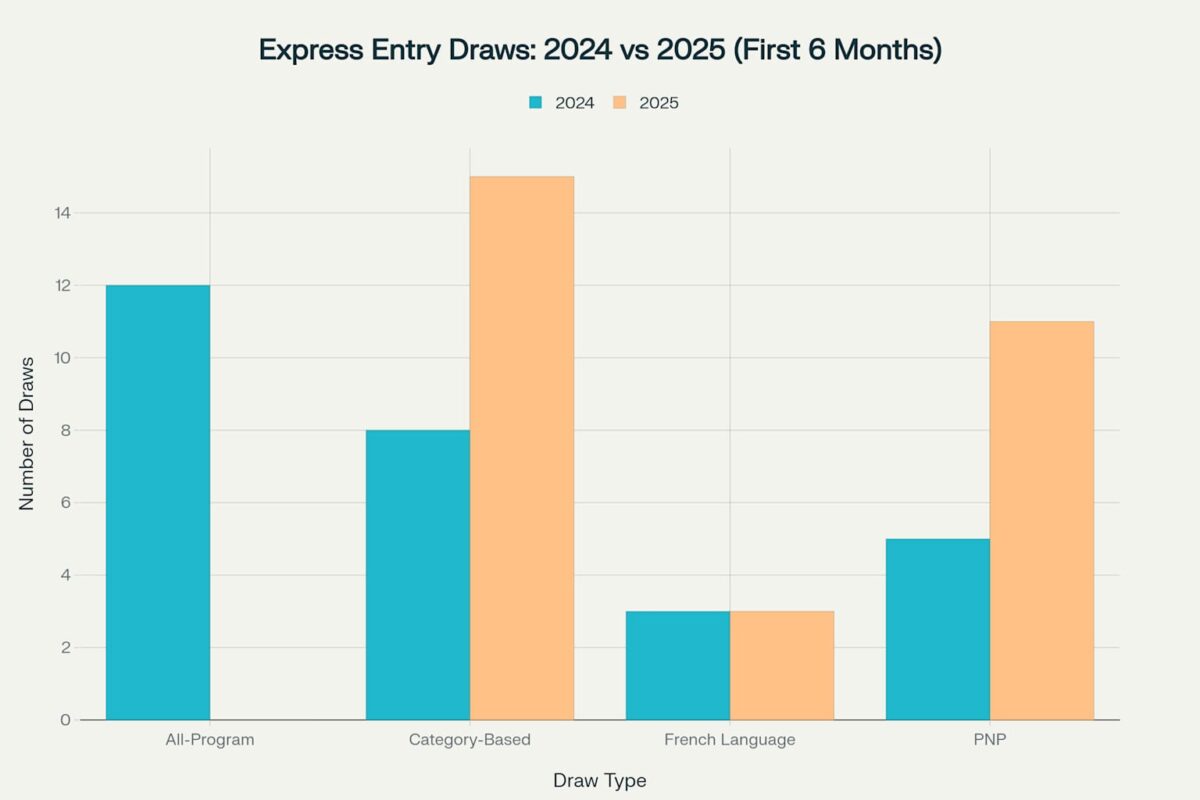
Express Entry Draws comparison showing the shift from all-program to targeted draws in 2025
What’s Changed in Express Entry
Job Offer Points Eliminated: As of March 25, 2025, job offers no longer provide 50-200 CRS points, removing a major pathway that many candidates relied on.
Targeted Draws Only: Express Entry now focuses exclusively on:
- French-language proficiency (highest priority)
- Canadian Experience Class candidates
- Healthcare and social services occupations
- Skilled trades workers
- Education sector professionals
- Provincial Nominee Program candidates
Higher Competition: With fewer draws and reduced targets, CRS scores have increased significantly. The average cut-off score in 2025 is 617, compared to 481 in 2024.
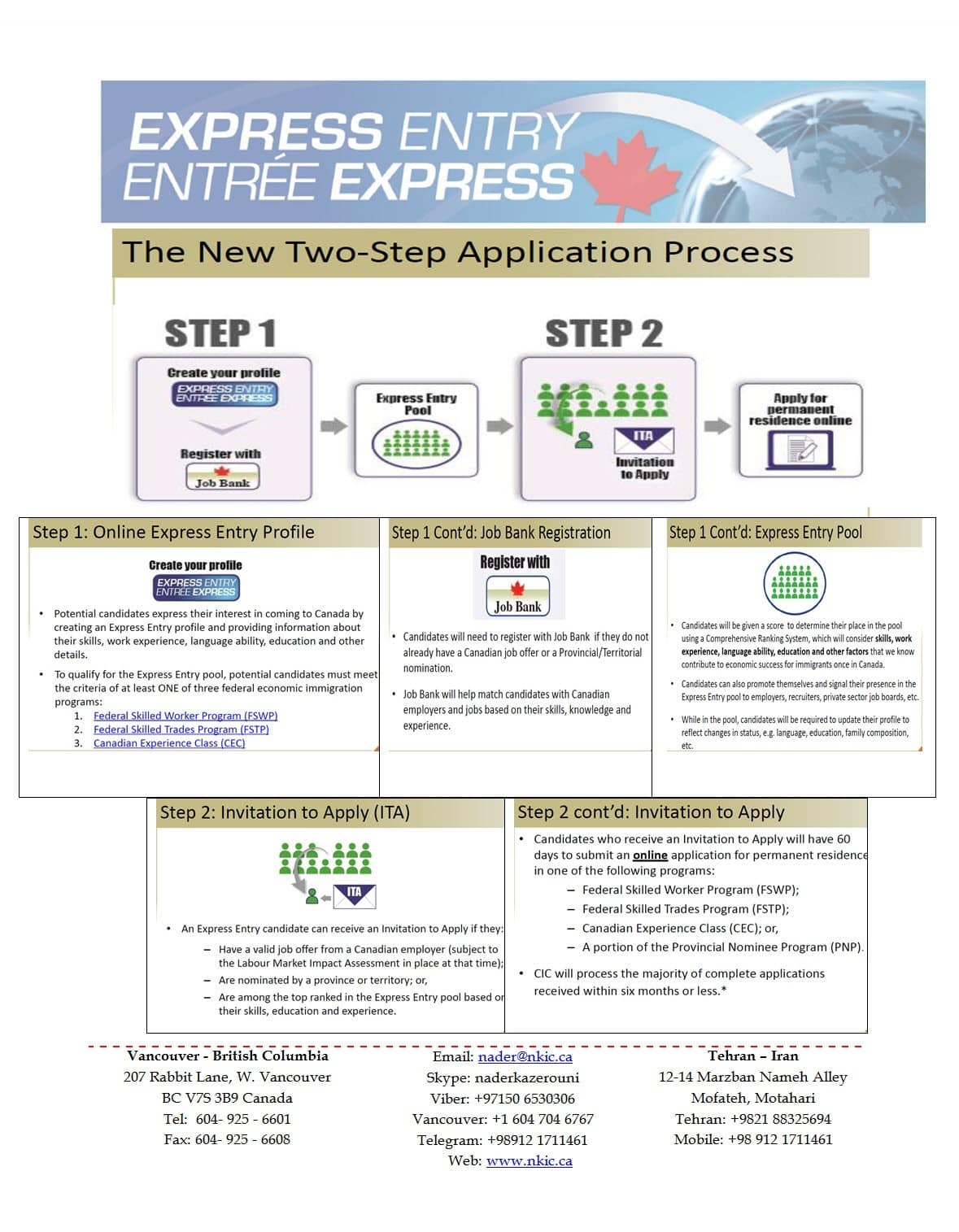
Infographic explaining the two-step Express Entry application process for Canadian immigration, including profile creation, Job Bank registration, Express Entry pool, Invitation to Apply, and permanent residence application
🏛️ Provincial Nominee Programs: 50% Reduction
The Provincial Nominee Program (PNP) has been cut by 50% for 2025, creating intense competition for nominations. This dramatic reduction affects all provinces and territories, with many implementing new selection criteria and processes.
Key PNP Changes:
- Reduced allocations across all provinces
- Longer processing times (up to 20 months for non-Express Entry aligned applications)
- Stricter eligibility criteria focusing on in-demand occupations
- New Expression of Interest (EOI) systems in multiple provinces
- Increased focus on French-speaking candidates and healthcare workers
Ontario Changes: The Ontario Immigrant Nominee Program (OINP) now has authority to return applications before issuing nominations and requires in-person interviews for employers and applicants.
📚 International Students: New Caps and Restrictions
Canada has introduced its second consecutive year of international student caps, reducing permits from 485,000 in 2024 to 437,000 in 2025.
Student Program Changes:
- Study Permit Caps: 437,000 total permits for 2025, a 10% reduction from 2024.
- Provincial Attestation Letters (PAL): Most students now need PAL/TAL letters from provincial governments, including graduate students for the first time.
- Post-Graduation Work Permit (PGWP) Restrictions: Only 920 fields of study now qualify for PGWP, with 178 programs removed and 119 added to focus on healthcare, trades, and education.
- Language Requirements: New language proficiency requirements for PGWP applications.
🏠 Temporary Residents: Population Cap Introduced
For the first time, Canada has set targets for temporary residents, aiming to reduce their share of the population from 7.4% to 5% by the end of 2026.
Temporary Resident Targets:
| Year | Target Arrivals | Expected Population Share |
|---|---|---|
| 2025 | 673,650 | 6.8% |
| 2026 | 516,600 | 5.0% |
| 2027 | 543,600 | 5.0% |
This represents a significant shift from Canada’s previous open-door policy for temporary residents.
💼 Labour Market Impact Assessment (LMIA) Changes
The LMIA process has become more restrictive, with new wage thresholds and regional restrictions.
LMIA Updates:
Wage Threshold Increases: New wage thresholds effective June 27, 2025, ranging from $30.00 in New Brunswick to $48.00 in Northwest Territories.
Regional Moratoriums: LMIA processing suspended in census metropolitan areas with unemployment rates above 6%, affecting cities like Toronto (8.6%), Calgary (7.8%), and Vancouver (6.6%).
Processing Times: Significant delays across all streams:
- Global Talent Stream: 7 business days
- High-Wage Stream: 50 business days
- Low-Wage Stream: 50 business days
- Permanent Resident Stream: 235 business days
🇲🇫 Quebec: Separate Immigration Overhaul
Quebec has announced its own dramatic immigration reforms, proposing to reduce annual targets to between 25,000-45,000 permanent residents.
Quebec Changes:
- Program Suspensions: Both PEQ (Programme de l’expérience québécoise) streams suspended until November 30, 2025.
- PSTQ Reopening: Skilled Worker Selection Program reopens July 2025, prioritizing French-speaking candidates already in Quebec.
- Temporary Worker Reductions: Plans to reduce temporary foreign workers from 72,000 to 65,000 over four years.
- French Language Requirements: Minimum French proficiency required for work permit renewals after three years.
💰 Application Fees and Costs
Immigration fees have increased across multiple categories, with the most notable being the citizenship fee hike.
2025 Fee Schedule:
| Program | Fee (CAD) | Total with PR Fee |
|---|---|---|
| Express Entry (Principal) | $950 | $1,525 |
| Express Entry (Spouse/partner) | $950 | $1,525 |
| Express Entry (Dependent child) | $260 | $835 |
| Study Permit | $150 | N/A |
| Work Permit (Open) | $100 | N/A |
| Work Permit (Employer-specific) | $155 | N/A |
| Citizenship Application (Adult) | $649.75 | N/A |
| Right of Permanent Residence Fee | $575 | N/A |
Major Fee Increases: The citizenship fee increased from $630 to $649.75 in March 2025, the first increase in nearly a decade.
⏱️ Processing Times: Longer Waits Expected
Processing times have increased across most immigration programs due to higher application volumes and reduced capacity.
Current Processing Times (June 2025):
Express Entry: 5-8 months (unchanged)
Provincial Nominee Program: 5 months (Express Entry aligned), 20 months (non-Express Entry)
Atlantic Immigration Program: 11 months (increased from 7 months)
Family Sponsorship: 29 months (increased from 10 months)
Study Permits: 12 weeks (varies by country)
Work Permits: 196 days (inside Canada)
✅ Action Checklists for 2025
Stay focused, stay organized, and make 2025 your most productive year yet. Whether you’re aiming for personal growth, business success, or better health, these checklists will keep you on track.
Express Entry Checklist
| Task | Status | Priority | Estimated Time |
|---|---|---|---|
| Research eligible occupation codes (NOC) | ☐ | High | 1-2 weeks |
| Take English/French language test (IELTS/CELPIP/TEF) | ☐ | High | 2-4 weeks |
| Get Educational Credential Assessment (ECA) | ☐ | High | 3-6 weeks |
| Gather work experience documents | ☐ | High | 2-4 weeks |
| Create Express Entry profile | ☐ | Medium | 1-2 hours |
| Calculate CRS score | ☐ | Medium | 30 minutes |
| Improve CRS score if needed | ☐ | Medium | 2-6 months |
| Wait for Invitation to Apply (ITA) | ☐ | Low | Variable |
| Gather required documents | ☐ | High | 2-4 weeks |
| Submit permanent residence application | ☐ | High | 1 day |
| Complete medical examination | ☐ | Medium | 1-2 weeks |
| Pay processing fees | ☐ | Medium | 1 day |
| Wait for decision | ☐ | Low | 5-8 months |
Student Immigration Checklist
| Task | Status | Priority | Estimated Time |
|---|---|---|---|
| Choose eligible program and institution | ☐ | High | 1-2 weeks |
| Apply to designated learning institution | ☐ | High | 2-8 weeks |
| Receive acceptance letter | ☐ | High | 2-4 weeks |
| Obtain Provincial Attestation Letter (PAL) | ☐ | High | 2-4 weeks |
| Take English/French language test | ☐ | High | 2-4 weeks |
| Gather financial documents | ☐ | Medium | 1-2 weeks |
| Apply for study permit | ☐ | High | 12 weeks |
| Pay tuition fees | ☐ | High | 1 day |
| Arrange accommodation | ☐ | Medium | 1-4 weeks |
| Apply for student visa (if required) | ☐ | Medium | 3-8 weeks |
| Travel to Canada | ☐ | Low | 1 day |
| Complete studies | ☐ | Low | 1-4 years |
| Apply for Post-Graduation Work Permit (PGWP) | ☐ | Medium | 12 weeks |
📈 What These Changes Mean for You
For Skilled Workers:
- Higher competition due to reduced targets
- French language skills now provide significant advantage
- Canadian work experience becomes more valuable
- Provincial nominations are more difficult to obtain
- Job offers no longer provide CRS points advantage
For International Students:
- Limited study opportunities due to caps
- Restricted career options after graduation
- Higher costs for citizenship applications
- Longer processing times for most applications
For Employers:
- Harder to hire foreign workers due to LMIA restrictions
- Regional limitations in high-unemployment areas
- Higher wage requirements for temporary foreign workers
- Increased scrutiny of applications
For Families:
- Longer wait times for family sponsorship
- Higher application fees across programs
- Reduced opportunities in Quebec
🎯 Strategic Recommendations
Immediate Actions:
- Improve French language skills – This is now the highest priority pathway
- Gain Canadian work experience – CEC candidates have better chances
- Focus on priority occupations – Healthcare, trades, and education
- Apply to multiple provinces – Diversify your PNP applications
- Start applications early – Processing times are increasing
Long-term Planning:
- Consider alternative pathways – Explore business immigration or family sponsorship
- Build stronger profiles – Focus on education, work experience, and language
- Stay informed – Immigration policies continue to evolve rapidly
- Professional guidance – Consider consulting with immigration experts
🔮 Looking Ahead: What to Expect
The 2025 changes represent a fundamental shift in Canada’s immigration philosophy. The government has signaled that these reductions will continue through 2027, with permanent resident targets dropping to 365,000.
Key trends to watch:
- Continued emphasis on French-language immigration
- Greater focus on candidates already in Canada
- Increased regional immigration outside major cities
- Stronger integration support for newcomers
- Potential for further program modifications
The road to Canadian immigration has become more challenging, but opportunities remain for well-prepared candidates who understand the new landscape. Success in 2025 will require strategic planning, language skills development, and adaptability to changing policies.
By focusing on the priority pathways – French language proficiency, Canadian experience, and in-demand occupations – prospective immigrants can still achieve their Canadian dreams despite the more competitive environment.
Related reading: BREAKING: Major IRCC Changes — a closer look at this topic.