Student Direct Stream (SDS): Faster Study Permit Processing
The Student Direct Stream (SDS) program was officially discontinued on November 8, 2024, at 2:00 PM ET. All prospective international students must now apply through the regular study permit process. This comprehensive guide covers what SDS was, why it ended, and how to navigate the current application system.
The Student Direct Stream (SDS) program was officially discontinued on November 8, 2024, at 2:00 PM ET. All prospective international students must now apply through the regular study permit process.
What Was the Student Direct Stream (SDS)?
The Student Direct Stream was a fast-track study permit processing program launched by Immigration, Refugees and Citizenship Canada (IRCC) in June 2018. The program was designed to expedite study permit applications for international students from 14 specific countries who planned to study at designated learning institutions (DLIs) in Canada.
Key Features of SDS (Historical):
- Processing Time: Applications were typically processed within 20 calendar days
- Approval Rate: Approximately 71% approval rate, significantly higher than regular applications
- Eligibility: Limited to legal residents of 14 specific countries
- Requirements: Mandatory language test scores and Guaranteed Investment Certificate (GIC)
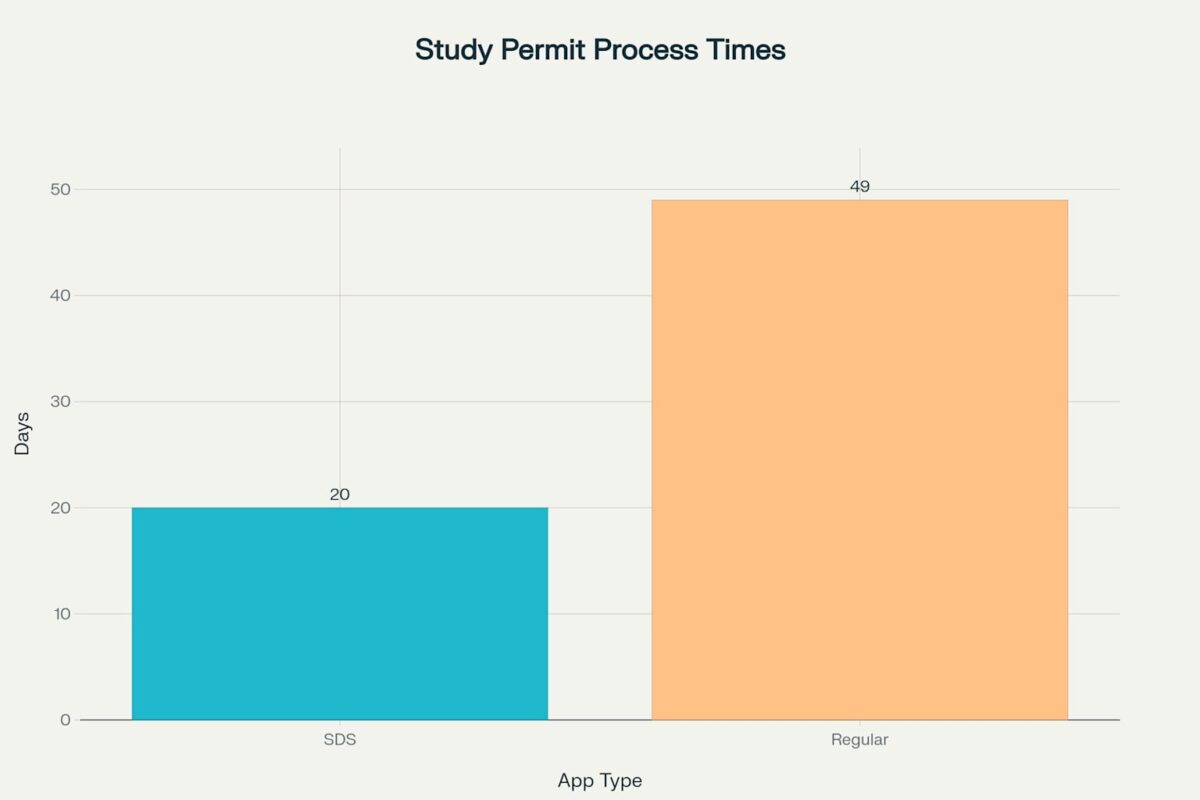

Comparison of processing times between the discontinued Student Direct Stream (SDS) and current regular study permit applications
Countries That Were Eligible for SDS
The SDS program served students from 14 countries across multiple regions. Asia had the highest representation with 5 countries, followed by the Caribbean, Africa, and South America with 3 countries each, and North America with 1 country.
| Country | Region | Primary Language | SDS Benefits |
|---|---|---|---|
| India | Asia | Hindi/English | Fast processing, high approval rates |
| China | Asia | Mandarin | Streamlined application process |
| Philippines | Asia | Filipino/English | Reduced documentation requirements |
| Nigeria | Africa | English | Priority processing |
| Brazil | South America | Portuguese | Faster visa processing |
| Pakistan | Asia | Urdu/English | Simplified requirements |
| Vietnam | Asia | Vietnamese | Quick turnaround time |
| Morocco | Africa | Arabic/French | Expedited processing |
| Peru | South America | Spanish | Reduced wait times |
| Colombia | South America | Spanish | Streamlined process |
| Costa Rica | North America | Spanish | Fast-track processing |
| Senegal | Africa | French | Priority consideration |
| Antigua and Barbuda | Caribbean | English | Expedited review |
| Saint Vincent and the Grenadines | Caribbean | English | Quick processing |
| Trinidad and Tobago | Caribbean | English | Fast approval |
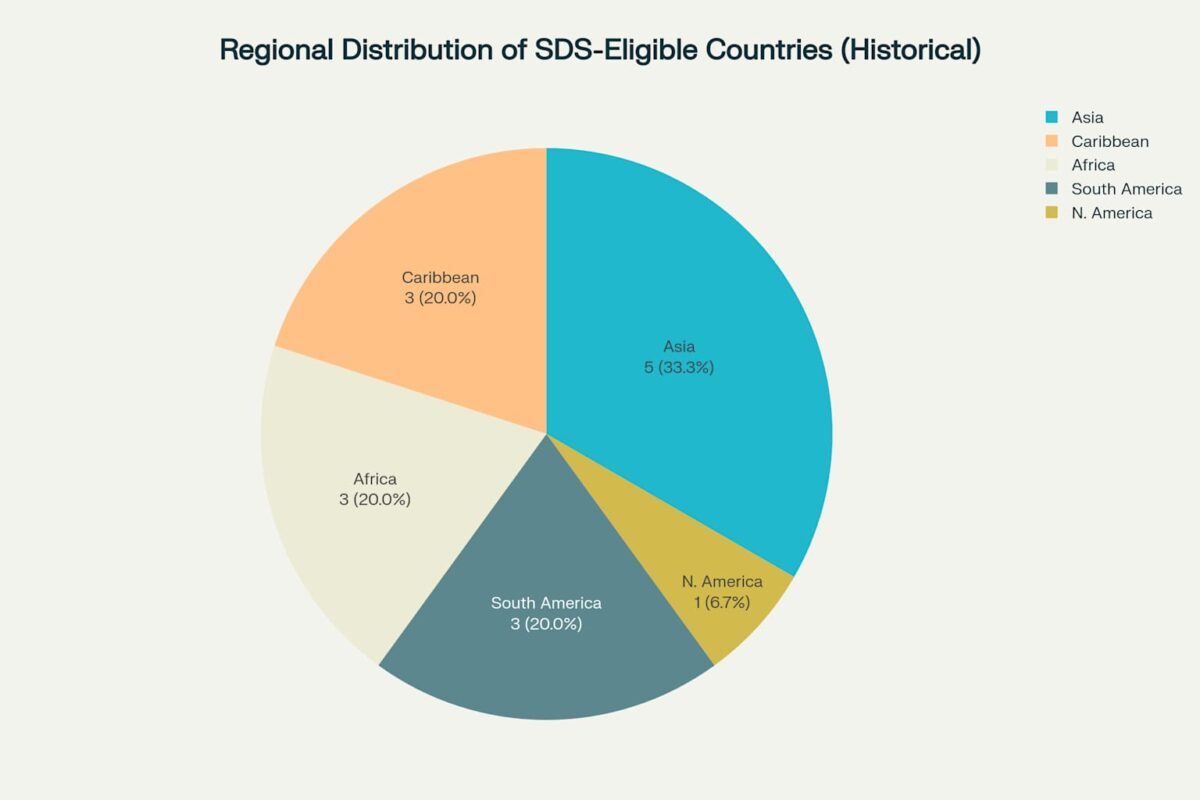
Regional breakdown of the 14 countries that were previously eligible for Canada’s Student Direct Stream program
Complete List of SDS-Eligible Countries:
- Asia: India, China, Philippines, Pakistan, Vietnam
- Africa: Nigeria, Morocco, Senegal
- Caribbean: Antigua and Barbuda, Saint Vincent and the Grenadines, Trinidad and Tobago
- South America: Brazil, Peru, Colombia
- North America: Costa Rica
Why Was SDS Discontinued?
On November 8, 2024, IRCC announced the immediate closure of both the Student Direct Stream and the Nigeria Student Express programs. The government cited several reasons for this decision:
Primary Reasons for Closure:
- Strengthening Program Integrity: To enhance the reliability and transparency of immigration processes
- Ensuring Equal Access: Providing fair access to all international students regardless of country of origin
- Addressing Student Vulnerability: Protecting international students from potential exploitation and ensuring positive academic experiences
- Resource Management: Managing pressure on housing, services, and resources due to growing international student populations
The closure aligns with Canada’s broader 2024 policy changes, including a cap on new study permits limiting approvals to 437,000 in 2025.
Current Study Permit Application Process (2024-2025)
With SDS discontinued, all international students must now apply through the regular study permit process. The current system requires more time and documentation but remains accessible to students worldwide.
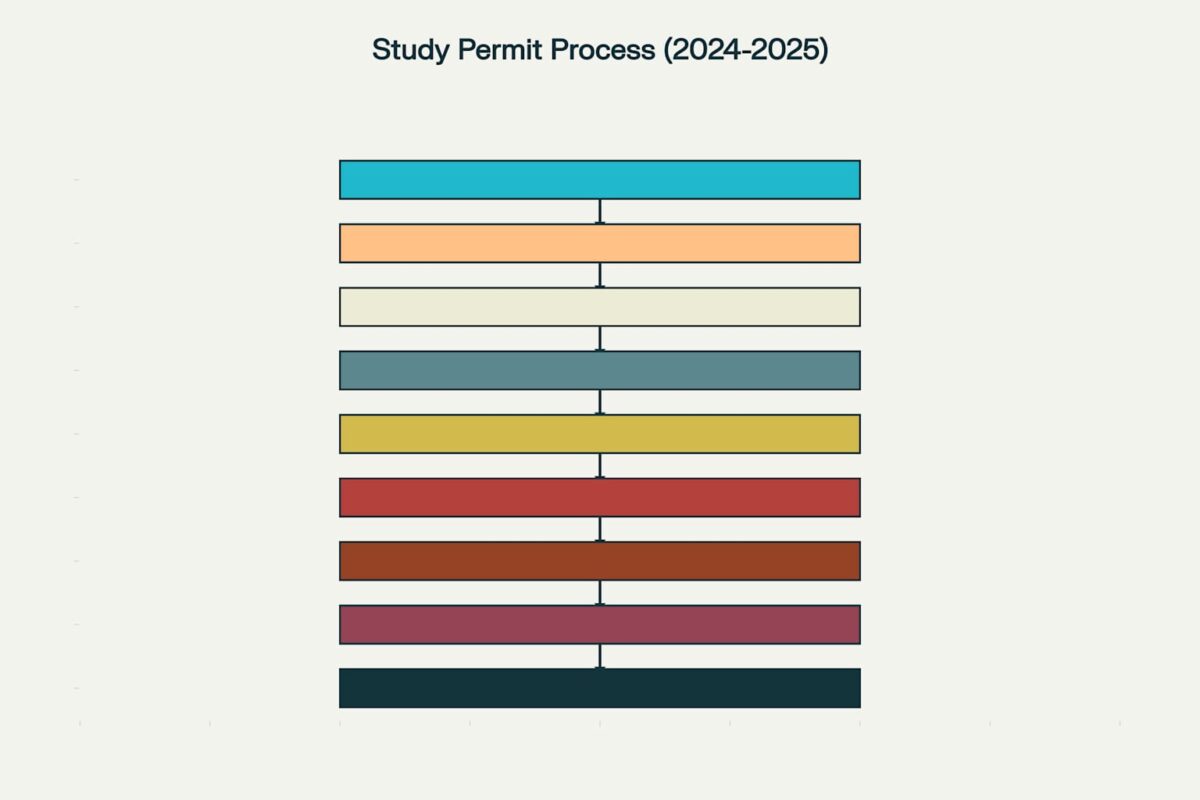
Step-by-step flowchart of the current study permit application process for Canada following the discontinuation of SDS
Step-by-Step Application Process:
- Get Acceptance Letter from DLI (2-6 months)
- Obtain Provincial Attestation Letter (PAL) (2-4 weeks)
- Gather Required Documents (2-4 weeks)
- Submit Online Application (1-2 days)
- Provide Biometrics (1-3 weeks)
- Medical Exam (if required, 2-4 weeks)
- IRCC Application Review (5-10 weeks)
- Receive Decision (immediate notification)
- Obtain Study Permit (1-2 weeks if approved)
Total Processing Time: 5-10 weeks on average, varying by country and application completeness.
Essential Requirements and Documentation
Core Eligibility Requirements:
- Acceptance Letter: From a designated learning institution (DLI)
- Provincial Attestation Letter (PAL): Required since January 22, 2024
- Financial Proof: Demonstrate sufficient funds for tuition and living expenses
- Language Proficiency: Meet institution and visa requirements
- Medical Exam: If required based on country of residence or field of study
- Police Certificate: If required
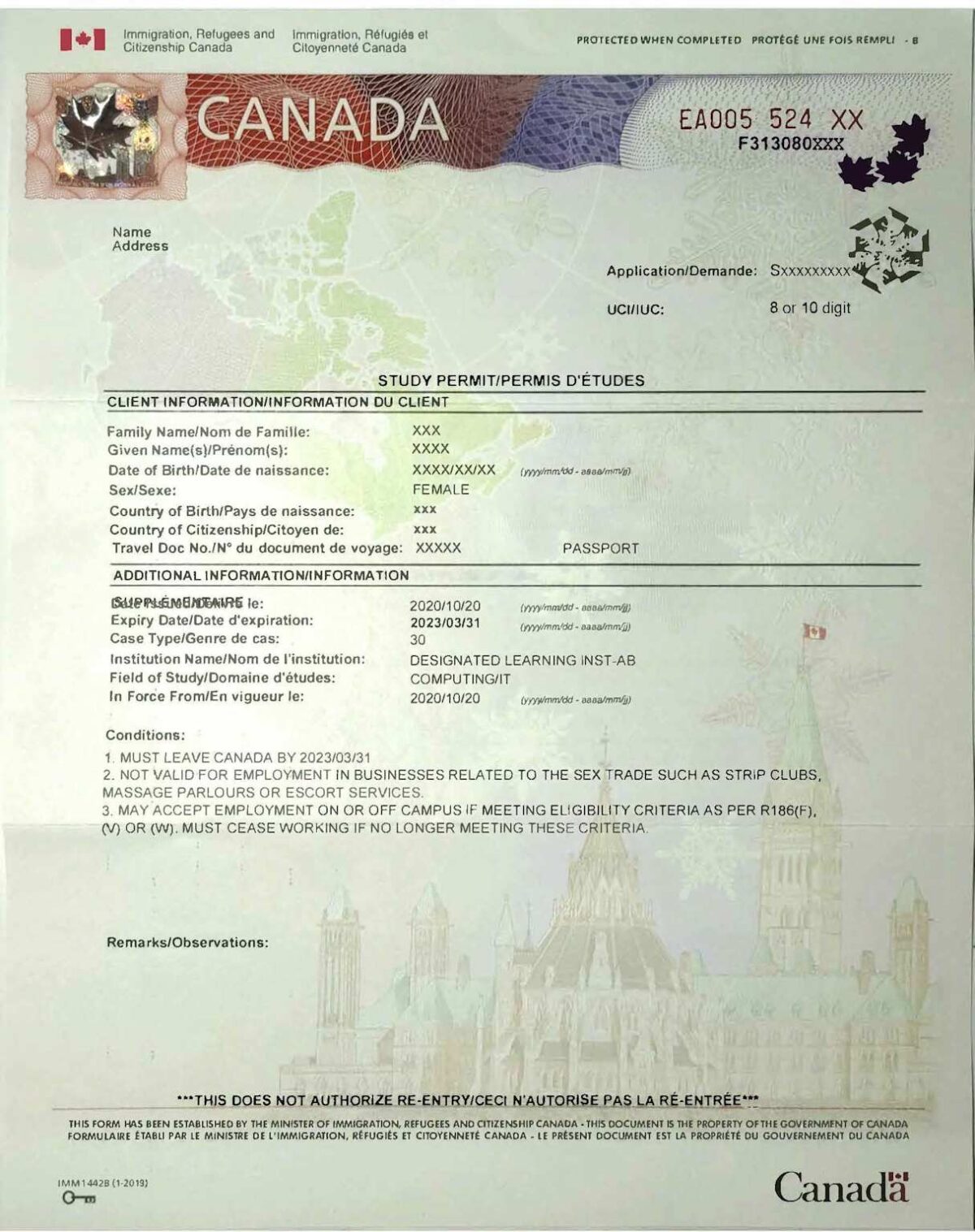
An official Canadian study permit outlining client information, study details, and conditions for international students
Provincial Attestation Letter (PAL)
The PAL is a critical new requirement introduced in 2024. This document confirms that you have applied to study at a post-secondary institution and that the province has allocated a space for your application within their cap.
Important: Each province has been allocated a maximum number of study permit applications per year, making the PAL essential for managing student intake.
Financial Requirements for 2024-2025
Canada significantly increased its financial requirements in January 2024. Students must now demonstrate substantially higher financial capacity compared to previous years.
| Requirement Type | Amount (CAD) | Notes |
|---|---|---|
| Tuition Fees (First Year) | $15,000 – $50,000 (varies by program) | Must be paid in advance or show proof of payment |
| Living Expenses (Cost of Living) | $20,635 (mandatory proof) | Increased from $10,000 in January 2024 |
| Guaranteed Investment Certificate (GIC) | $20,635 (for SDS – now discontinued) | Was mandatory for SDS, optional for regular permits |
| Return Transportation | $2,000 – $3,000 | Proof of funds for return to home country |
| Total Minimum Funds (Estimated) | $37,635 – $73,635 (excluding tuition) | Varies significantly based on program and province |
Updated Financial Proof Requirements:
- Living Expenses: CAD $20,635 (increased from $10,000)
- Tuition Fees: Full first-year tuition paid or proven
- Return Transportation: CAD $2,000-$3,000
- Total Estimated Minimum: CAD $37,635-$73,635 (excluding tuition)
Acceptable Proof of Funds:
- Bank statements showing required amounts
- Guaranteed Investment Certificate (GIC) – now optional
- Education loan approval letters
- Scholarship or funding letters
- Financial guarantee from parents or sponsors
Language Test Requirements
Language proficiency remains a crucial requirement for study permits, though requirements vary between institutions and visa applications.
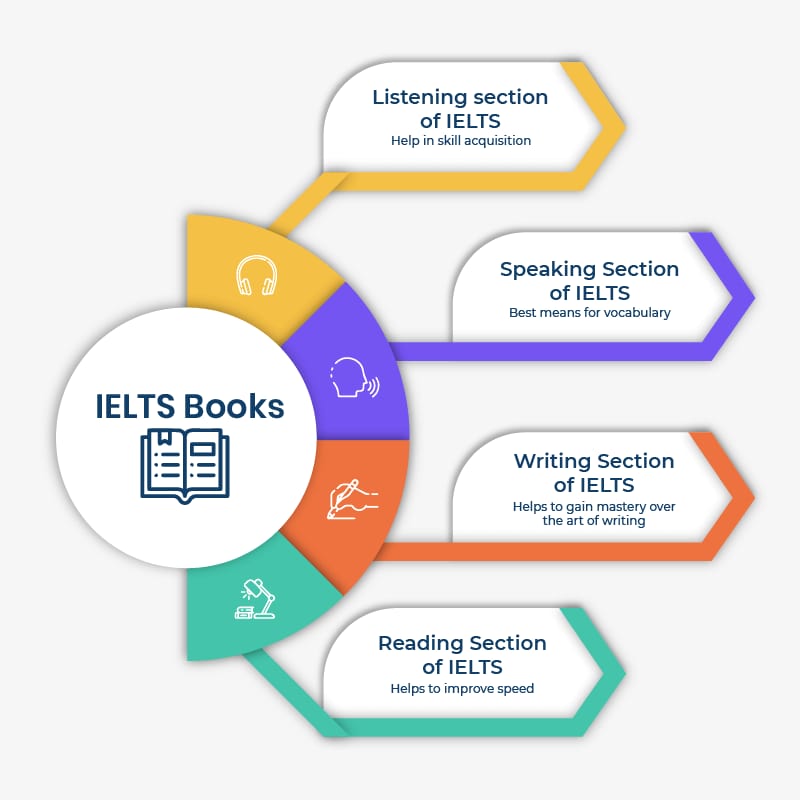
Infographic illustrating how IELTS books aid in preparing for the Listening, Speaking, Writing, and Reading sections of the IELTS exam
| Test Type | SDS Minimum (Historical) | Regular Study Permit (Current) | Institution Requirements |
|---|---|---|---|
| IELTS Academic | Overall: 6.0, Each band: 6.0 | Overall: 6.0-6.5, Each band: 5.5-6.0 | Varies by program (6.5-7.5) |
| IELTS General Training | Not accepted for SDS | Overall: 6.0-6.5, Each band: 5.5-6.0 | Varies by program (6.5-7.5) |
| TOEFL iBT | Not accepted for SDS | Overall: 80-90, Each section: 20+ | Varies by program (90-110) |
| TEF (French) | Overall: Level 4 (B2) | Overall: Level 4 (B2) | Varies by program |
| CELPIP | Not accepted for SDS | Overall: 7-8, Each section: 7+ | Varies by program (8-9) |
| PTE Academic | Not accepted for SDS | Overall: 58-65, Each section: 50+ | Varies by program (65-79) |
Current Language Test Options:
- IELTS Academic: Most widely accepted, minimum 6.0-6.5 overall
- TOEFL iBT: 80-90 overall with minimum section scores
- TEF (French): Level 4 (B2) for French programs
- CELPIP: Overall 7-8 for Canadian English Language Proficiency
- PTE Academic: 58-65 overall score
Note: Individual institutions may have higher requirements than visa minimums.
Processing Times and Approval Rates
The end of SDS has resulted in longer processing times and potentially lower approval rates for all applicants.
| Step | SDS Timeline (Historical) | Regular Study Permit (Current) |
|---|---|---|
| 1. Gather Documents | 1-2 weeks | 2-4 weeks |
| 2. Submit Application | 1-2 days online | 1-2 days online |
| 3. Biometrics Appointment | 1-2 weeks (30 days max) | 1-3 weeks (30 days max) |
| 4. Application Review | 2-3 weeks | 4-8 weeks |
| 5. Medical Exam (if required) | 1-2 weeks (if required) | 2-4 weeks (if required) |
| 6. Interview (if required) | Rare (1-2 weeks if needed) | 2-4 weeks (if required) |
| 7. Decision Made | Within 20 calendar days | 5-10 weeks total |
| 8. Receive Study Permit | 1-2 weeks after approval | 1-2 weeks after approval |
| Total Processing Time | 20 calendar days average | 5-10 weeks average |
Comparison of SDS and regular study permit timelines—from document preparation to permit issuance—highlighting faster average processing under SDS (20 days vs. 5–10 weeks).
Current Processing Reality:
- Regular Study Permits: 5-10 weeks average processing time
- Country Variations: Some countries experience longer delays
- Approval Rates: Generally lower than SDS rates (approximately 40% vs. previous 71%)
| Feature | Student Direct Stream (SDS) | Regular Study Permit |
|---|---|---|
| Processing Time | 20 calendar days | 5-10 weeks (varies by country) |
| Approval Rate | 71% (higher approval rate) | 40% (lower approval rate) |
| Eligible Countries | 14 specific countries only | All countries worldwide |
| Language Test Required | Mandatory (IELTS/TEF minimum scores) | May be required (varies by institution) |
| GIC Requirement | Mandatory CAD $20,635 | Optional (but can be used as proof of funds) |
| Application Method | Online only | Online or paper (limited cases) |
| Financial Proof (excluding tuition) | CAD $20,635 (via GIC) | CAD $20,635 (various proof methods) |
| Current Status | Closed November 8, 2024 | Currently active |
Impact of 2024 Policy Changes
Canada’s international student landscape has changed dramatically in 2024. The government implemented several major policy shifts affecting international students:
Key Policy Changes:
- Study Permit Cap: Limited to 437,000 new permits in 2025
- Provincial Allocation: Study permits distributed based on provincial population
- Reduced Approvals: Approximately 47% fewer study permits approved in 2024 compared to 2023
- Enhanced Requirements: Stricter financial and documentation standards
Complete Application Checklist
Before You Apply:
- Research and apply to designated learning institutions (DLIs)
- Receive acceptance letter from chosen institution
- Obtain Provincial Attestation Letter (PAL) through your institution
- Prepare language test scores (IELTS, TOEFL, etc.)
- Gather financial documentation proving CAD $20,635+ living expenses
- Secure full first-year tuition payment or proof of payment
- Obtain police clearance certificate (if required)
- Complete medical examination (if required)
During Application:
- Create IRCC online account
- Complete IMM1294 form (Application for Study Permit Made Outside Canada)
- Upload all required documents
- Pay application fee (CAD $150) and biometrics fee (CAD $85)
- Submit complete application online
- Book and attend biometrics appointment within 30 days
- Respond promptly to any additional document requests
After Submission:
- Monitor application status through IRCC account
- Prepare for potential interview (if requested)
- Plan travel arrangements after approval
- Apply for visitor visa or eTA (if required for your country)
What’s Next for International Students?
Despite the challenges created by SDS closure and new policies, Canada remains committed to welcoming international students. However, the landscape has become more competitive and requires earlier planning.
Recommendations for Success:
- Start Early: Begin applications 6-12 months before intended start date
- Multiple Applications: Consider applying to several provinces/institutions
- Strong Documentation: Ensure all financial and academic documents exceed minimum requirements
- Professional Guidance: Consider consulting with licensed immigration advisors
- Alternative Programs: Explore graduate programs (Master’s/PhD) which are exempt from caps
Future Outlook:
Canada processed over 1 million international students in 2023, but numbers are declining significantly due to new policies. The 2024 cap reduced approvals by approximately 35-47% compared to previous years. Students should expect increased competition and longer processing times going forward.
Conclusion
While the Student Direct Stream provided faster processing for students from specific countries, its discontinuation reflects Canada’s effort to create a more equitable and sustainable international education system.
Current applicants face longer processing times and stricter requirements, but Canada continues to offer world-class education opportunities for international students who meet the enhanced criteria.
The key to success in the post-SDS era is thorough preparation, early application submission, and ensuring all requirements exceed minimum standards. Despite the challenges, Canada remains one of the world’s premier destinations for international education.
Related reading: OINP International Student Stream: Pathway to PR — a closer look at this topic.