
International Student Healthcare: Provincial Coverage Guide

Navigating Canada’s healthcare system as an international student can feel overwhelming, but understanding your options is crucial for your health, safety, and peace of mind during your studies. Canada’s healthcare system varies significantly from province to province, with some offering coverage to international students while others require private insurance.
This comprehensive guide will walk you through everything you need to know about healthcare coverage as an international student in Canada, from provincial differences to costs, applications, and emergency procedures.
Understanding Canada’s Healthcare System for International Students
Canada is renowned for its universal healthcare system, but this coverage primarily extends to Canadian citizens and permanent residents. As an international student, you’ll need to navigate a complex landscape where healthcare access depends heavily on which province you’re studying in.
The good news is that many provinces do offer some form of coverage to international students, though the requirements and processes vary considerably.
The Canadian healthcare system operates at the provincial level, meaning each province and territory has its own rules, requirements, and coverage options for international students. Some provinces provide free or low-cost provincial health insurance to eligible international students, while others require you to purchase private insurance or participate in university-sponsored plans.
Provincial Coverage Breakdown: Where You Study Matters
Understanding which provinces offer coverage and their specific requirements is essential for planning your healthcare needs and budget. The landscape varies dramatically across Canada’s 13 provinces and territories.


Healthcare Coverage Types by Province/Territory for International Students
Provinces Offering Provincial Health Coverage
Eight provinces and territories provide some form of provincial health coverage to international students who meet specific criteria:
- Alberta: Offers free coverage through the Alberta Health Care Insurance Plan (AHCIP) for students with study permits of 12+ months who intend to reside in Alberta for at least 12 months. Students must apply within 90 days of arrival, and those under 18 must be added to a parent or guardian’s insurance.
- British Columbia: Provides coverage through the Medical Services Plan (MSP) for students with study permits of 6+ months. However, there’s a mandatory monthly fee of $75 (International Student Health Fee), and coverage begins after a three-month waiting period.
- Manitoba: Covers international students with 6+ month study permits and minimum six-month residency per calendar year.
- New Brunswick: Offers coverage for students with minimum three months residence in New Brunswick.
- Newfoundland and Labrador: Provides automatic enrollment for full-time international students enrolled for at least 12 months through the Medical Care Plan (MCP).
- Northwest Territories: Covers students studying for more than 12 months through the Northwest Territories Health Care (NWTHC).
- Nova Scotia: Offers coverage for students with 12+ month study permits, but students can only apply on the first day of the thirteenth month following arrival.
- Saskatchewan: Provides coverage for students with study permits and proof of full-time enrollment.
Provinces Requiring Private Insurance
Three provinces and territories do not offer provincial coverage to international students:
- Ontario: All international students must enroll in the University Health Insurance Plan (UHIP), a mandatory private insurance program administered by participating universities. UHIP costs range from $600-$1,000 annually and provides basic medical coverage similar to the provincial Ontario Health Insurance Plan (OHIP).
- Prince Edward Island: Requires international students to obtain private insurance, with institutions potentially offering optional or mandatory coverage plans.
- Yukon: International students must purchase private insurance coverage.
Quebec: Special Considerations
Quebec operates under a unique system where coverage depends on reciprocal agreements between Quebec and specific countries. Students from Belgium, Denmark, Finland, France, Greece, Luxembourg, Norway, Portugal, Sweden, and Romania may be eligible for RAMQ (Quebec Health Insurance Plan) coverage.
All other international students must purchase private insurance, often through their educational institution.

Examples of Canadian provincial health and identification cards, including Ontario Health Card, CareCards, and British Columbia Driver’s Licence and Services Card
Healthcare Coverage Decision Process
Understanding the path to healthcare coverage requires following a systematic approach based on your destination province. The decision-making process involves several key factors including your study permit duration, residency requirements, and application deadlines.
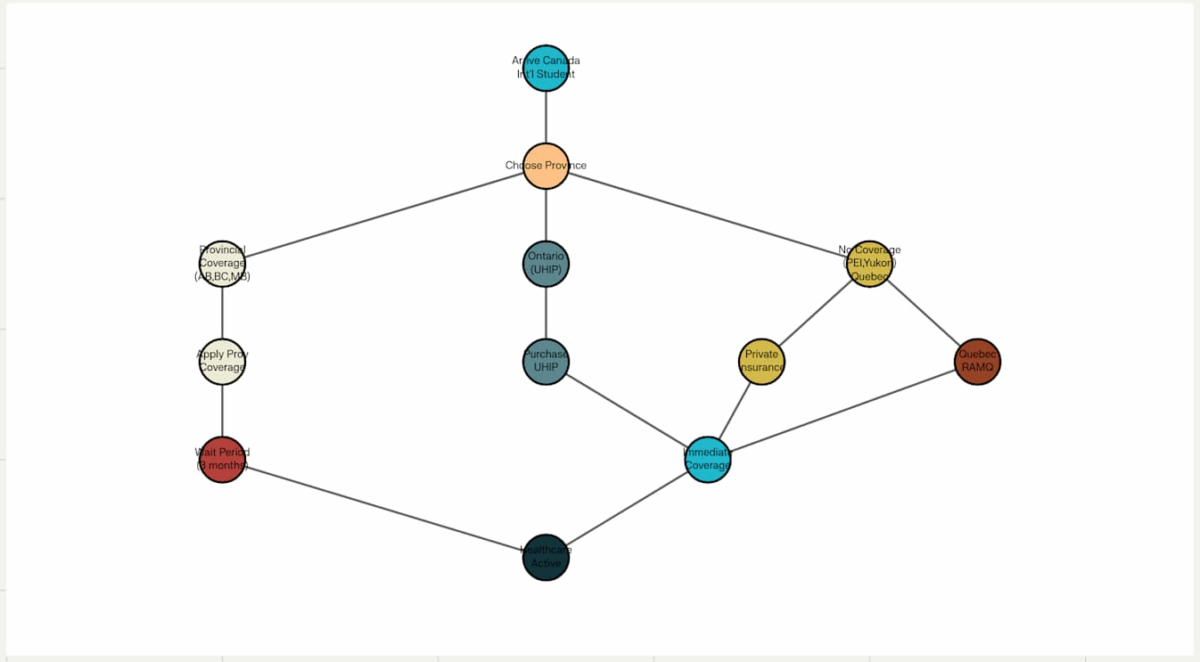
Healthcare Coverage Decision Flowchart for International Students in Canada
Costs and Insurance Options
Healthcare insurance costs vary significantly depending on the type of coverage and your province of study. Understanding these costs is crucial for budgeting your education expenses in Canada.
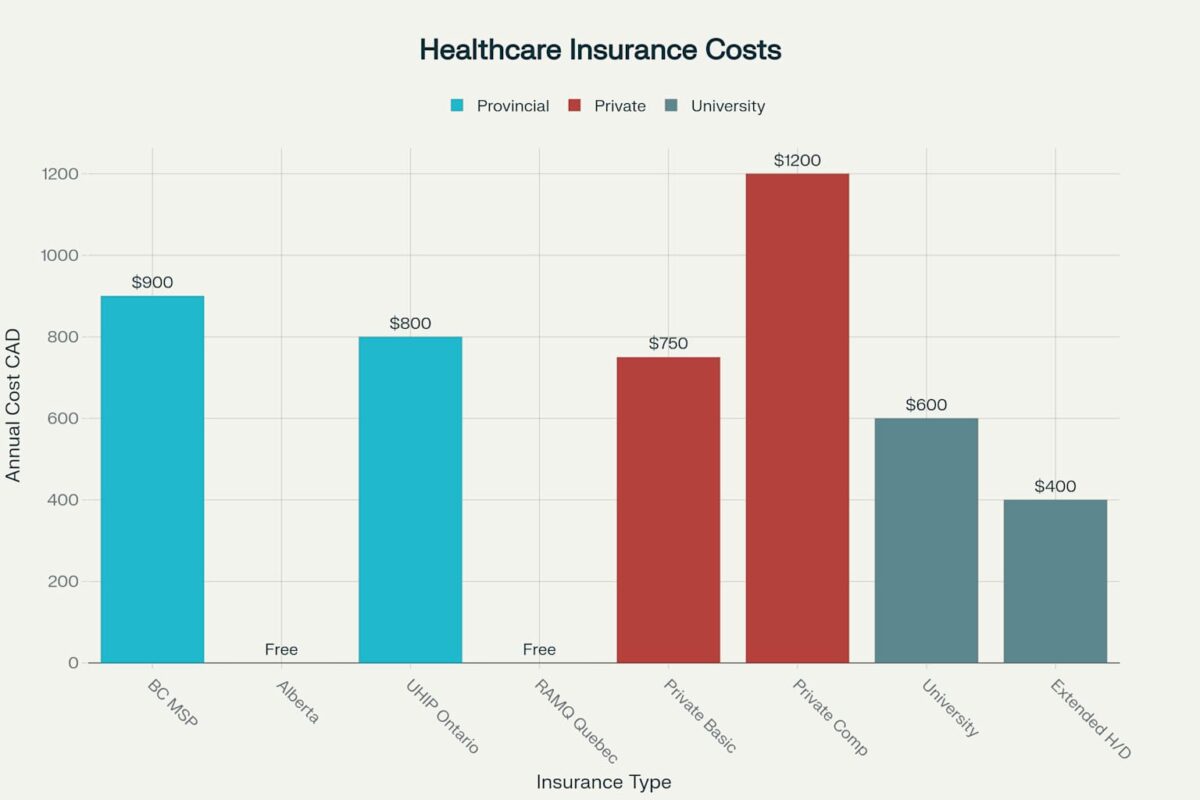
Annual Healthcare Insurance Costs for International Students in Canada (CAD)
Provincial Coverage Costs
Provincial health insurance costs range from free to approximately $900 annually. Alberta offers completely free coverage to eligible international students, while British Columbia charges $75 monthly ($900 annually) through the International Student Health Fee. Most other provinces with coverage offer it at no direct cost to students, though some may require small administrative fees.
Private Insurance Costs
Private health insurance for international students typically ranges from $600-$1,500 annually, depending on the comprehensiveness of coverage. Basic emergency coverage usually costs $600-$900 per year, while comprehensive plans with additional benefits can reach $1,500. University-sponsored plans often fall in the middle range at $400-$800 annually.
Extended Coverage Options
Many students require extended health insurance to cover services not included in basic provincial or private plans. Extended health and dental plans typically cost an additional $200-$600 annually and cover prescription medications, dental care, vision care, and other supplementary services.
What’s Covered vs. What’s Not
Understanding the scope of your healthcare coverage helps you plan for additional expenses and avoid unexpected medical bills. Provincial health insurance and basic private plans typically cover similar services, but important gaps remain.
Services Typically Covered
Most provincial and basic private health insurance plans cover essential medical services including doctor visits, hospital stays, diagnostic testing (X-rays, blood work, MRIs), emergency services, and ambulance transportation within the province. Some plans also include maternity coverage and basic mental health services.
Services Often Not Covered
- Prescription Medications: Most provincial plans do not cover prescription drugs, requiring separate coverage or out-of-pocket payment. This represents a significant potential expense for students with ongoing medical needs.
- Dental Care: Routine dental services including cleanings, fillings, and checkups are typically not covered under basic provincial plans. Emergency dental care may have limited coverage.
- Vision Care: Eye exams, glasses, and contact lenses usually require separate coverage. Some extended plans include annual eye exam coverage and eyewear allowances.
- Travel Outside Province: Provincial coverage may not extend to other provinces or territories, making travel insurance important for students who plan to explore Canada.
Application Process and Timeline
Successfully obtaining healthcare coverage requires careful attention to application deadlines and requirements. Missing these deadlines can result in coverage gaps and expensive out-of-pocket medical expenses.
Before Arrival in Canada
- Research Requirements (2-3 months before arrival): Investigate the specific healthcare requirements for your destination province and understand whether you’re eligible for provincial coverage. Check if your home country has reciprocal health agreements with Canada or Quebec that might affect your coverage options.
- Obtain Temporary Coverage (1 month before arrival): Purchase temporary travel health insurance to cover the period between your arrival and when your Canadian coverage becomes active. This is particularly important for provinces with waiting periods like British Columbia.
- Gather Documentation: Ensure you have all required documents including your passport, study permit, acceptance letter from your educational institution, and any forms required for provincial applications.
Upon Arrival
- Apply Within Deadlines: Submit your application for provincial health coverage within the required timeframe, which ranges from immediately upon arrival to within 90 days depending on the province. Missing these deadlines can result in significant delays or ineligibility for coverage.
- Register with Institution: Connect with your university or college’s international student services and health center to understand available services and coverage options. Many institutions provide valuable support in navigating the healthcare system.
- Obtain Documentation: Once approved, ensure you receive and properly store your health insurance card or documentation. Keep copies in multiple locations and always carry your card when seeking medical care.
Finding Healthcare Providers
Locating appropriate healthcare providers is essential for maintaining your health during your studies. The Canadian healthcare system operates differently from many countries, and understanding how to access care will help you navigate it effectively.
Campus Health Services
Most Canadian universities and colleges offer on-campus health centers that provide convenient, accessible healthcare services to students. These centers typically accept all forms of student health insurance and offer services including routine check-ups, urgent care for minor illnesses and injuries, mental health counseling, and health education programs.
Finding Off-Campus Providers
When you need care beyond what’s available on campus, you’ll need to find healthcare providers in your community. For students with provincial coverage, you can visit any doctor or clinic that accepts provincial patients. Those with private insurance should verify that providers accept their specific insurance plan to avoid unexpected costs.
Walk-in Clinics vs. Family Doctors
Walk-in clinics provide convenient access to medical care without appointments and are excellent for urgent but non-emergency situations. However, having a regular family doctor provides continuity of care and better management of ongoing health needs. Many provinces maintain online directories of healthcare providers accepting new patients.
Emergency Situations and Procedures
Understanding how to handle medical emergencies is crucial for your safety and can prevent minor situations from becoming serious. The Canadian emergency system is well-developed, but knowing when and how to access it properly is important.
When to Call 911
Call 911 immediately for life-threatening emergencies including severe injuries, chest pain, difficulty breathing, loss of consciousness, severe allergic reactions, or any situation where someone’s life may be in danger. Emergency services will respond regardless of your insurance status, and life-threatening situations receive immediate treatment.
Emergency Room vs. Urgent Care
Emergency rooms are designed for serious, life-threatening conditions and should be used accordingly. For urgent but non-life-threatening issues like minor injuries, severe cold or flu symptoms, or other conditions requiring prompt attention, walk-in clinics or urgent care centers are more appropriate and typically have shorter wait times.
Hospital Procedures
When visiting a hospital, bring your health insurance card, identification, and a list of any medications you’re taking. If you don’t have your insurance card, you may need to pay upfront and submit receipts for reimbursement later. Keep all medical receipts and documentation for insurance claims.
Complete Healthcare Checklist for International Students
A systematic approach to healthcare preparation ensures you don’t miss critical steps or deadlines.
| Stage | Task | Timeline | Priority |
|---|---|---|---|
| Before Arrival | Research provincial healthcare requirements for your destination | 2-3 months before | High |
| Before Arrival | Check if your country has reciprocal agreement with Canada/Quebec | 2-3 months before | Medium |
| Before Arrival | Obtain temporary coverage for travel and initial period | 1 month before | High |
| Before Arrival | Gather required documents (passport, study permit, etc.) | 1 month before | High |
| Upon Arrival | Apply for provincial healthcare within deadline | Within 90 days | Critical |
| Upon Arrival | Register with your institution’s health services | First week | High |
| Upon Arrival | Obtain health insurance card/documentation | Within 30 days | Critical |
| Upon Arrival | Find local healthcare providers and clinics | First month | Medium |
| During Studies | Keep insurance cards and documentation accessible | Ongoing | High |
| During Studies | Understand what services are covered vs. not covered | Ongoing | High |
| During Studies | Know how to make appointments and access care | Ongoing | Medium |
| During Studies | Keep emergency contact information updated | Ongoing | Medium |
| Emergency Situations | Know location of nearest hospital/emergency room | Immediately | Critical |
| Emergency Situations | Carry insurance cards and emergency contacts | Always | Critical |
| Emergency Situations | Understand when to call 911 vs. visiting clinic | Know before needed | Critical |
Following this comprehensive checklist helps establish proper coverage and understand the system before you need medical care.
Before Arrival Tasks:
- Research provincial healthcare requirements for your specific destination 2-3 months before departure
- Verify if your home country has reciprocal health agreements with Canada or Quebec that might provide coverage
- Purchase temporary travel health insurance to cover your initial period in Canada, especially important for provinces with waiting periods
- Gather all required documentation including passport, study permit, school acceptance letter, and any specific forms required by your destination province
Upon Arrival Priorities:
- Apply for provincial healthcare coverage within the required deadline (ranges from immediately to 90 days depending on province)
- Register with your institution’s health services and international student support office during your first week
- Obtain your health insurance card or documentation within 30 days of approval
- Locate nearby healthcare providers, walk-in clinics, and the nearest hospital during your first month
Ongoing During Studies:
- Keep all insurance cards and health documentation easily accessible at all times
- Understand exactly what services are covered under your plan and what requires additional payment or coverage
- Learn how to make medical appointments and navigate the healthcare system in your province
- Maintain updated emergency contact information with your institution and insurance provider
Emergency Preparedness:
- Know the exact location and contact information for the nearest hospital emergency room
- Always carry your insurance cards and emergency contact information
- Understand the difference between emergency situations requiring 911 calls versus issues appropriate for walk-in clinics or campus health services
Provincial Coverage Summary Table
Understanding the specific requirements and characteristics of each province’s healthcare system helps you prepare appropriately for your destination.
| Province/Territory | Provincial Coverage | Study Permit Duration | Waiting Period | Application Deadline | Alternative Required |
|---|---|---|---|---|---|
| Alberta | Yes | 12+ months | None | 90 days of arrival | UHIP if not eligible |
| British Columbia | Yes | 6+ months | 3 months | Immediately upon arrival | iMED during waiting |
| Manitoba | Yes | 6+ months | None | Upon arrival | Private if not eligible |
| New Brunswick | Yes | 3+ months | None | Upon arrival | Private if not eligible |
| Newfoundland and Labrador | Yes | 12+ months | None | Upon arrival | Private if not eligible |
| Northwest Territories | Yes | 12+ months | None | Upon arrival | Private if not eligible |
| Nova Scotia | Yes | 12+ months | 12+ months | 1st day of 13th month | Private during waiting |
| Ontario | No | N/A | N/A | N/A | UHIP (mandatory) |
| Prince Edward Island | No | N/A | N/A | N/A | Private insurance |
| Quebec | Limited | Special agreements | Varies | Before arrival | RAMQ or private |
| Saskatchewan | Yes | Full-time enrollment | None | Upon enrollment | Private if not eligible |
| Yukon | No | N/A | N/A | N/A | Private insurance |
This comprehensive overview covers all provinces and territories, their coverage availability, requirements, and alternatives.
The data shows that 8 out of 12 provinces and territories offer some form of provincial health coverage to international students, while 3 require private insurance only, and Quebec operates under special bilateral agreements. Waiting periods range from none in most provinces to 3 months in British Columbia and over 12 months in Nova Scotia.
Cost Comparison and Budgeting
Planning your healthcare budget requires understanding the full range of costs you may encounter.
| Insurance Type | Annual Cost (CAD) | Coverage Type | Prescription Coverage | Dental Coverage |
|---|---|---|---|---|
| Provincial Coverage (BC MSP) | $900 ($75/month) | Basic Medical | No | No |
| Provincial Coverage (Alberta) | $0 (Free) | Basic Medical | No | No |
| UHIP (Ontario) | $600-$1,000 | Basic Medical | Limited | No |
| RAMQ (Quebec) | $0 (Free for eligible) | Basic Medical | No | No |
| Private Insurance (Basic) | $600-$900 | Emergency + Basic | Limited | Emergency only |
| Private Insurance (Comprehensive) | $900-$1,500 | Comprehensive | Yes | Limited |
| University Plans | $400-$800 | Basic + Some Extended | Varies | Basic |
| Extended Health/Dental | $200-$600 | Dental, Vision, Prescriptions | Yes | Yes |
These costs vary significantly based on your province of study, the type of coverage you choose, and any additional services you need.
Provincial coverage costs range from free in Alberta and eligible Quebec students to $900 annually in British Columbia. Private insurance varies more widely, with basic coverage starting around $600-900 annually and comprehensive plans reaching $1,500. University-sponsored plans often provide good value at $400-800 annually, though coverage varies by institution.
Extended health and dental coverage, which covers prescription medications, dental care, and vision services, typically costs an additional $200-600 annually. This coverage is often essential since basic provincial and private plans rarely include these services.
Tips for Success
Successfully navigating the Canadian healthcare system as an international student requires preparation, understanding, and proactive management of your health needs. Start your research early, apply for coverage promptly, and don’t hesitate to ask for help from your institution’s international student services.
Keep multiple copies of important health documents, understand your coverage limitations, and maintain contact with your insurance provider. Build relationships with healthcare providers early in your studies, even if you’re healthy, as this makes accessing care easier when you need it.
Remember that healthcare is an investment in your academic success and overall well-being during your studies in Canada. Proper coverage provides peace of mind and ensures you can focus on your education without worrying about potential medical expenses.
The Canadian healthcare system, while complex, is designed to provide quality care to residents and eligible international students. With proper preparation and understanding of your options, you can access the care you need and enjoy your studies in Canada with confidence.