How to Increase Express Entry Points: 15 Proven Strategies

Canada’s Express Entry system has become increasingly competitive in 2025, with recent draws showing significantly higher CRS score requirements than previous years. The elimination of job offer points in March 2025 has fundamentally changed the game, forcing candidates to rely more heavily on core human capital factors like language skills, education, and work experience 12.
Canada’s Express Entry system has become increasingly competitive in 2025, with recent draws showing significantly higher CRS score requirements than previous years.
The elimination of job offer points in March 2025 has fundamentally changed the game, forcing candidates to rely more heavily on core human capital factors like language skills, education, and work experience 12.
Understanding how to strategically maximize your Comprehensive Ranking System (CRS) score is now more crucial than ever for achieving your Canadian immigration dreams.
This comprehensive guide provides 15 proven strategies to boost your Express Entry points, complete with actionable steps, timelines, and insider tips that can make the difference between receiving an Invitation to Apply (ITA) and waiting indefinitely in the pool.
Understanding the Express Entry CRS System
Core Human Capital Factors (Maximum 500 Points)
The Comprehensive Ranking System evaluates candidates across four main categories, with different point allocations depending on whether you have an accompanying spouse. Single applicants can earn up to 500 points from core factors, while those with spouses can earn up to 460 points.
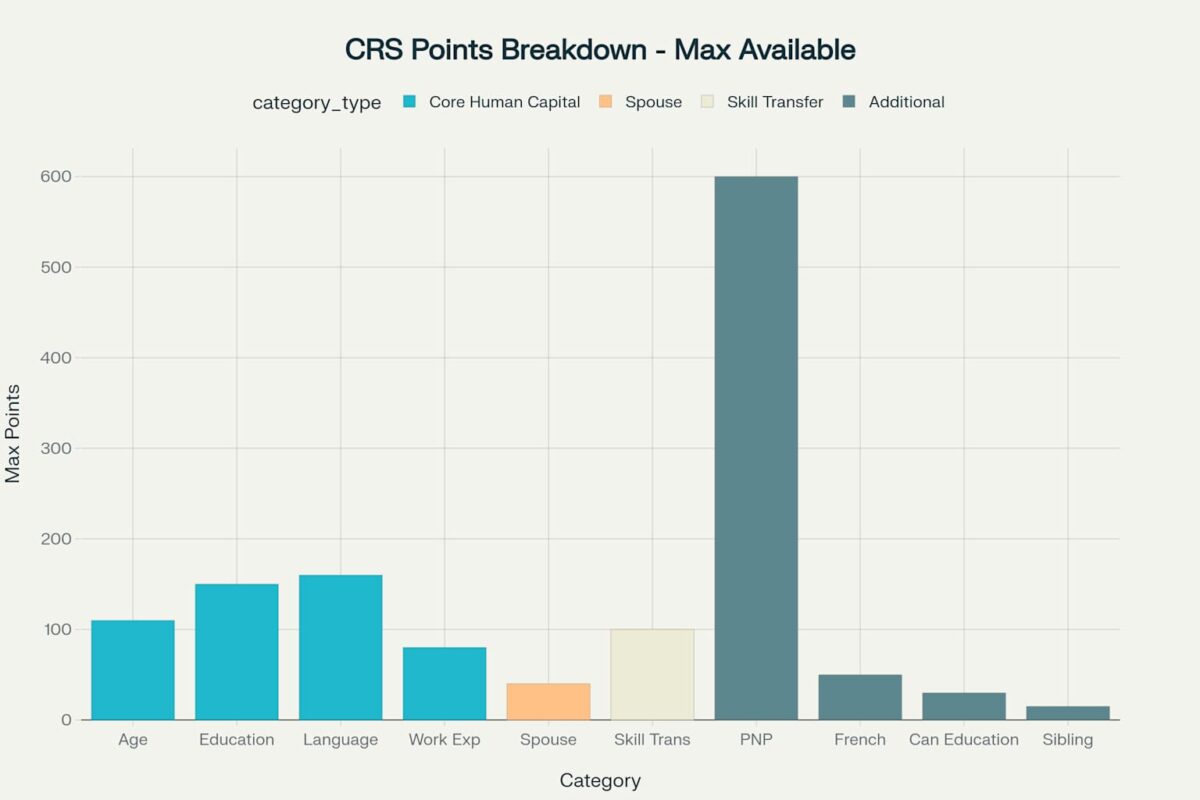

Maximum CRS points breakdown showing all scoring categories in Express Entry system
The maximum points available are distributed as follows: Age contributes up to 110 points for single applicants, Education up to 150 points, Language proficiency up to 160 points, and Canadian work experience up to 80 points.
Additional factors can provide up to 600 points for provincial nominations, 50 points for French language skills, and smaller bonuses for Canadian education and siblings.
Recent Express Entry Trends in 2025
Current draw patterns show a significant shift toward category-based selections, with Provincial Nominee Program (PNP) draws requiring scores above 700 points and general draws becoming increasingly rare.
The Canadian Experience Class (CEC) draws have seen scores ranging from 529 to 547 points, while specialized draws for healthcare and education occupations have required between 479 to 510 points.
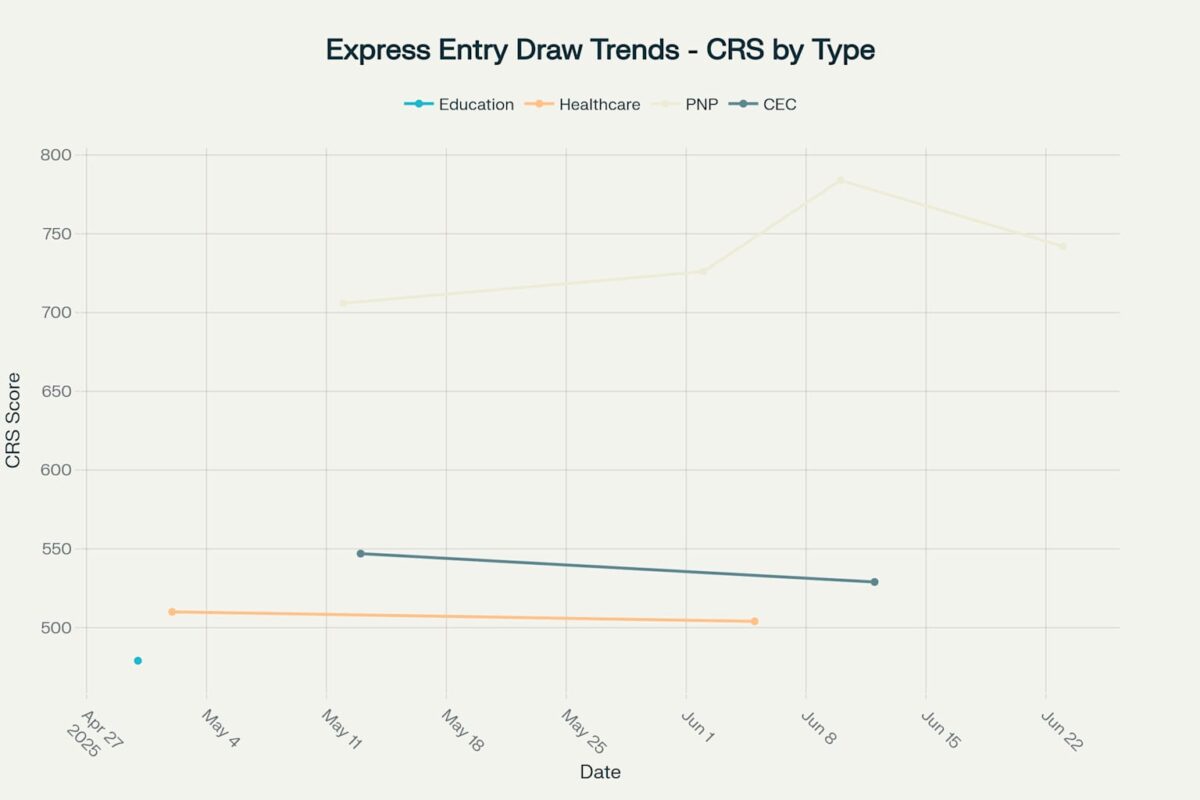
Recent express entry draw trends showing CRS score requirements by draw type
The 15 Proven Strategies to Increase Your CRS Score
1. Secure a Provincial Nomination (600 Points)
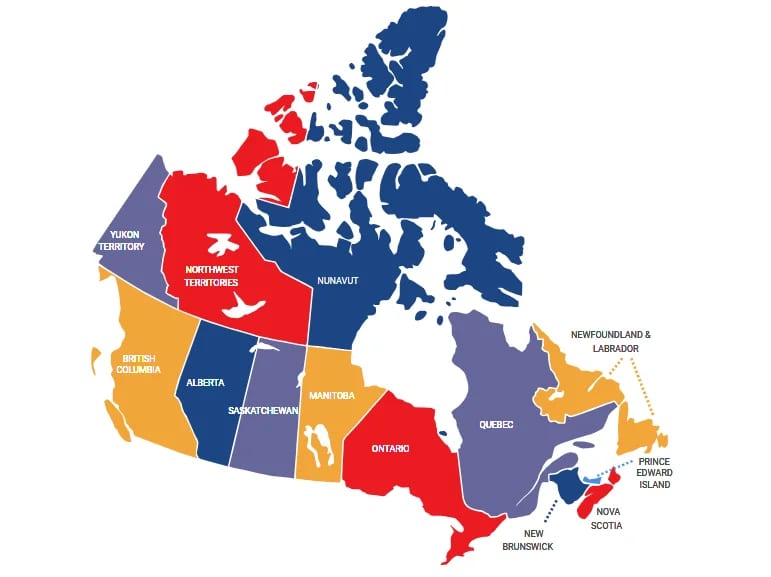
Provincial Nominee Programs remain the most powerful strategy for boosting your CRS score, adding 600 points and virtually guaranteeing an invitation. Each province operates unique streams targeting specific occupations, with some requiring as low as 300-400 CRS points for eligibility.
Action Steps:
- Research provinces that align with your occupation and experience
- Submit expressions of interest through provincial portals
- Ensure you meet minimum language and education requirements
- Demonstrate genuine intention to live in the nominating province
2. Optimize Your Age Factor (110 Points)
Age significantly impacts your CRS score, with candidates aged 20-29 receiving maximum points. If you’re approaching 30 or beyond, timing your application strategically becomes crucial.
Strategic Considerations:
- Apply before your 30th birthday to maximize age points
- Consider that points decrease by 5-10 annually after age 29
- Factor age decline into your overall strategy timeline
3. Maximize Language Proficiency (Up to 160 Points)
Language skills represent the largest component of core human capital factors, with opportunities to earn points in both first and second official languages. Achieving CLB 9 or higher in all four abilities (reading, writing, speaking, listening) can add 60+ points compared to minimum requirements.
Optimization Tactics:
- Retake language tests until achieving CLB 9+ in all abilities
- Take both English and French tests for maximum points
- Focus on weaker skills through targeted preparation
- Use official test preparation materials and courses
4. Leverage French Language Skills (50 Points)
Bilingual candidates can earn significant bonus points, with 50 additional points available for achieving NCLC 7+ in French while maintaining CLB 5+ in English. The recent emphasis on Francophone immigration makes this strategy particularly valuable.
Implementation Path:
- Enroll in French language courses or programs
- Take TEF Canada or TCF Canada tests
- Aim for NCLC 7 minimum across all four abilities
- Maintain strong English scores (CLB 5+) for maximum bonus
5. Gain Canadian Work Experience (80 Points)
Canadian work experience provides substantial points and demonstrates integration potential. Even one year of skilled work in Canada can add 35-40 points, with maximum benefits at five years.
Pathways to Consider:
- Work permits through Post-Graduation Work Permits
- Temporary Foreign Worker Programs
- Intra-company transfers
- Working holiday programs for eligible countries
6. Maximize Skill Transferability Factors (100 Points)
The CRS awards additional points for combinations of factors, such as strong language skills with post-secondary education or Canadian work experience with foreign experience. Understanding these interactions can unlock significant point bonuses.
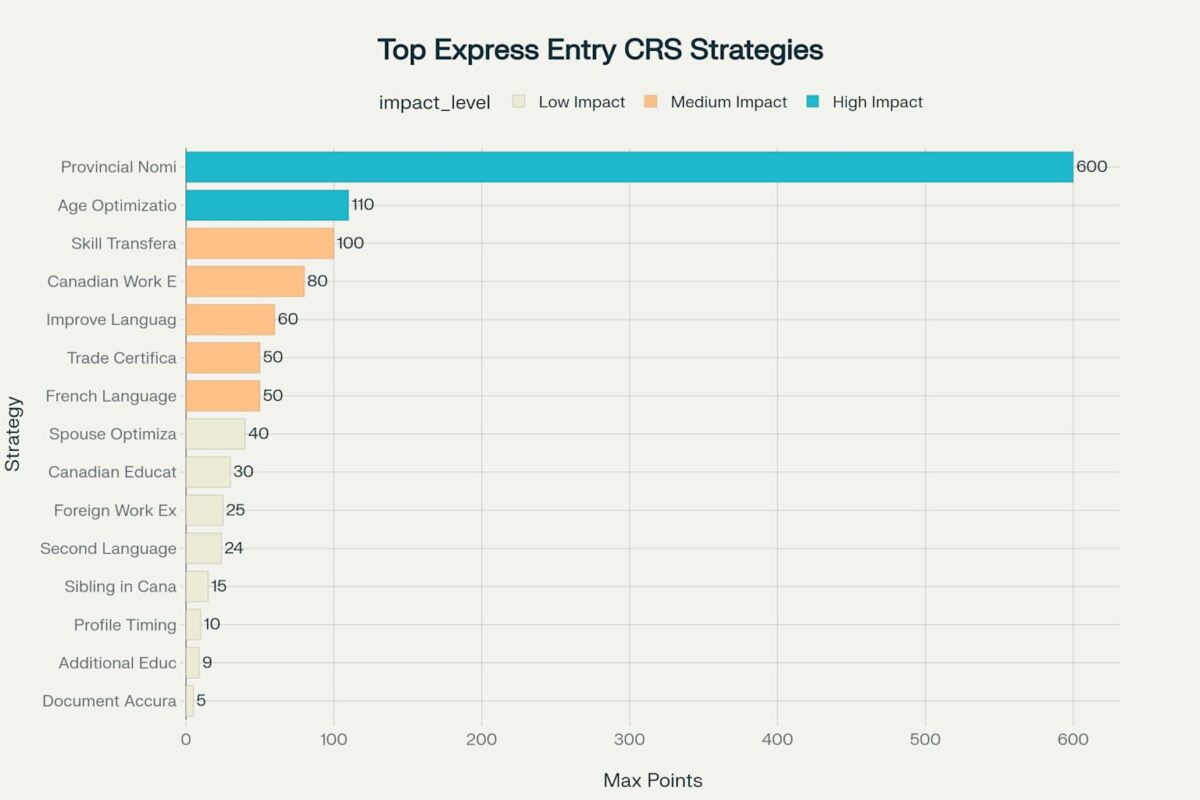
Top 15 strategies to increase Express Entry CRS score ranked by point potential
Key Combinations:
- CLB 9+ language scores with post-secondary education: 50 points
- Two years of Canadian work experience with post-secondary education: 50 points
- Strong language skills with foreign work experience: 50 points
7. Pursue Higher Education Credentials (150 Points)
Educational qualifications significantly impact CRS scores, with doctoral degrees earning maximum points. Additional credentials can also provide bonus points through skill transferability factors.
Educational Enhancement Options:
- Complete a master’s or doctoral degree
- Pursue additional credentials in different fields
- Consider Canadian education for bonus points (15-30 points)
- Ensure all foreign credentials are assessed through ECA
8. Obtain Educational Credential Assessment (ECA)
Foreign education credentials must be assessed by designated organizations to claim CRS points. The ECA process can take 2-4 months and is essential for maximizing education points.

ECA Requirements:
- Use designated organizations like WES, ICAS, or CES
- Submit original transcripts and degree certificates
- Allow sufficient processing time (8-20 weeks)
- Ensure assessment remains valid (5 years) throughout process
9. Optimize Spouse Credentials (40 Points)
If you have a spouse or common-law partner, their qualifications can contribute up to 40 points to your CRS score. In some cases, having them as the principal applicant might result in a higher overall score.
Spouse Optimization Strategies:
- Have both partners take language tests
- Assess spouse’s education credentials
- Consider who should be the principal applicant
- Factor in spouse’s Canadian work experience potential
10. Leverage Sibling Connections (15 Points)
Having a sibling who is a Canadian citizen or permanent resident aged 18+ can add 15 points to your CRS score. This applies to siblings by blood, marriage, adoption, or common-law partnership.
Sibling Points Requirements:
- Sibling must be 18 years or older
- Must be Canadian citizen or permanent resident
- Must be living in Canada
- Relationship must be verifiable through documentation
11. Perfect Your Profile Accuracy
Many candidates lose points or face application refusal due to profile inaccuracie. Ensuring every detail is correct and supportable with documentation is crucial.
Profile Optimization Tips:
- Use exact information from official documents
- Select correct NOC codes based on job duties, not titles
- Claim all eligible points including second languages and credentials
- Update profile immediately when circumstances change
12. Time Your Application Strategically
Express Entry draw patterns show seasonal variations, with lower CRS scores typically occurring toward year-end as IRCC works to meet annual targets. Understanding these patterns can improve your chances of receiving an ITA.
Timing Considerations:
- Submit profiles between September-December for optimal positioning
- Monitor draw frequency and score trends
- Factor in document preparation time (60 days after ITA)
- Consider profile expiry and renewal timing
13. Monitor Category-Based Draws
The 2025 focus on category-based selections creates opportunities for candidates in specific occupations. Healthcare, trades, education, and French-speaking candidates have seen dedicated draws with lower score requirements.
Category Strategy:
- Identify if your occupation qualifies for category-based draws
- Research specific draw frequencies and score requirements
- Position yourself for multiple draw types
- Stay updated on new category announcements
14. Consider Trade Certification
For skilled trades workers, obtaining Canadian trade certification can provide significant advantages through skill transferability points and category-based draw eligibility. Trade certification combined with strong language skills can earn up to 50 additional points.
15. Plan for Canadian Education
Completing post-secondary education in Canada provides both direct bonus points (15-30 points) and pathway advantages including work permits and Canadian experience opportunities. This long-term strategy can dramatically improve your competitiveness.

Step-by-Step Action Plan
If you’re planning to immigrate to Canada through the Express Entry system or a Provincial Nominee Program (PNP), having a clear, phased roadmap is essential.
The following action plan outlines each step you should take, grouped by phases, with timelines, impact levels, and priorities. This structure will help you stay organized, prioritize high-impact tasks, and make steady progress toward your Canadian immigration goals.
| Phase | Step | Action | Timeline | Points_Impact | Priority |
|---|---|---|---|---|---|
| Phase 1: Foundation | 1 | Take Language Test (IELTS/CELPIP) | 1-2 months | High | 1 |
| Phase 1: Foundation | 2 | Get Educational Credential Assessment | 2-4 months | High | 1 |
| Phase 1: Foundation | 3 | Calculate Current CRS Score | 1 week | None | 1 |
| Phase 1: Foundation | 4 | Research Eligibility Requirements | 2 weeks | None | 1 |
| Phase 2: Optimization | 5 | Improve Language Scores to CLB 9+ | 3-6 months | High | 2 |
| Phase 2: Optimization | 6 | Research Provincial Nominee Programs | 1-2 months | Very High | 2 |
| Phase 2: Optimization | 7 | Optimize Spouse Credentials | 3-6 months | Medium | 2 |
| Phase 2: Optimization | 8 | Consider French Language Training | 6-12 months | Medium | 3 |
| Phase 3: Application | 9 | Create Express Entry Profile | 1 week | None | 2 |
| Phase 3: Application | 10 | Apply to Provincial Programs | 3-6 months | Very High | 2 |
| Phase 3: Application | 11 | Gather Supporting Documents | 2-3 months | None | 2 |
| Phase 3: Application | 12 | Monitor Draw Trends | Ongoing | Low | 3 |
| Phase 4: Enhancement | 13 | Gain Canadian Work Experience | 1-2 years | High | 3 |
| Phase 4: Enhancement | 14 | Pursue Additional Education | 1-4 years | Medium | 4 |
| Phase 4: Enhancement | 15 | Maintain Profile Updates | Ongoing | Low | 2 |
Common Mistakes to Avoid
Understanding frequent Express Entry mistakes can prevent delays and maximize your chances of success. The most critical errors include using estimated language scores, selecting incorrect NOC codes, and missing educational assessments.
| Mistake | Impact | Frequency | Solution_Priority |
|---|---|---|---|
| Using Estimated Language Scores | High | Very Common | Immediate |
| Incorrect NOC Code Selection | High | Very Common | Immediate |
| Missing Educational Assessment | High | Common | Immediate |
| Not Claiming All Eligible Points | Medium | Common | High |
| Outdated Proof of Funds | Medium | Common | High |
| Delaying Application Submission | Medium | Common | High |
| Inaccurate Work Experience Claims | High | Very Common | Immediate |
| Missing Profile Updates | Low | Common | Medium |
| Poor Document Translation | Medium | Common | High |
| Not Monitoring Draw Trends | Low | Common | Low |
Critical Mistakes by Impact Level:
- High Impact: Using estimated language scores, incorrect NOC selection, inaccurate work experience claims
- Medium Impact: Missing educational assessments, outdated proof of funds, poor document translation
- Low Impact: Missing profile updates, not monitoring draw trends
Express Entry Success Checklist
Use this comprehensive checklist to track your progress and ensure you’re maximizing every opportunity to increase your CRS score.
| Strategy | Priority | Timeline | Points_Potential |
|---|---|---|---|
| Take Official Language Test (IELTS/CELPIP) | High | 1-2 months | 136 |
| Get Educational Credential Assessment (ECA) | High | 2-4 months | 150 |
| Research Provincial Nominee Programs | High | 1-2 months | 600 |
| Improve Language Score to CLB 9+ | High | 3-6 months | 60 |
| Consider French Language Training | Medium | 6-12 months | 50 |
| Gain Canadian Work Experience | Medium | 1-2 years | 80 |
| Optimize Spouse Credentials | Medium | 3-6 months | 40 |
| Pursue Additional Education | Medium | 1-3 years | 20 |
| Create Express Entry Profile | High | 1 week | 0 |
| Update Profile Regularly | Medium | Ongoing | 10 |
| Prepare Supporting Documents | High | 2-3 months | 0 |
| Monitor Draw Trends | Low | Ongoing | 5 |
| Apply to PNP Programs | High | 3-6 months | 600 |
| Consider Canadian Education | Medium | 1-4 years | 30 |
| Verify Sibling Status | Low | 1 week | 15 |
Priority Actions (Complete First):
- ✅ Take official language test (IELTS/CELPIP)
- ✅ Get Educational Credential Assessment (ECA)
- ✅ Research Provincial Nominee Programs
- ✅ Create Express Entry Profile
- ✅ Prepare supporting documents
Optimization Actions (High Impact):
- ✅ Improve language scores to CLB 9+
- ✅ Apply to PNP programs
- ✅ Consider French language training
- ✅ Optimize spouse credentials
Enhancement Actions (Long-term):
- ✅ Gain Canadian work experience
- ✅ Consider Canadian education
- ✅ Pursue additional education
- ✅ Verify sibling status
Current Express Entry Landscape
Recent draw data reveals the intensely competitive nature of Express Entry in 2025.
| Draw Number | Date | CRS Score | ITAs Issued | Draw Type |
|---|---|---|---|---|
| 344 | 2025-04-30 | 479 | 800 | Education |
| 345 | 2025-05-02 | 510 | 500 | Healthcare |
| 346 | 2025-05-12 | 706 | 511 | PNP |
| 347 | 2025-05-13 | 547 | 500 | CEC |
| 348 | 2025-06-02 | 726 | 277 | PNP |
| 349 | 2025-06-05 | 504 | 500 | Healthcare |
| 350 | 2025-06-10 | 784 | 125 | PNP |
| 351 | 2025-06-12 | 529 | 3000 | CEC |
| 352 | 2025-06-23 | 742 | 503 | PNP |
Provincial Nominee Program draws consistently require scores above 700 points, while Canadian Experience Class draws range from 529-547 points.
Key Insights from Recent Draws:
- PNP remains the most reliable pathway with guaranteed high scores
- Category-based draws offer opportunities for specific occupations
- General draws have become extremely rare and competitive
- French-speaking candidates receive priority through dedicated streams
Conclusion
Successfully increasing your Express Entry points requires a strategic, multi-faceted approach that combines immediate optimizations with long-term planning. The elimination of job offer points in 2025 has shifted focus entirely to core human capital factors, making language skills, education, and provincial nominations more critical than ever.
While the competition has intensified significantly, candidates who implement these 15 proven strategies systematically can still achieve their Canadian immigration goals. The key is starting early, being thorough in your preparation, and staying informed about the evolving landscape of Express Entry draws and requirements.
Remember that Express Entry is a dynamic system, and maintaining flexibility in your approach while focusing on high-impact strategies will give you the best chance of success in Canada’s competitive immigration environment. Start with the foundation phase, optimize strategically, and remain persistent in pursuing your Canadian dream.
Related reading: Express Entry June — a closer look at this topic.