Express Entry Language Requirements: IELTS vs CELPIP vs TEF

If you’re planning to immigrate to Canada through the Express Entry system, proving your language proficiency is one of the most critical steps in your journey. Language test scores directly impact your Comprehensive Ranking System (CRS) score and determine your eligibility for Canada’s three main economic immigration programs.
This comprehensive guide will help you understand the differences between IELTS, CELPIP, and TEF Canada, choose the right test for your situation, and maximize your scores for Express Entry success.
Understanding Express Entry Language Requirements
Express Entry is Canada’s primary pathway for skilled immigration, managing applications for three federal economic programs. Language proficiency serves as both a minimum eligibility requirement and a crucial factor in your CRS score calculation.
The Immigration, Refugees and Citizenship Canada (IRCC) uses the Canadian Language Benchmarks (CLB) for English and Niveaux de compétence linguistique canadiens (NCLC) for French to assess your language abilities.
All language test results must be less than two years old when you complete your Express Entry profile and submit your permanent residence application. Your Express Entry profile remains valid for 12 months, so ensure your test results cover this entire period.
Express Entry Language Test Preparation Checklist
Pre-Test Planning Phase ✅
Program Assessment
- Determine which Express Entry program you are eligible for:
- Federal Skilled Worker Program (FSW)
- Canadian Experience Class (CEC)
- Federal Skilled Trades Program (FST)
- Check minimum CLB requirements for your specific program
- Identify your National Occupational Classification (NOC) code
- Calculate your current CRS score
Language Assessment
- Assess your current English/French proficiency level
- Take a free online practice test to gauge your abilities
- Identify your strongest and weakest language skills
- Set target scores based on CRS point goals
Test Selection
- Research and compare IELTS vs CELPIP vs TEF vs PTE Core
- Consider factors:
- Test availability in your location
- Your comfort with computer-based vs paper-based tests
- Accent preferences (international vs Canadian English)
- Cost considerations
- Result processing time
Study Phase ✅
Study Plan Creation
- Create a structured study schedule (recommended: 3-6 months)
- Allocate daily/weekly study hours
- Set milestone goals for each month
- Plan regular progress assessments
Study Materials
- Purchase official study materials for your chosen test
- Download official practice tests and sample questions
- Subscribe to online preparation platforms (if needed)
- Join study groups or online communities
- Consider hiring a tutor (if budget allows)
Skill Development
- Reading Skills:
- Practice academic and general reading passages
- Work on skimming and scanning techniques
- Build vocabulary systematically
- Practice time management
- Writing Skills:
- Practice different writing task types
- Work on grammar and sentence structure
- Learn essay organization techniques
- Practice within time limits
- Listening Skills:
- Listen to various English/French accents
- Practice note-taking while listening
- Work on identifying main ideas and details
- Use official practice audio materials
- Speaking Skills:
- Practice speaking on various topics
- Record yourself and analyze fluency
- Work on pronunciation and intonation
- Practice test-specific speaking tasks
Progress Tracking
- Take weekly practice tests
- Keep a study log and track improvements
- Identify and focus on weak areas
- Adjust study plan based on progress
Test Booking Phase ✅
Timeline Planning
- Choose test date 2-3 months before your application deadline
- Consider peak seasons and test availability
- Allow time for potential retakes if needed
- Ensure results will be valid throughout your application process
Registration Process
- Find authorized test centers near you
- Check test dates and availability
- Complete online registration
- Make payment (keep receipt)
- Receive test confirmation
Documentation
- Prepare required identification documents:
- Valid passport OR
- Canadian Permanent Resident Card
- Ensure ID will not expire before test date
- Take clear photocopies for backup
Final Preparation Phase ✅
Last Month Before Test
- Complete final comprehensive practice tests
- Review test day procedures and rules
- Prepare all required materials and documents
- Confirm test center location and transportation
- Practice relaxation and stress management techniques
Week Before Test
- Light review of key strategies
- Organize test day materials
- Get adequate sleep and rest
- Avoid intensive studying
- Confirm test appointment details
Day Before Test
- Prepare test day bag with:
- Required identification
- Test confirmation
- Water and light snacks (if allowed)
- Extra pens/pencils (for paper-based tests)
- Get a good night’s sleep (7-8 hours)
- Avoid alcohol and excessive caffeine
Test Day ✅
Preparation
- Wake up early and have a nutritious breakfast
- Arrive at test center 30-60 minutes early
- Bring required identification and materials
- Leave prohibited items at home or in lockers
During the Test
- Follow all test instructions carefully
- Manage time effectively for each section
- Stay calm and focused
- Read all questions carefully
- Use test-taking strategies learned during preparation
- Don’t panic if you encounter difficult questions
Post-Test Phase ✅
Results Processing
- Wait for official results:
- IELTS Computer: 48 hours
- IELTS Paper: 13 days
- CELPIP: 4-5 days
- TEF Canada: 2-4 weeks
- PTE Core: 2-3 days
Score Evaluation
- Compare results with target requirements
- Calculate new CRS score with actual test results
- Check if scores meet minimum program requirements
- Verify results will remain valid throughout application process
Next Steps Decision
- If satisfied with scores:
- Proceed with Express Entry profile creation
- Gather other required documents
- Submit application when ready
- If not satisfied with scores:
- Analyze which skills need improvement
- Plan for retake (consider waiting periods)
- Decide if different test might be better
- Create new study plan for improvement
Important Reminders 📝
Key Dates to Remember
- Test results validity: 2 years from test date
- Express Entry profile validity: 12 months
- Application processing time: 6 months (approximately)
Contact Information
- Save test center contact information
- Keep customer service numbers handy
- Know how to access results online
- Understand remark/appeal processes
Tips for Success
- Start preparation early (3-6 months recommended)
- Take multiple practice tests under timed conditions
- Focus on your weakest skills
- Stay consistent with daily practice
- Don’t underestimate any section
- Get familiar with test format and timing
- Practice stress management techniques
Good Luck with Your Language Test! 🍀
Remember: Proper preparation and consistent practice are the keys to achieving your target scores. Stay motivated and keep your Canadian immigration goals in mind!
This checklist is designed to guide you through the complete language test preparation process for Canadian Express Entry. Customize it based on your specific needs and timeline.
Accepted Language Tests for Express Entry 2025
The IRCC accepts several language tests for Express Entry applications. For English proficiency, you can choose from IELTS (International English Language Testing System), CELPIP (Canadian English Language Proficiency Index Program), or PTE Core (Pearson Test of English). For French proficiency, the accepted tests are TEF Canada (Test d’évaluation de français) and TCF Canada (Test de connaissance du français).
IELTS remains the most globally recognized test, accepted in over 140 countries and offering both paper-based and computer-based formats. CELPIP is designed specifically for Canadian immigration purposes and features exclusively Canadian English accents and scenarios. TEF Canada provides opportunities for additional CRS points through bilingual proficiency and opens doors to Quebec-specific immigration programs.
IELTS vs CELPIP vs TEF: Detailed Comparison
| Feature | IELTS | CELPIP | TEF Canada |
|---|---|---|---|
| Test Purpose | Global English proficiency (Academic/General Training) | Canadian immigration and citizenship | French proficiency for Canadian immigration |
| Test Format | Paper-based or Computer-based | Computer-based only | Paper-based and Computer-based |
| Test Duration | 2 hours 45 minutes | 3 hours (General), 1h 10m (General LS) | 2 hours 55 minutes (all 4 skills) |
| Test Delivery | Test centers worldwide | Authorized test centers | Authorized test centers |
| English Style/Accents | International accents (British, Australian, American) | Canadian English only | French (International standard) |
| Speaking Test | Face-to-face with examiner | Computer-recorded responses | Face-to-face with examiner |
| Scoring Scale | 1-9 bands (0.5 increments) | 1-12 levels | 0-699 points (converted to NCLC) |
| Cost (CAD) | ~$335 | ~$280 + tax | ~$400-500 |
| Results Available | 3-13 days | 4-5 days | 2-4 weeks |
| Validity Period | 2 years | 2 years | 2 years |
| Retake Policy | No waiting period | No waiting period | 2-month waiting period between tests |
| Global Acceptance | Accepted in 140+ countries | Primarily Canada | International (French-speaking countries) |
| Test Versions | Academic & General Training | General & General LS | TEF Canada (4 skills) & TEF Canada (2 skills for citizenship) |
IELTS (International English Language Testing System)
IELTS offers two versions: Academic for university applications and General Training for immigration purposes. The test evaluates four language skills through paper-based or computer-based formats, taking approximately 2 hours and 45 minutes to complete. Speaking tests involve face-to-face interviews with certified examiners, which some candidates find more natural than computer-based alternatives.
The test features international English accents including British, Australian, and American variations. Results are typically available within 3-5 days for computer-based tests and 13 days for paper-based versions. IELTS costs approximately $335 CAD in Canada and offers the flexibility of choosing your preferred test format.
CELPIP (Canadian English Language Proficiency Index Program)
CELPIP focuses exclusively on Canadian immigration and citizenship applications. The computer-based test takes about 3 hours for the General version or 1 hour and 10 minutes for the General LS (Listening and Speaking only) version. All test content reflects Canadian workplace and daily life scenarios using consistent Canadian English accents.
Speaking responses are recorded on computer rather than conducted face-to-face with an examiner. Results are available within 4-5 days, making it one of the faster options for obtaining scores. The test costs approximately $280 CAD plus tax, making it more affordable than IELTS.
TEF Canada (Test d’évaluation de français)
TEF Canada assesses French language proficiency for Canadian immigration purposes. The test evaluates four skills (reading, writing, listening, speaking) in 2 hours and 55 minutes, or just listening and speaking for citizenship applications. Speaking tests are conducted face-to-face with examiners, similar to IELTS.
Results take 2-4 weeks to process, significantly longer than English language tests. TEF Canada costs between $400-500 CAD and requires a two-month waiting period between retakes. However, strong French proficiency can provide substantial CRS point bonuses for bilingual candidates.
Express Entry Program Requirements
Language proficiency is a key requirement for various Canadian immigration programs. Each program has a minimum Canadian Language Benchmark (CLB) level applicants must meet, with corresponding scores in widely accepted language tests such as IELTS and CELPIP. The table below outlines these requirements and their impact on eligibility.
| Program | Minimum CLB Level | IELTS Equivalent | CELPIP Equivalent | Points Impact |
|---|---|---|---|---|
| Federal Skilled Worker (FSW) | CLB 7 | 6.0 all skills | 7 all skills | Minimum to qualify |
| Canadian Experience Class (CEC) – NOC 0/1 | CLB 7 | 6.0 all skills | 7 all skills | Minimum to qualify |
| Canadian Experience Class (CEC) – NOC 2/3 | CLB 5 | 5.0-5.5 (varies by skill) | 5 all skills | Minimum to qualify |
| Federal Skilled Trades (FST) – Speaking/Listening | CLB 5 | 5.0-6.0 (Speaking/Listening) | 5 Speaking/Listening | Minimum to qualify |
| Federal Skilled Trades (FST) – Reading/Writing | CLB 4 | 3.5-4.0 (Reading/Writing) | 4 Reading/Writing | Minimum to qualify |
Federal Skilled Worker Program (FSW)
The FSW requires CLB 7 (equivalent to IELTS 6.0 in all skills or CELPIP 7) as the minimum language proficiency for your first official language. You can earn additional points by demonstrating proficiency in a second official language at CLB/NCLC 5 or higher. Higher language scores significantly improve your CRS ranking and chances of receiving an Invitation to Apply.
Canadian Experience Class (CEC)
CEC language requirements depend on your job classification under the National Occupational Classification (NOC) system. Jobs classified as NOC TEER 0 or 1 (management and professional roles) require CLB 7, while NOC TEER 2 or 3 positions require CLB 5. This flexibility makes CEC accessible to candidates with varying language proficiency levels.
Federal Skilled Trades Program (FST)
FST has the most lenient language requirements among Express Entry programs 126. Speaking and listening skills require CLB 5, while reading and writing only need CLB 4 126. These lower thresholds reflect the practical language needs in skilled trades occupations 4.
Understanding CLB Levels and CRS Points


Canadian Language Benchmarks provide standardized measures for assessing language proficiency across all accepted tests. Each test uses different scoring systems that convert to equivalent CLB levels. CELPIP scores directly correspond to CLB levels (a score of 7 equals CLB 7), while IELTS uses band scores that vary by skill for each CLB level.

CRS Points awarded for different language proficiency levels in Express Entry
Language proficiency significantly impacts your CRS score, with higher levels providing exponentially more points. CLB 7 awards 68 points for first official language proficiency, while CLB 9 provides 124 points – a difference of 56 points that can determine your invitation success. CLB 10 and above maximizes language points at 136, making advanced proficiency a valuable investment.
CRS Points Breakdown
| CLB Level | Points Per Skill | Max Points First Language | Max Points Second Language | IELTS Example | CELPIP Example |
|---|---|---|---|---|---|
| CLB 4 or lower | 0 | 0 | 0 | Below 4.0 | Below 4 |
| CLB 5 | 1-6 | 24 | 4 | 4.0-5.0 | 5 |
| CLB 6 | 9 | 34 | 4 | 5.0-5.5 | 6 |
| CLB 7 | 17 | 68 | 6 | 6.0 | 7 |
| CLB 8 | 23 | 92 | 6 | 6.5-7.5 | 8 |
| CLB 9 | 31 | 124 | 6 | 7.0-8.0 | 9 |
| CLB 10+ | 34 | 136 | 6 | 7.5-9.0+ | 10+ |
How to Choose the Right Language Test
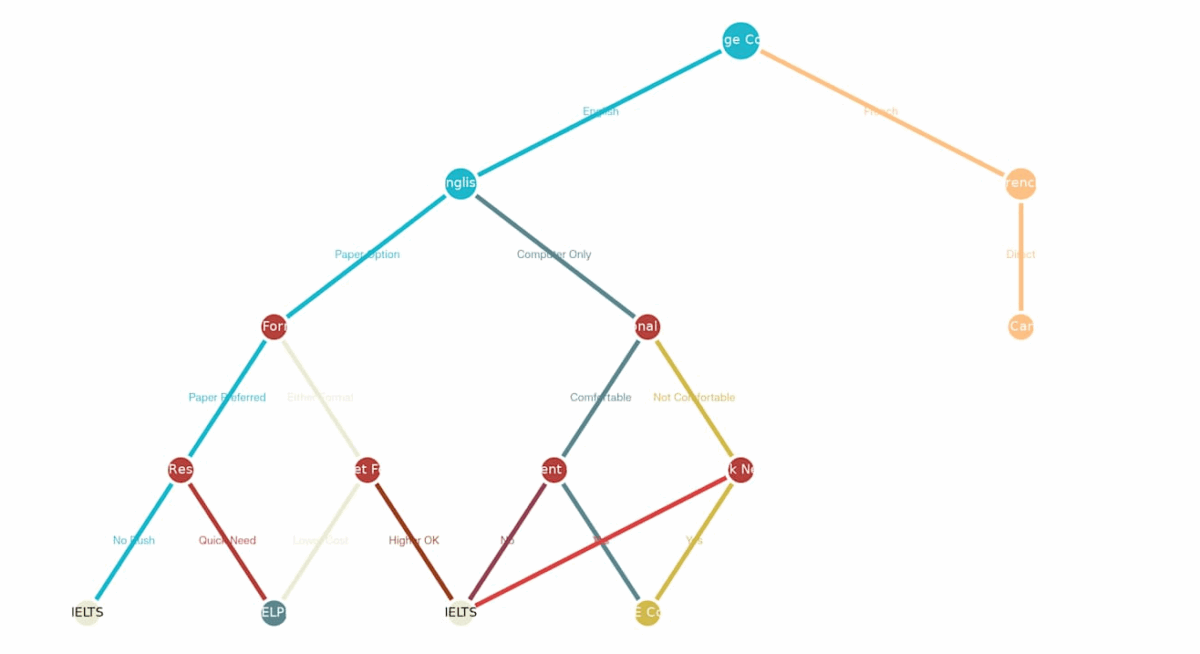
Selecting the appropriate language test depends on several personal and practical factors. Consider your language background, test format preferences, location, timeline, and budget when making this decision . If you’re more comfortable with Canadian English and planning to settle in Canada, CELPIP offers targeted preparation for your future environment.
Tests Pros Cons
| Test | Type | Point |
|---|---|---|
| IELTS | Pro | Globally recognized and accepted |
| IELTS | Pro | More test dates and locations available |
| IELTS | Pro | Can choose paper or computer format |
| IELTS | Con | Multiple accents can be confusing |
| IELTS | Con | Face-to-face speaking can be intimidating |
| IELTS | Con | Higher cost than CELPIP |
| CELPIP | Pro | Designed specifically for Canadian immigration |
| CELPIP | Pro | Computer-based with consistent Canadian accent |
| CELPIP | Pro | Faster results (4-5 days) |
| CELPIP | Con | Limited to Canadian context only |
| CELPIP | Con | Computer-only format may not suit everyone |
| CELPIP | Con | Less global recognition |
| TEF Canada | Pro | Additional CRS points for bilingual candidates |
| TEF Canada | Pro | High demand for French speakers in Canada |
| TEF Canada | Pro | Can open doors to Quebec programs |
| TEF Canada | Con | Limited test centers globally |
| TEF Canada | Con | Longer wait time for results |
| TEF Canada | Con | 2-month waiting period between retakes |
IELTS provides global recognition and flexible test formats, making it ideal if you’re considering multiple countries or prefer paper-based testing.
The variety of accents in IELTS can be challenging but also provides broader exposure to international English. TEF Canada becomes essential if you want to maximize CRS points through bilingual proficiency or access Quebec-specific programs.
Test Preparation Strategy and Timeline
| Timeline | Preparation_Activities | Key_Focus |
|---|---|---|
| 3-6 months before | Choose test type, assess current level, start structured study plan | Foundation building |
| 2-3 months before | Intensive practice, take mock tests, identify weak areas | Skill development |
| 1 month before | Focus on weak areas, daily practice, book test date | Test-specific strategies |
| 2 weeks before | Final review, practice test timing, prepare documents | Fine-tuning |
| 1 week before | Light review, rest well, organize test day materials | Mental preparation |
| Test day | Arrive early, stay calm, apply strategies learned | Execution |
Effective preparation requires 3-6 months of structured study, depending on your current proficiency level 2. Begin by assessing your current abilities through practice tests and identifying areas needing improvement . Create a study schedule that balances all four language skills while focusing extra attention on your weakest areas .
Official study materials from test providers offer the most accurate preparation resources. Supplement these with practice tests, online courses, and potentially tutoring for personalized guidance . Regular mock tests under timed conditions help build test-taking stamina and identify areas requiring additional work .
Pro Tips for Maximizing Your Score
Understanding test-specific strategies can significantly improve your performance. For IELTS, familiarize yourself with the variety of accents and practice academic vocabulary. CELPIP test-takers should focus on Canadian pronunciation and workplace scenarios. TEF Canada candidates need strong French grammar foundations and cultural knowledge.
Time management proves crucial across all tests . Practice completing sections within allocated timeframes and develop strategies for handling difficult questions . Don’t spend excessive time on challenging items – move forward and return if time permits .
Common Mistakes to Avoid
Many candidates underestimate preparation time requirements or focus only on their strongest skills. Each language skill contributes equally to your CLB level, so balanced preparation across reading, writing, listening, and speaking is essential. Avoid mixing test results from different exams – use scores from a single test sitting for consistency.
Don’t ignore test validity periods when planning your timeline. Ensure your results remain valid throughout your Express Entry profile period and permanent residence application processing. If results expire soon, retake the test and update your profile rather than risk application rejection.
Conclusion
Choosing and succeeding in the right language test represents a crucial step toward Canadian immigration through Express Entry. Whether you select IELTS for its global recognition, CELPIP for Canadian-specific preparation, or TEF Canada for bilingual advantages, thorough preparation and strategic planning will help you achieve your target scores.
Remember that language proficiency extends beyond immigration requirements – strong English or French skills will benefit your professional and personal success in Canada. Invest in comprehensive preparation, use official study materials, and allow adequate time for improvement . With dedication and the right approach, you can achieve the language scores needed to make your Canadian immigration dreams a reality.
Start your preparation today by assessing your current level, choosing your test, and creating a structured study plan that will set you up for Express Entry success . Your future in Canada begins with this important first step toward demonstrating your language proficiency.
Related reading: Express Entry Processing Times: What to Expect in — a closer look at this topic.