May 2025 IRCC Binder Outlines Federal Court Challenges
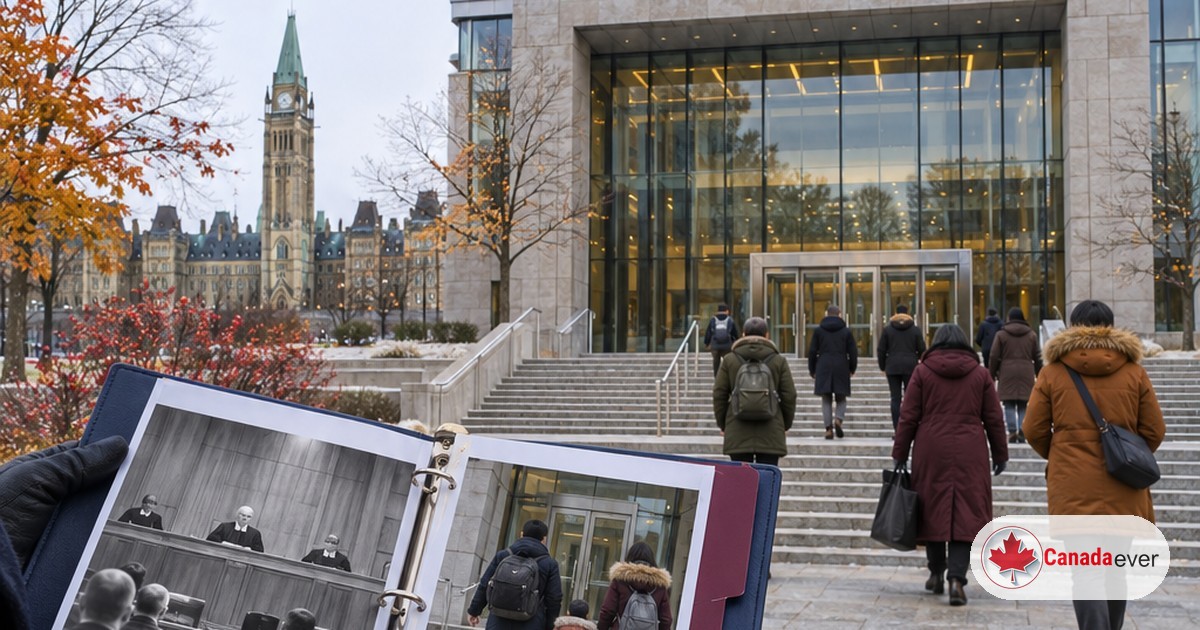
The May 2025 IRCC Minister Transition Binder describes general Federal Court challenges but does not establish whether it identifies four specific rulings. It describes an existing route to challenge decisions, measures or other matters under the Immigration and Refugee Protection Act: applicants can seek leave for judicial review in Federal Court. If you’re affected, you can also seek a judicial stay of removal while your challenge is pending, but the binder does not say a new court process began on a particular date.
Do 4 federal court rulings challenge IRCC?
Quick answer: No. The May 2025 IRCC binder does not identify 4 rulings; it describes an application for leave and judicial review in Federal Court to challenge a decision, measure or other matter under the Immigration and Refugee Protection Act. While the challenge is pending, an applicant can seek a judicial stay of removal.
- The challenge route applies to decisions, measures or other matters under the Immigration and Refugee Protection Act.
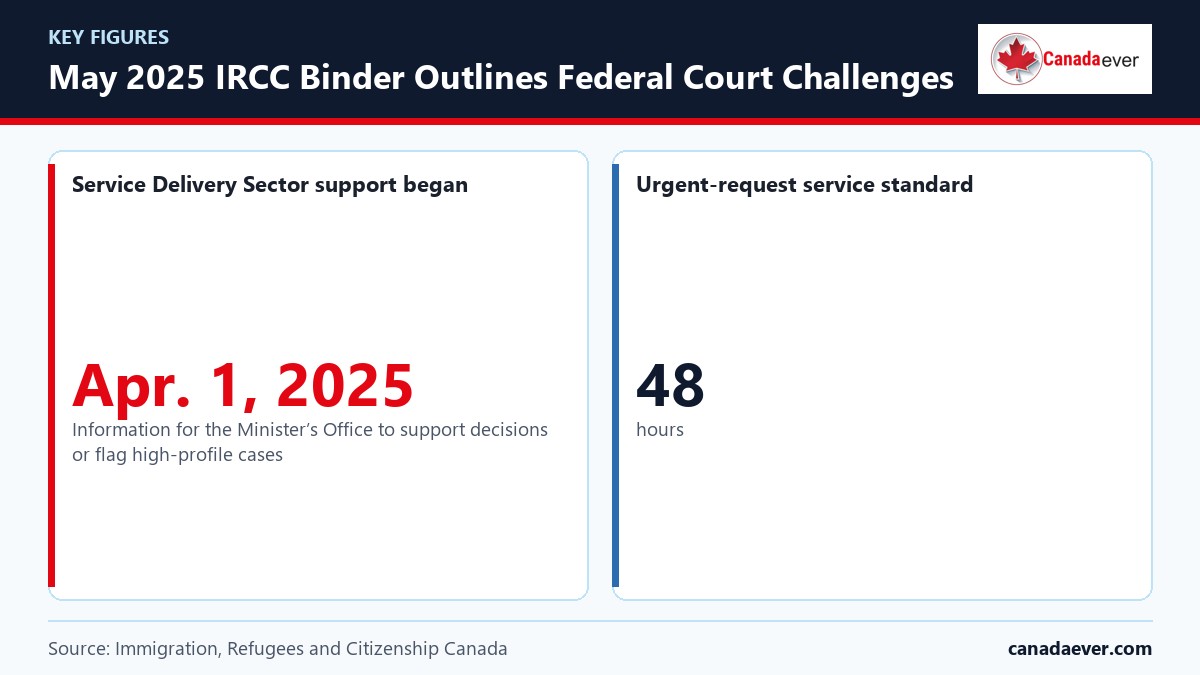
- The binder says that, as of April 1, 2025, the Service Delivery Sector provides information to support ministerial decisions or flag high-profile cases.
- The response standard for Minister’s Office requests flagged as urgent is 48 hours.
- To challenge a matter, apply for leave and judicial review in Federal Court; seek a judicial stay of removal if needed while the challenge is pending.
What changed and when it starts
The binder does not document 4 federal court rulings challenging IRCC or give a start date for a new challenge route. It describes the existing legal process for challenging decisions, measures or other matters under the Immigration and Refugee Protection Act.
For an applicant, the route described is to apply for leave and judicial review in Federal Court. While that challenge is pending, the applicant can seek a judicial stay of removal. A stay is a separate request, not an automatic result of bringing a challenge.
Department of Justice counsel defend IRCC and Immigration and Refugee Board decisions in Federal Court.
The binder does not state that a new rule has begun or give a start date for a new court process.
Who is affected and who is not
The phrase “4 federal court rulings challenge IRCC” does not describe who administers immigration law: the IRCC Minister generally administers the Immigration and Refugee Protection Act (IRPA) for refugees and the selection of temporary and permanent residents.
Responsibility is divided by subject. The Minister of Public Safety handles enforcement matters, including port-of-entry examinations, detention and removals, while the Minister of Employment and Social Development Canada is responsible for certain temporary foreign worker provisions.
The Immigration and Refugee Board is an independent tribunal that decides refugee claims referred by IRCC or the Canada Border Services Agency. Department of Justice counsel defend decisions by IRCC and the Board in Federal Court.
Decision types include:
- Temporary and permanent residence applications.
- Refugee claims and pre-removal risk assessments.
- Travel documents, citizenship grants and citizenship revocations.
Authorities for immigration, citizenship and passport decisions are established in federal acts, regulations and orders-in-council. These include IRPA, the Citizenship Act, the Department of Citizenship and Immigration Act, the Canadian Passport Order and the Diplomatic and Special Passports Order.
The binder says that any decision, measure or other matter under IRPA can be challenged in Federal Court through an application for leave and judicial review.
The binder distinguishes regular cases from complex cases. Regular cases can be decided by processing offices without input from supporting policy, legal, program or migration-integrity branches. Complex cases involve a high-risk element, such as possible serious inadmissibility, fraud or misrepresentation beyond what processing offices can handle, or high reputational or legal risk to the Department.
Key figures and dates
Its listed dates and response standard describe ministerial support, not a new start date for challenging immigration decisions.
| What | Figure or date | Applies to |
|---|---|---|
| Service Delivery Sector support began | April 1, 2025 | Information for the Minister’s Office to support decisions or flag high-profile cases |
| Urgent-request service standard | 48 hours | Responses to urgent Minister’s Office requests |
| Binder date | May 2025 | IRCC Minister Transition Binder |
What to do next
If you want to challenge an immigration decision or understand a pending removal, the binder describes these steps:
- Apply for leave and judicial review. An applicant can challenge a decision, measure or other matter under the Immigration and Refugee Protection Act in Federal Court through an application for leave and judicial review.
- Seek a judicial stay of removal if needed. An applicant can seek a stay while the legal challenge is pending.
The official source is the IRCC Minister Transition Binder 2025-05, dated May 2025.
Frequently Asked Questions
SEO title: 4 federal court rulings challenge IRCC? What the May 2025 binder says
What changed and when it starts
The binder does not state that the court challenge process changed or give a new start date. As of April 1, 2025, the Service Delivery Sector provides information to support ministerial decisions and has a 48-hour service standard for urgent requests.
Who is affected and who is not
The Immigration and Refugee Board is an independent administrative tribunal that decides refugee claims referred to it by IRCC or the Canada Border Services Agency.
Decision types covered by the binder include:
- Temporary and permanent residence applications.
- Refugee claims and pre-removal risk assessments.
- Travel documents, citizenship grants and citizenship revocations.
It does not limit that route to the decision types listed above.
The binder calls a case regular if a processing office can decide it without input from supporting policy, legal, program or migration-integrity branches.
What to do next
- Apply for leave and judicial review in Federal Court to challenge a decision, measure or other matter under IRPA.
- Seek a judicial stay of removal if needed while the legal challenge is pending.
What does the binder mean by “regular” versus “complex” immigration cases?
Regular cases are applications or groups of applications that processing offices can decide without input from supporting policy, legal, program or migration-integrity branches.
Which specific decision types can be challenged under IRPA via leave and judicial review?
Temporary and permanent residence applications, refugee claims, pre-removal risk assessments, travel documents, citizenship grants and citizenship revocations are among the decision types listed in the binder.
What service delivery support changes on April 1, 2025 affect applicants?
The IRCC Minister Transition Binder is dated May 2025. Rules and dates can change; confirm on Canada.ca.
Related on CanadaEver: