
Canada Slashes Immigration Targets by 25% in Major Policy Shift: Minister Diab Unveils Three-Year IRCC Plan
OTTAWA — Canada’s Immigration Minister Lena Metlege Diab has announced sweeping reductions to immigration levels, cutting permanent resident targets by nearly 25% over three years while introducing the first-ever caps on temporary residents in a comprehensive policy shift aimed at sustainable growth and infrastructure alignment.
The minister’s 2025-26 Departmental Plan, released in June 2025, marks a dramatic departure from previous immigration strategies, reducing permanent resident admissions from 485,000 in 2024 to just 365,000 by 2027. For the first time, IRCC has set arrival targets for temporary residents, aiming to reduce their share of Canada’s population to 5% by the end of 2026.
Key Immigration Targets
Permanent Residents:
- 2025: 395,000 (-18.6% from 2024)
- 2026: 380,000 (-3.8%)
- 2027: 365,000 (-3.9%)
Temporary Residents:
- 2025: 673,650 new arrivals
- 2026: 516,600 new arrivals
- 2027: 543,600 new arrivals
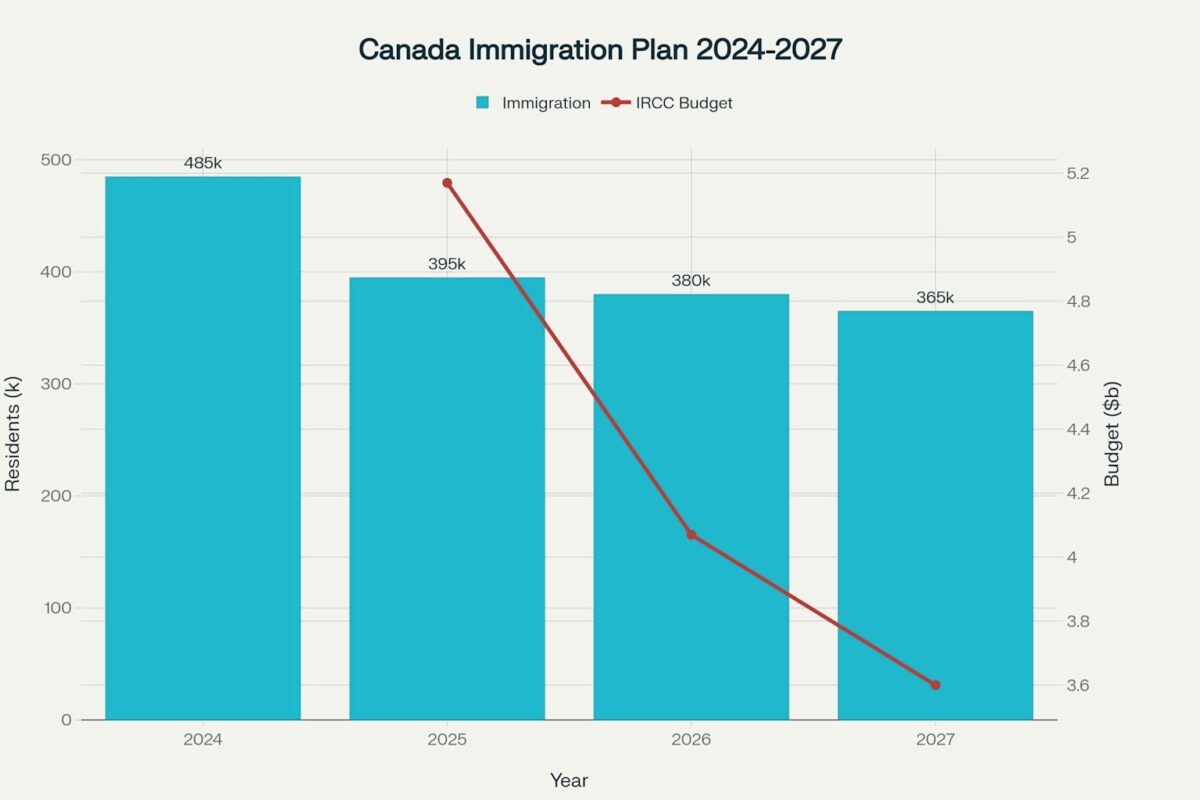

Canada’s new immigration plan shows declining permanent resident targets alongside reduced IRCC budget spending over the three-year period
Budget and Staffing Reductions
IRCC’s planned spending will decline significantly over the three-year period, reflecting the government’s commitment to fiscal restraint while managing reduced immigration levels:
- 2025-26: $5.17 billion
- 2026-27: $4.07 billion (-21.3%)
- 2027-28: $3.60 billion (-11.5%)
Staffing levels will also be reduced from 12,689 full-time equivalent positions in 2025-26 to 11,257 by 2027-28, representing an 11.3% decrease.
Economic Focus Maintained
Despite overall reductions, Canada will maintain its economic immigration priority, with 62% of permanent resident admissions dedicated to economic class immigrants by 2027. The breakdown for 2025 targets includes:
- Economic Class: 62% (245,900 people)
- Family Class: 23% (90,850 people)
- Refugees and Protected Persons: 14% (55,300 people)
- Other Categories: 1% (2,950 people)
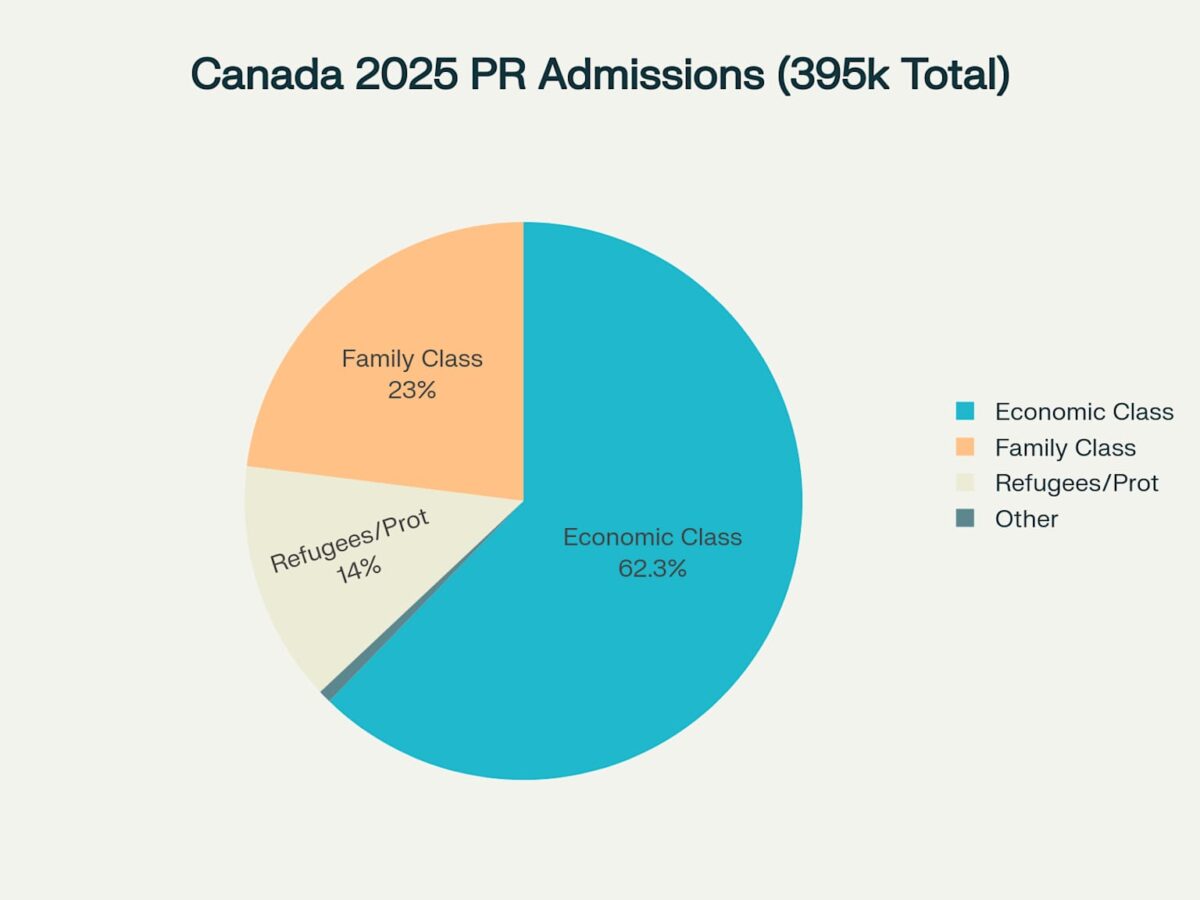
Canada’s 2025 immigration plan prioritizes economic immigrants at 62% of total admissions, with family reunification and refugee protection making up the remainder
Temporary Resident Management
A significant policy shift includes the introduction of specific arrival caps for temporary residents:
- International Students: 305,900 per year
- Temporary Foreign Workers: 367,750 in 2025, with sub-quotas for different programs
- Cost-of-living requirement for students indexed annually to $20,635 for 2024
Statistics Canada data shows the new policies are already having impact, with temporary resident numbers falling by 61,111 between January and April 2025.
Digital Modernization Initiative
The plan emphasizes digital transformation through the Digital Platform Modernization program, including:
- New unified client portal by 2026 offering real-time updates
- Advanced analytics and AI for application processing
- GeoMatch AI tool developed with Stanford University for Express Entry candidates
Post-Graduation Work Permit Changes
Following major PGWP program updates in 2024, new frameworks will govern eligible fields of study, aligning more closely with national and regional labour shortages. A Francophone Student Pilot program will launch in 2025 to support French-speaking students outside Quebec.
Policy Context and Rationale
Minister Diab, who took office in May 2025 following Prime Minister Mark Carney’s cabinet shuffle, brings extensive provincial immigration experience from her tenure as Nova Scotia’s Immigration Minister (2013-2021). The policy shift responds to growing concerns about housing shortages, infrastructure capacity, and public support for immigration levels.
Economic Impact Analysis
The Parliamentary Budget Office estimates the reduced immigration targets will result in:
- 1.4 million fewer residents by end of 2027
- 1.7% downward revision to real GDP by 2027
- $37 billion reduction in nominal GDP over three years
- 1.4% higher real GDP per capita in 2027
Recent Statistics Canada data shows Canada’s population growth has already slowed dramatically, with only 0.0% growth in the first quarter of 2025 compared to an average of 0.3% from 2001-2024.
Next Steps and Implementation
The comprehensive plan will be implemented through:
- Continued Express Entry draws targeting Canadian work experience and French-language ability
- Enhanced Provincial Nominee Program for regional needs
- Three-year funding agreements with settlement service providers
- Modernized refugee resettlement programs maintaining humanitarian commitments
Minister Diab stated that the plan ensures “immigration works in harmony with housing, infrastructure, and economic priorities” while maintaining Canada’s tradition as a welcoming country.
Implications
This represents the most significant immigration policy recalibration in decades, balancing Canada’s economic needs with infrastructure capacity and public sentiment. The success of these measures will be closely monitored as the government seeks to restore public confidence in the immigration system while maintaining Canada’s competitive advantage in attracting global talent.