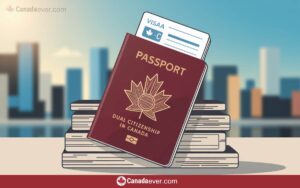
Citizenship Applicants Need 1,095 Days in Canada Over 5 Years
Applicants aged 18 to 54 must show adequate knowledge of English or French and take the citizenship test, while minors have separate requirements. To find out if your family qualifies for citizenship, check each applicant’s permanent resident status and days in Canada; time in some other statuses or circumstances counts differently.
How can I find out if my family qualifies for citizenship?
Quick answer: Each applicant generally needs at least 1,095 days in Canada during the five-year eligibility period, including at least 730 days as a permanent resident. Check each person’s status and physical-presence days separately. Adults can use the eligibility questionnaire; minors have different requirements and may count some time outside Canada with a parent.
- Adults must have valid permanent resident status, with no removal order or unfulfilled conditions tied to that status.
- Applicants aged 18 to 54 on signing day must show adequate knowledge of English or French and take the citizenship test.
- You may need to file taxes in Canada for at least 3 years during the 5 years right before applying.
- Use the adult eligibility questionnaire for applicants aged 18 or older; review the minors’ eligibility page for anyone under 18.
Check status before counting days
An expired permanent resident card does not, by itself, mean you’ve lost permanent resident status; you can apply with a valid or expired card. The card’s expiry and your immigration status are separate issues.
These periods do not count toward your physical presence in Canada:
- Time in prison
- Time on parole or probation
- Time waiting for a decision on a refugee claim
A special rule applies if you’re a Crown servant. Each day you work outside Canada as a Crown servant counts as 1 day of physical presence; the same credit applies to each day you spend outside Canada as a Crown servant’s eligible family member. Eligible family members are your spouse, common-law partner or child.
How do the rules differ for minors?
Minors have different citizenship requirements from adults, but they still need at least 1,095 days in Canada during their five-year eligibility period, including at least 730 days as a permanent resident.
IRCC encourages minors to apply with more than 1,095 days in Canada in case there’s a problem with the day calculation.
They can request a waiver only for the oath of citizenship.
The adult eligibility questionnaire is for people aged 18 and older; minors under 18 have different requirements. Its results aren’t legal advice and aren’t part of the formal citizenship application.
Key figures and dates to check
| Item | Figure or requirement |
|---|---|
| Eligibility period | 5 years before signing the application |
| Physical presence | At least 1,095 days, or 3 years, in Canada during the eligibility period |
| Adult questionnaire | Asks if you were in Canada for at least 3 of the last 5 years, or 1,095 days, and whether you have been a permanent resident |
| Language and test requirements | Applicants aged 18 to 54 on the day they sign must show adequate knowledge of English or French and take the citizenship test |
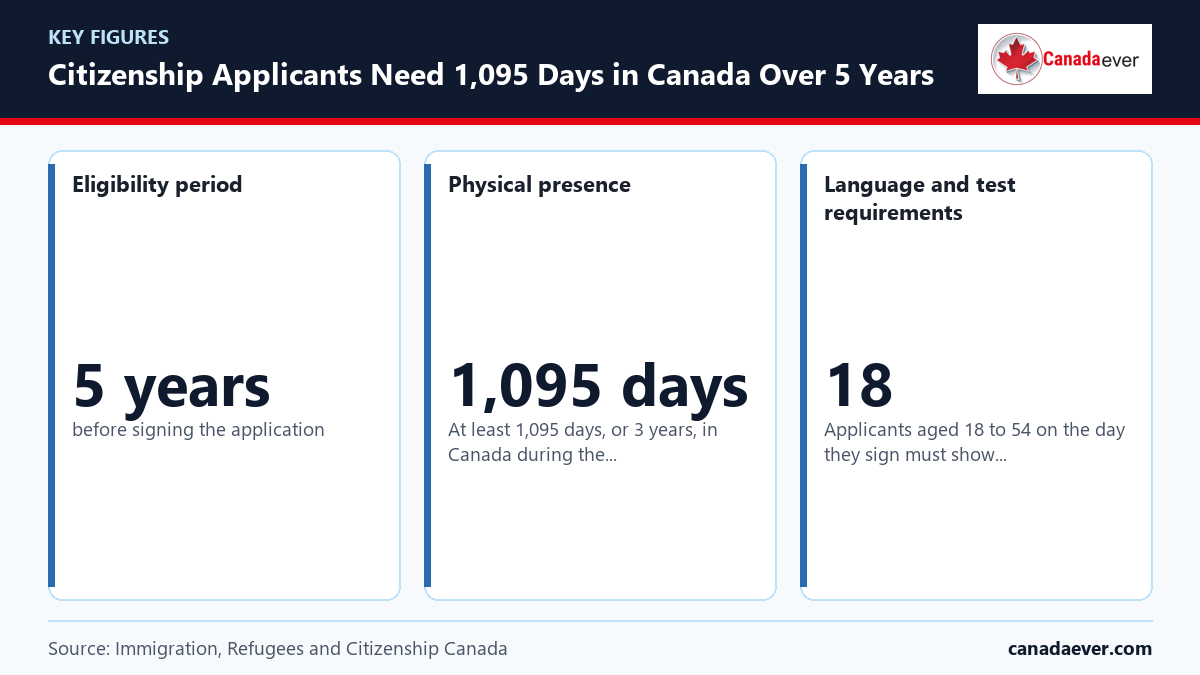
Age on signing day matters for the language and test requirements: the stated age range is 18 to 54.
| Key fact | Source |
|---|---|
| You must have been physically in Canada for at least 1,095 days (3 years) during your 5-year eligibility period. | Immigration, Refugees and Citizenship Canada |
| Each day as a temporary resident or protected person during your eligibility period counts as 0.5 days of physical presence in Canada. | Immigration, Refugees and Citizenship Canada |
| You can use a maximum of 365 days of physical presence as temporary resident or protected person. | Immigration, Refugees and Citizenship Canada |
| This is equal to 730 calendar days (730 days x 0.5 = 365 days of physical presence). | Immigration, Refugees and Citizenship Canada |
| Each day employed outside Canada as a Crown servant or as their family member counts as 1 day of physical presence in Canada. | Immigration, Refugees and Citizenship Canada |
| We encourage you to apply with more than 1,095 days of living in Canada in case there’s a problem with the calculation. | Immigration, Refugees and Citizenship Canada |
What to do next
If you need to find out if your family qualifies for citizenship, use the adult questionnaire only for applicants aged 18 or older; minors have different requirements.
- Use the adult eligibility questionnaire. If you’re 18 or older, answer the questions on Check if you are eligible to apply for citizenship. Its results are not legal advice and are not part of the formal application.
- Review the eligibility page for each minor. Applicants under 18 have different requirements, so the adult questionnaire isn’t the right tool for them. Use the citizenship eligibility page for minors.
- Read about permanent resident status if it’s in question. Use Understand PR Status to learn about PR status. If the concern is a PR card, use Permanent resident cards and status for information about PR cards and related services.
- Permanent resident cards and status, n.d. – Understand PR Status, n.d.
Frequently Asked Questions
How do I prove my physical presence days for citizenship?
Use the citizenship application’s physical-presence calculation to report your days in Canada during the 5-year eligibility period before you sign. Keep in mind that days in prison, on parole or probation, or waiting for a refugee claim decision don’t count; days in Canada as a temporary resident or protected person count as half-days, up to 365 days.
Can time as a student or worker count toward the 1,095 days?
Yes, days in Canada as a temporary resident can count, including time as a student or worker if you held that status. Each day counts as half a day, up to 365 days of physical presence, and you need 730 calendar days in Canada in temporary-resident status to reach that maximum.
What happens if my day total is close to 1,095 days?
Apply with more than 1,095 days if you can, because a problem with the calculation could leave you short of the requirement.
Do I need to file taxes if I’m applying as a minor?
The application asks whether filing was required and whether the applicant filed.
Related on CanadaEver: