Dual Citizenship in Canada: Rules and Implications
Canada is one of the world’s most welcoming countries when it comes to dual citizenship, allowing its citizens to hold multiple nationalities simultaneously. Whether you’re considering applying for Canadian citizenship or already planning to maintain your original nationality, this comprehensive guide covers everything you need to know about dual citizenship in Canada.
Quick answer: Canadians are allowed to take foreign citizenship while keeping their Canadian citizenship, and there is no certificate for dual citizenship. Dual Canadian citizens can no longer travel to or transit through Canada by air with a non-Canadian passport: you need a valid Canadian passport to board your flight.
What is Dual Citizenship?
Dual citizenship (also called dual nationality) occurs when a person legally holds citizenship of two countries at the same time. This means you can enjoy the rights, privileges, and responsibilities of both nations.
Key Points About Canadian Dual Citizenship:
- Canada fully allows dual citizenship – You don’t need to renounce your original nationality
- No official certificate required – There’s no formal document proving dual citizenship status
- Automatic in many cases – You may already be a dual citizen without realizing it
- Growing trend – Over 3.7 million Canadians held multiple citizenships as of 2021
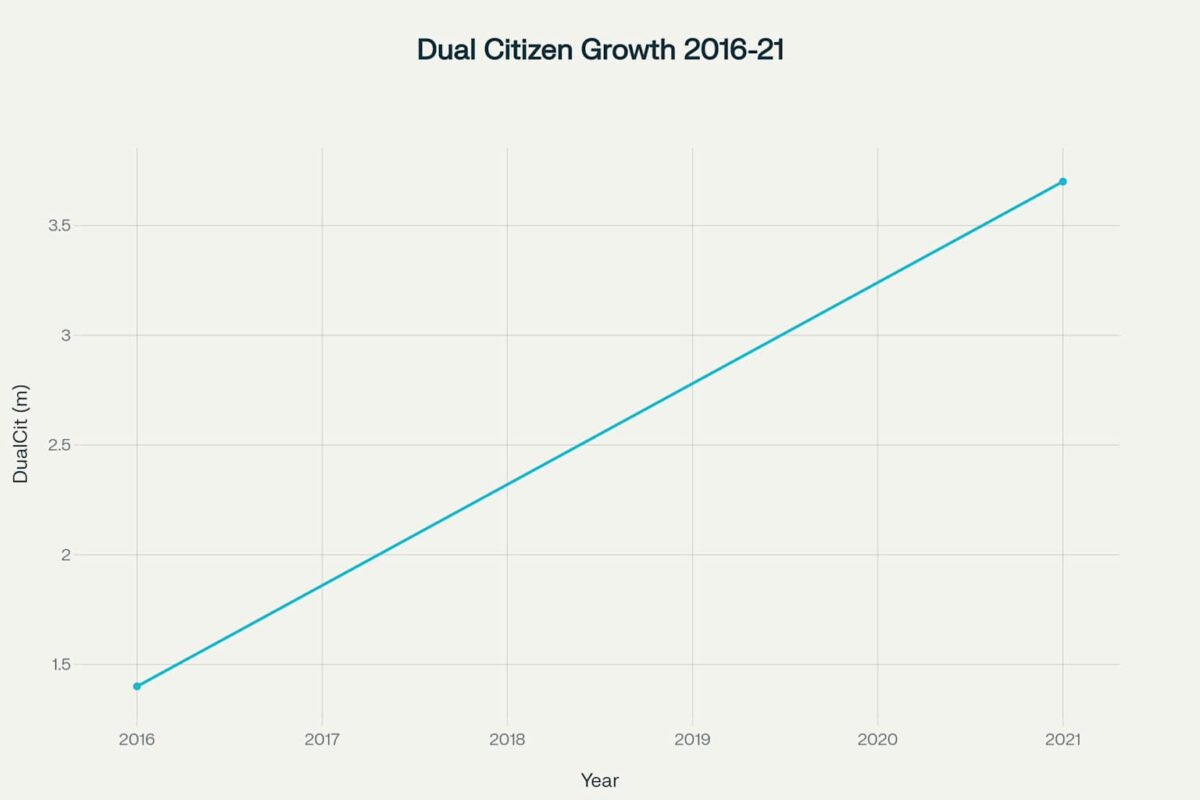

Dramatic increase in dual citizenship holders in Canada between 2016 and 2021
How to Become a Canadian Citizen (The First Step to Dual Citizenship)
To enjoy dual citizenship with Canada, you must first become a Canadian citizen. Here are the essential requirements:
Eligibility Requirements
| Requirement | Details |
|---|---|
| Permanent Resident Status | Must hold valid permanent residency with no unfulfilled conditions |
| Physical Presence | 1,095 days (3 years) in Canada within the last 5 years |
| Tax Filing | Filed taxes for at least 3 years during the 5-year period |
| Language Skills | Prove English or French proficiency (ages 18-54) |
| Knowledge Test | Pass citizenship test on Canadian history and values (ages 18-54) |
| Clean Record | No serious criminal history or security issues |
Application Process and Timeline
The citizenship application process typically takes 10-14 months from submission to ceremony. Here’s what to expect:
- Preparation Phase (1-2 months)
- Gather required documents
- Calculate physical presence using IRCC calculator
- Complete application forms
- Application Submission (1-3 months)
- Submit online or paper application
- Pay fees ($649.75 for adults, $100 for minors)
- Await acknowledgment from IRCC
- Review and Testing (6-9 months)
- IRCC reviews your application
- Take citizenship test (20 questions, 75% pass rate)
- Attend interview if required
- Final Steps (1-2 months)
- Receive decision from IRCC
- Attend citizenship ceremony
- Receive citizenship certificate
Complete Dual Citizenship Application Checklist
Use this comprehensive checklist to ensure you don’t miss any important steps:
| Task Category | Task | Status | Notes |
|---|---|---|---|
| Eligibility Requirements | Confirm permanent resident status | ☐ | Must not have unfulfilled conditions |
| Eligibility Requirements | Calculate physical presence (1,095 days in 5 years) | ☐ | 3 years out of last 5 years before applying |
| Eligibility Requirements | Verify tax filing for 3+ years | ☐ | Must align with permanent residency period |
| Eligibility Requirements | Check language requirements (ages 18-54) | ☐ | IELTS, CELPIP, or TEF if between 18-54 |
| Documentation | Valid passport or travel document | ☐ | For travel and identity verification |
| Documentation | Permanent resident card (can be expired) | ☐ | Permanent resident status must be valid |
| Documentation | Tax documents (Notice of Assessment) | ☐ | CRA Notice of Assessment for required years |
| Documentation | Language test results (if required) | ☐ | CLB Level 4 speaking and listening |
| Documentation | Identity documents and photos | ☐ | Recent photos meeting specifications |
| Application Process | Complete application form online or paper | ☐ | Online preferred unless specific circumstances |
| Application Process | Pay application fees ($649.75 for adults) | ☐ | Includes processing and right of citizenship fee |
| Application Process | Submit application with all documents | ☐ | Ensure completeness to avoid delays |
| Application Process | Track application status online | ☐ | Use IRCC online portal |
| Test Preparation | Study “”Discover Canada”” guide | ☐ | Official government study guide |
| Test Preparation | Take practice citizenship tests | ☐ | Multiple practice tests recommended |
| Test Preparation | Prepare for potential interview | ☐ | May be required based on application |
| Post-Application | Schedule and take citizenship test | ☐ | 20 questions, 75% pass rate required |
| Post-Application | Attend citizenship ceremony | ☐ | Take Oath of Citizenship |
| Post-Application | Receive citizenship certificate | ☐ | Typically received 2-4 weeks after ceremony |
Essential Documents You’ll Need:
- ✅ Valid passport or travel document
- ✅ Permanent resident card (can be expired)
- ✅ Tax documents (Notice of Assessment from CRA)
- ✅ Language test results (if required – IELTS, CELPIP, or TEF)
- ✅ Identity documents and photos meeting IRCC specifications
- ✅ Proof of physical presence (travel records, employment records)
Benefits and Drawbacks of Dual Citizenship
Understanding both sides will help you make an informed decision:
| Category | Benefit/Drawback | Type |
|---|---|---|
| Travel Benefits | Two passports for easier travel | Benefit |
| Travel Benefits | Visa-free access to more countries | Benefit |
| Travel Benefits | No visa required between countries | Benefit |
| Work & Education | Work freely in both countries | Benefit |
| Work & Education | Access to education systems | Benefit |
| Work & Education | Professional opportunities | Benefit |
| Financial Benefits | Access to social services in both countries | Benefit |
| Financial Benefits | Property ownership rights | Benefit |
| Financial Benefits | Access to healthcare systems | Benefit |
| Political Rights | Voting rights in both countries | Benefit |
| Political Rights | Can run for office (restrictions may apply) | Benefit |
| Tax Obligations | Potential double taxation | Drawback |
| Tax Obligations | Complex tax filing requirements | Drawback |
| Legal Obligations | Must obey laws of both countries | Drawback |
| Legal Obligations | Potential military service obligations | Drawback |
| Administrative Burden | More complex travel documentation | Drawback |
| Administrative Burden | Multiple government interactions | Drawback |
Major Benefits:
Travel and Mobility
- Hold two passports for easier international travel
- Visa-free access to more countries
- No visa requirements when traveling between your countries of citizenship
Work and Education
- Freedom to work in both countries without permits
- Access to education systems and potentially reduced tuition fees
- Expanded professional and business opportunities
Rights and Services
- Voting rights in both countries
- Access to healthcare and social services
- Property ownership rights
- Consular protection when traveling
Potential Drawbacks:
Tax Obligations
- Risk of double taxation on worldwide income
- Complex tax filing requirements in multiple countries
- Need for professional tax advice
Legal Obligations
- Must comply with laws of both countries
- Potential military service requirements
- Conflicting legal obligations between countries
Administrative Complexity
- More complex travel documentation requirements
- Multiple government interactions and renewals
- Potential delays at border crossings
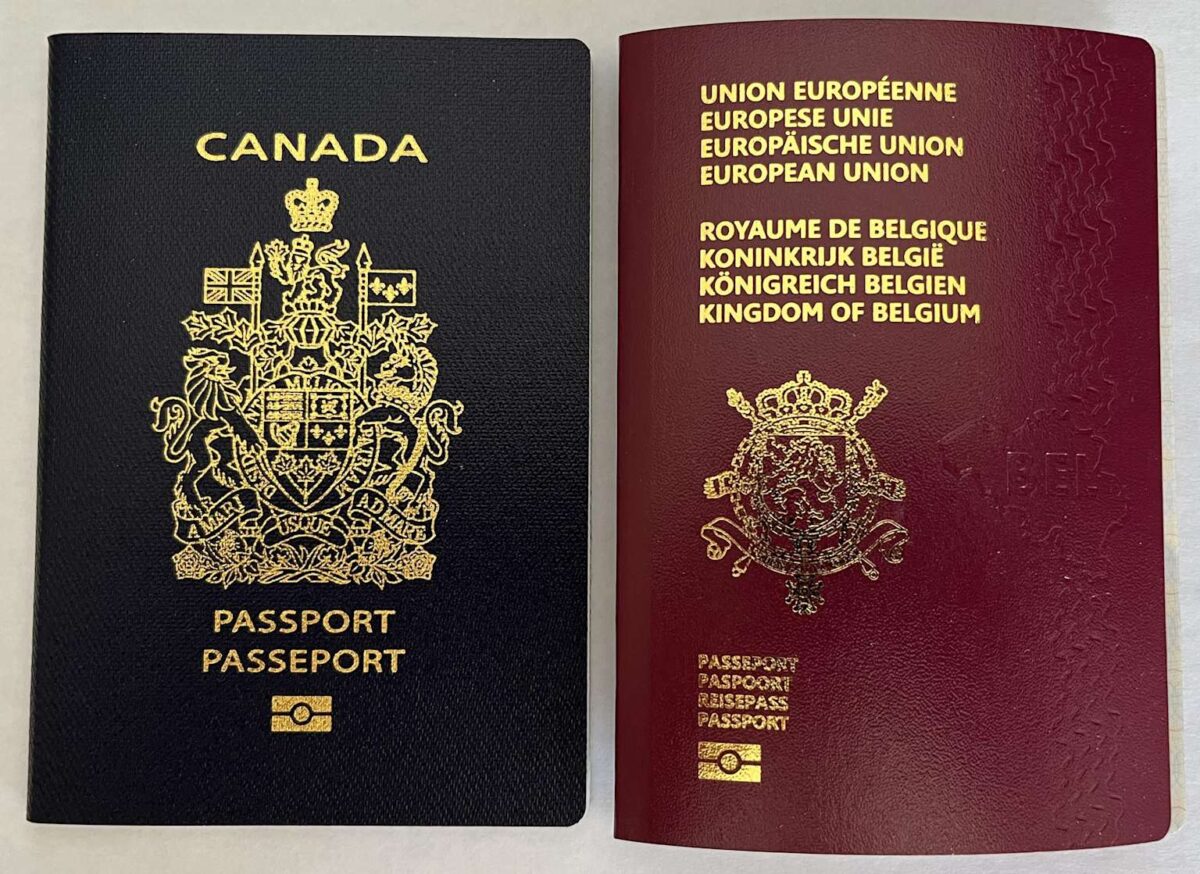
Canadian and Belgian passports side by side illustrating dual citizenship with multiple passports
Countries That Allow Dual Citizenship with Canada
Not all countries permit their citizens to hold dual nationality. Here’s what you need to know:
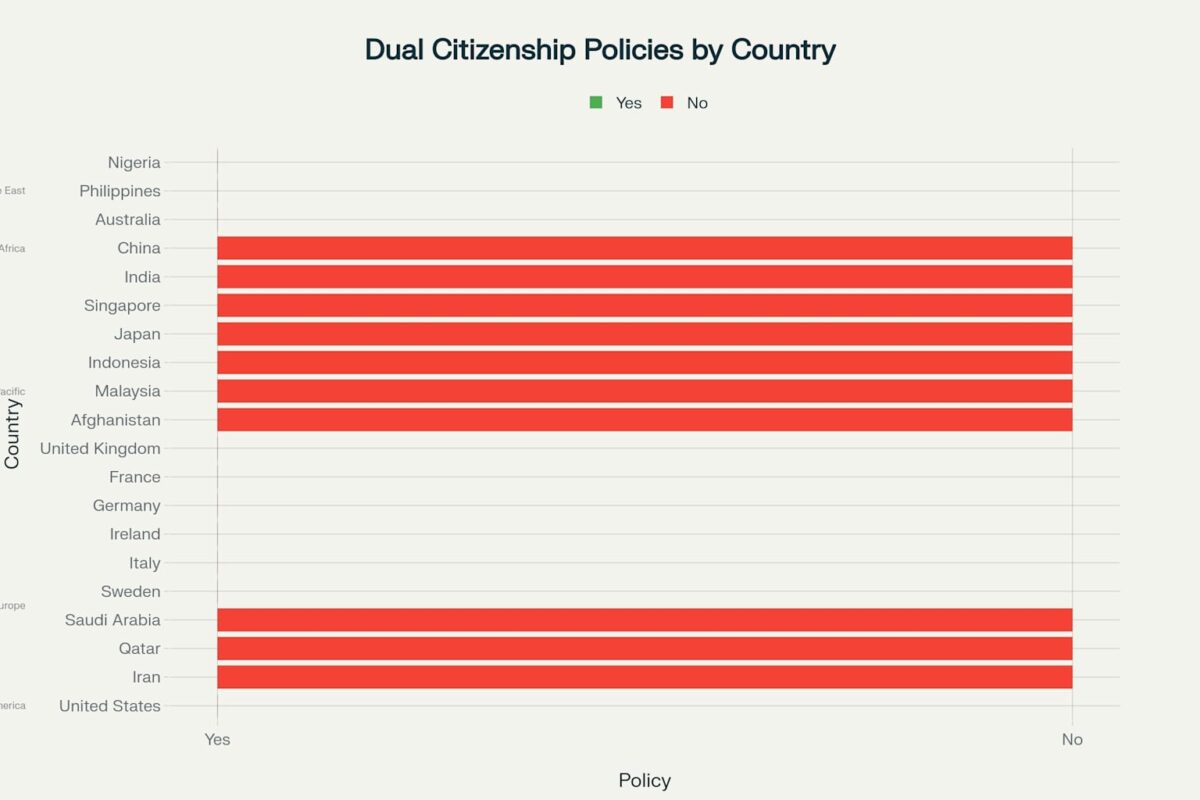
Countries that allow or prohibit dual citizenship with Canada, organized by region
Countries That ALLOW Dual Citizenship:
- North America: United States
- Europe: United Kingdom, France, Germany, Ireland, Italy, Sweden
- Asia-Pacific: Philippines, Australia, South Korea
- Others: Many Caribbean and South American nations
Countries That PROHIBIT Dual Citizenship:
- Asia: China, India, Singapore, Japan, Indonesia, Malaysia
- Middle East: Saudi Arabia, Qatar, UAE
- Others: Afghanistan, Iran, several African nations
Important Note: Even if your home country prohibits dual citizenship, some offer alternatives like:
- India: Overseas Citizen of India (OCI) status
- China: May not recognize dual citizenship but doesn’t actively pursue revocation
Tax Implications for Dual Citizens
One of the most complex aspects of dual citizenship involves taxation:
Canadian Tax Obligations:
- Residence-based taxation: Pay Canadian taxes if you’re a Canadian resident
- Departure tax: May apply if you cease Canadian residency
- Reporting requirements: Foreign income and assets over certain thresholds
US-Canada Dual Citizens:
- US citizens must file US taxes worldwide regardless of residence
- Foreign Tax Credit available to prevent double taxation
- Tax treaties between countries help reduce double taxation
- Professional advice strongly recommended
Key Tax Considerations:
- File taxes in both countries if required
- Understand tax treaties and credits available
- Keep detailed records of income and taxes paid
- Consider timing of major financial decisions
Travel Requirements for Dual Citizens
Traveling as a dual citizen has specific rules and benefits:
Entering Canada:
- Must use Canadian passport when flying to Canada
- Can use either Canadian or other passport when entering by land/sea
- Exception: US-Canada dual citizens can use either passport
International Travel:
- Choose which passport offers better visa-free access
- Some countries may require specific passport for entry
- Always carry both passports when traveling
- Check entry requirements for each destination
Important Travel Tips:
- Register with your country’s embassy when living abroad
- Understand which country’s laws apply where you’re located
- Be aware of exit requirements from some countries
- Keep passports valid and renewed
The Citizenship Ceremony: Your Final Step
The citizenship ceremony is a special milestone where you officially become Canadian:
What to Expect:
- Duration: 1-3 hours depending on format (virtual or in-person)
- Oath of Citizenship: Pledge allegiance to Canada and the Crown
- National Anthem: Sing “O Canada” in English or French
- Certificate: Receive your official citizenship certificate
Virtual vs. In-Person Ceremonies:
- Virtual ceremonies are now more common (conducted via Zoom)
- In-person ceremonies still available in many locations
- Family and friends can attend both types
- Business attire recommended for both formats
Common Mistakes to Avoid
Learn from others’ experiences and avoid these frequent pitfalls:
Documentation Errors:
- ❌ Submitting incomplete applications
- ❌ Using outdated application forms
- ❌ Providing inconsistent information across documents
- ❌ Missing required signatures or photos
Residency Calculation Mistakes:
- ❌ Miscounting physical presence days
- ❌ Not including eligible temporary resident time
- ❌ Forgetting to account for travel dates
- ❌ Not using the official IRCC calculator
Language and Test Preparation:
- ❌ Underestimating language requirements
- ❌ Not studying the official “Discover Canada” guide
- ❌ Skipping practice tests
- ❌ Rushing the application process
Recent Changes: Bill C-3 and Citizenship by Descent
In 2025, Canada introduced Bill C-3, which significantly expands citizenship by descent:
Key Changes:
- Removes first-generation limit for citizenship by descent
- Substantial connection test: Parent must have spent 1,095 days in Canada
- Automatic restoration for those previously affected by restrictions
- Benefits thousands of people worldwide who may now be eligible
Who Benefits:
- Children of Canadian citizens born abroad
- “Lost Canadians” who previously couldn’t pass citizenship to children
- Grandchildren of Canadians in certain circumstances
Dual Citizenship Statistics and Trends
The popularity of dual citizenship in Canada has grown dramatically:
| Year | Total Canadian Citizens | Dual Citizens | Percentage Dual |
|---|---|---|---|
| 2016 | 31400000 | 1400000 | 4.5 |
| 2021 | 33100000 | 3700000 | 11.2 |
Key Statistics:
- 2016: 1.4 million dual citizens (4.5% of all Canadian citizens)
- 2021: 3.7 million dual citizens (11.2% of all Canadian citizens)
- Growth rate: 164% increase in just 5 years
- 2024: Over 375,000 people granted Canadian citizenship
This growth reflects:
- Enhanced data collection methods
- Increased global mobility
- Canada’s welcoming immigration policies
- Growing awareness of dual citizenship benefits
Processing Times and Current Wait Times
Stay informed about current processing times:
Current Average Processing Times (2024-2025):
- Citizenship Application: 10-14 months
- Citizenship Test: Typically scheduled 6-9 months after application
- Citizenship Ceremony: 1-3 months after successful test
- Certificate Delivery: 2-4 weeks after ceremony
Factors Affecting Processing Times:
- Application completeness and accuracy
- Background check complexity
- Current IRCC workload
- Country of origin considerations
- Individual circumstances
Renouncing Citizenship: When and Why
While most people embrace dual citizenship, some situations may require renouncing one nationality:
Reasons for Renunciation:
- Employment requirements (some government positions)
- Military service obligations
- Home country prohibits dual citizenship
- Personal or political reasons
Renunciation Process:
- Cost: $100 for Canadian citizenship renunciation
- Timeline: Approximately 15 months
- Requirements: Must not live in Canada, must be 18+, must have other citizenship
- Irreversible: Difficult and expensive to regain citizenship later
Military Service Obligations
Some dual citizens may face military service requirements:
Countries with Mandatory Military Service:
- South Korea: Males typically required to serve
- Israel: Both males and females may be required
- Turkey: Males may be subject to service
- Several European countries have or recently had mandatory service
Important Considerations:
- Research your other country’s military service laws
- Understand potential conflicts with Canadian law
- Seek legal advice if facing service obligations
- Consider timing of travel to countries with mandatory service
Cost Breakdown for Canadian Citizenship
Budget for these expenses when applying:
| Fee Type | Amount (CAD) | Notes |
|---|---|---|
| Adult Application | $649.75 | Includes processing and right of citizenship fee |
| Minor Application | $100 | Under 18 years old |
| Language Testing | $200-$400 | IELTS, CELPIP, or TEF if required |
| Document Translation | $50-$200 | If documents not in English/French |
| Photos | $20-$50 | Meeting IRCC specifications |
| Legal Consultation | $150-$500/hour | Optional but recommended for complex cases |
Frequently Asked Questions
Can I lose my Canadian citizenship?
Canadian citizenship can only be revoked in cases of fraud during the application process. Unlike some countries, Canada doesn’t revoke citizenship for crimes or disloyalty.
Do my children automatically become dual citizens?
Children born in Canada automatically become Canadian citizens regardless of parents’ nationality. Children born abroad to Canadian parents may be eligible for citizenship by descent.
Can I vote in both countries?
Generally yes, but check your other country’s laws. Some countries restrict voting rights for citizens living abroad.
What if my home country finds out about my Canadian citizenship?
This depends entirely on your home country’s laws. Research your country’s specific policies or consult with their embassy.
Can I use either passport when traveling?
For entering Canada, you must use your Canadian passport when flying. For other travel, you can strategically choose which passport offers better access.
Next Steps: Your Action Plan
Ready to pursue dual citizenship? Follow this action plan:
Immediate Steps (Next 1-2 Weeks):
- Verify your eligibility using IRCC’s online tools
- Research your home country’s dual citizenship policies
- Calculate your physical presence using the official calculator
- Gather required documents and start organizing them
Short-term Goals (Next 1-3 Months):
- Complete language testing if required
- Study the “Discover Canada” guide thoroughly
- Prepare your application with all supporting documents
- Consult with professionals if you have complex circumstances
Long-term Process (Next 12-18 Months):
- Submit your application and pay fees
- Prepare for and take the citizenship test
- Attend your citizenship ceremony
- Apply for your Canadian passport
- Understand your ongoing obligations as a dual citizen
Conclusion
Dual citizenship with Canada offers tremendous opportunities for travel, work, and personal growth while maintaining ties to your heritage. With Canada’s welcoming approach and clear guidelines, the path to dual citizenship is accessible to millions of people worldwide.
The key to success lies in careful preparation, understanding both benefits and obligations, and following the application process meticulously. Whether you’re just starting to consider Canadian citizenship or are already in the application process, this guide provides the roadmap to navigate your journey successfully.
Remember that immigration laws can change, so always verify current requirements with official government sources and consider consulting with qualified professionals for complex situations. Your journey to becoming a proud dual citizen of Canada awaits!
Disclaimer: This guide provides general information only and should not replace official government guidance or professional legal advice. Always consult current IRCC resources and qualified professionals for your specific situation.
Related reading: Canadian Citizenship Guide: Application Process and Requirem — a closer look at this topic.
Quick answers from official sources
Can Canadians hold another citizenship?
Yes. IRCC says Canadians are allowed to take foreign citizenship while keeping their Canadian citizenship.
Is there a certificate for dual citizenship?
No. IRCC says there is no related certificate.
Can dual citizens fly to Canada on a foreign passport?
No. They need a valid Canadian passport to board a flight to or transit through Canada by air.
Sources (checked October 27, 2026):