Sponsorship Breakdown: What Happens and Your Options
When immigration sponsorship relationships face difficulties, it can feel overwhelming and confusing for everyone involved. Whether you’re a sponsor struggling to meet your obligations or a sponsored person facing an uncertain situation, understanding sponsorship breakdown is crucial for making informed decisions about your future in Canada.
This comprehensive guide will walk you through everything you need to know about sponsorship breakdown, your rights, available options, and practical steps to take during this challenging time.
What is Sponsorship Breakdown?
Sponsorship breakdown occurs when a sponsor is unable or unwilling to provide the financial and settlement support they committed to in their sponsorship agreement. This breakdown represents an official recognition that the sponsorship relationship has deteriorated to the point where the sponsor can no longer fulfill their legal obligations to support the sponsored person’s basic needs.
Common Causes of Sponsorship Breakdown
Several situations can lead to sponsorship breakdown, and it’s important to understand that these circumstances are often beyond anyone’s control:
- Financial hardship: The sponsor loses their job, faces serious illness, or experiences other financial difficulties that make it impossible to provide adequate support
- Relationship deterioration: In spousal sponsorships, divorce, separation, or relationship breakdown can lead to withdrawal of support
- Abuse or family violence: When sponsors abuse sponsored persons, or when sponsored persons need to leave dangerous situations for their safety
- Geographical separation: Sponsored persons move to different communities where sponsors cannot provide planned support
- Mismatched expectations: Cultural differences, unrealistic expectations, or communication breakdowns between sponsors and sponsored persons
It’s crucial to understand that sponsored persons will not lose their permanent resident status due to sponsorship breakdown, even if they need to apply for social assistance.
Understanding Your Sponsorship Obligations
Before diving into breakdown scenarios, it’s essential to understand the scope and duration of sponsorship commitments. Sponsorship obligations vary significantly depending on the relationship between the sponsor and sponsored person, creating different levels of financial responsibility and commitment duration.
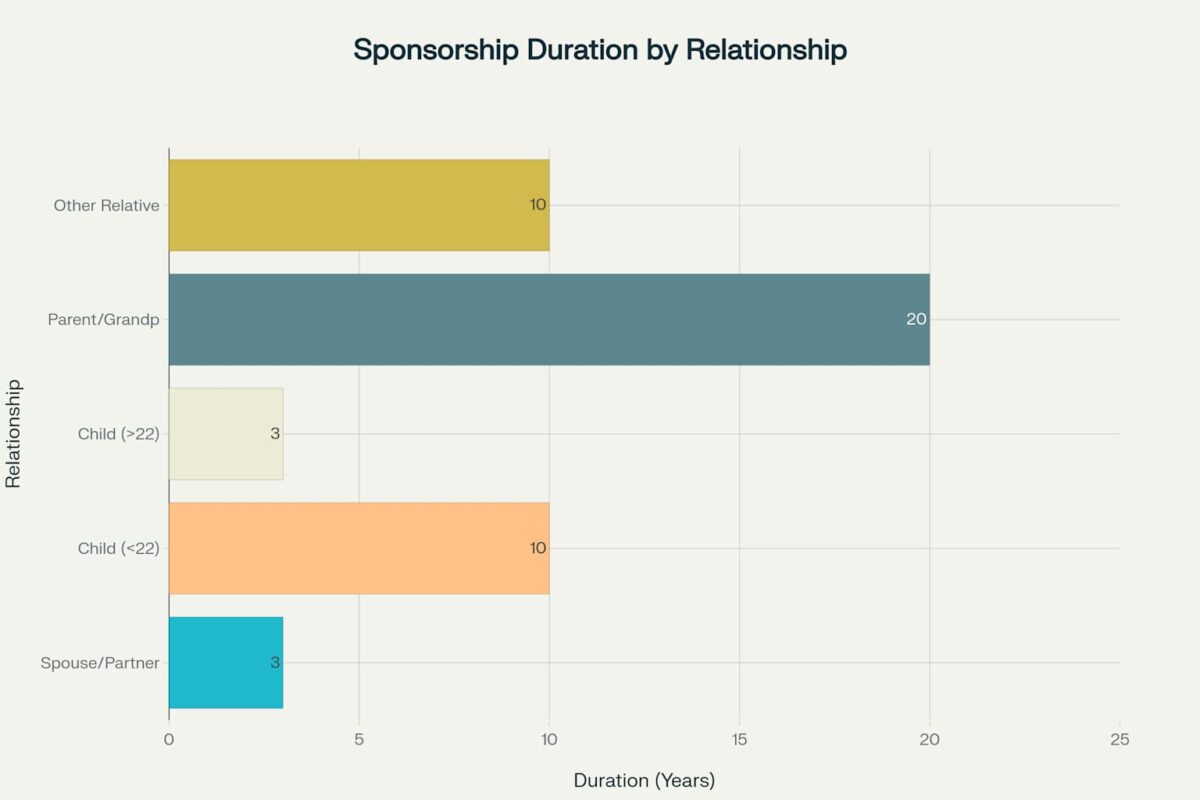

Sponsorship undertaking duration varies significantly by relationship type, from 3 years for spouses to 20 years for parents and grandparents
The sponsorship undertaking is a legally binding contract that cannot be cancelled or modified once the sponsored person receives permanent residence, even if circumstances change dramatically. This means that sponsors remain financially responsible for the sponsored person’s basic needs – including food, clothing, shelter, healthcare not covered by public insurance, and other essential requirements – throughout the entire undertaking period.
What Sponsors Must Provide
Sponsors are legally obligated to provide comprehensive support covering all basic requirements for daily living:
- Housing and utilities: Safe, adequate accommodation with heat and essential utilities
- Food and clothing: Nutritious meals and appropriate clothing for all seasons
- Healthcare: Medical, dental, and eye care not covered by provincial health insurance plans
- Personal necessities: Household supplies, personal care items, and other daily essentials
- Settlement support: Help with integration, language learning, employment search, and community orientation
The Sponsorship Breakdown Process
Understanding how sponsorship breakdown unfolds can help both sponsors and sponsored persons prepare for what lies ahead and make informed decisions about their next steps. The process follows a systematic approach designed to protect everyone’s rights while ensuring appropriate government oversight.
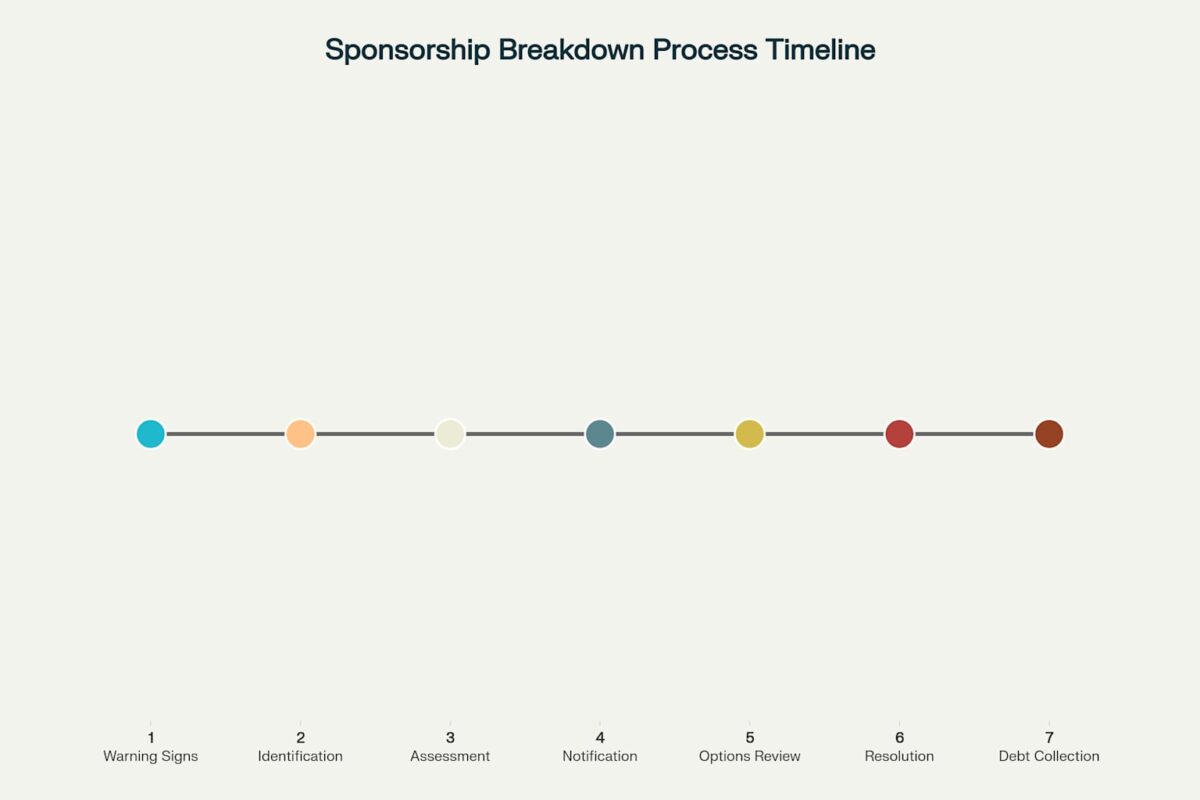
The sponsorship breakdown process follows a systematic 7-step timeline from initial warning signs to resolution
The breakdown process typically begins when warning signs emerge, such as sponsors expressing inability to continue support or sponsored persons reporting inadequate assistance. Government agencies then assess the situation thoroughly, documenting circumstances and determining whether intervention is necessary.
Throughout this process, both parties receive formal notifications explaining their rights, responsibilities, and available options.
Key Stages Explained
- Initial Assessment: When concerns arise, immigration authorities and social services agencies evaluate the situation to determine if genuine breakdown has occurred. This involves reviewing financial circumstances, relationship dynamics, and any safety concerns that may exist.
- Documentation and Verification: Officials document all relevant circumstances, including any evidence of abuse, financial hardship, or other factors contributing to the breakdown. For cases involving violence or abuse, third-party verification from qualified professionals may be required.
- Options Evaluation: Both sponsors and sponsored persons receive information about their available options, rights, and potential consequences of different choices. This stage often involves consultations with legal aid organizations, settlement services, and other support agencies.
- Resolution Attempts: Before declaring formal breakdown, authorities typically attempt to facilitate resolution through mediation, counseling, or other intervention services. However, if safety concerns exist or resolution proves impossible, formal breakdown may be declared.
What Happens During Breakdown: Rights and Responsibilities
When sponsorship breakdown occurs, it’s essential to understand how it affects both parties involved. Contrary to common misconceptions, sponsored persons retain their permanent resident status and access to essential services, while sponsors face specific financial and legal consequences.
| Aspect | Sponsor | Sponsored Person |
|---|---|---|
| Immigration Status | Not affected by breakdown | NOT affected – keeps permanent residence |
| Financial Responsibility | Must repay social assistance given to sponsored person | Must attempt self-support before seeking assistance |
| Access to Social Assistance | Available if eligible | Eligible for Ontario Works/ODSP if in need |
| Right to Leave Relationship | Yes, but financial obligations continue | Yes – can leave abusive situations safely |
| Future Sponsorship Eligibility | Restricted until debt repaid and conditions met | Available after sponsorship period ends |
| Legal Protection | Protected under Canadian law | Full protection under Canadian law and Charter |
| Healthcare Access | Full access (citizen/PR) | Full access to OHIP and healthcare |
| Work/Study Rights | Full rights (citizen/PR) | Full rights to work/study anywhere in Canada |
| Debt Responsibility | Responsible for sponsored person’s social assistance | No debt responsibility to government |
| Support Services Access | Available through legal aid and counseling | Priority access to victim services and settlement help |
Impact on Sponsored Persons
Sponsored persons facing breakdown should understand that their immigration status remains secure. Permanent residence cannot be revoked due to sponsorship breakdown, providing crucial stability during this difficult transition. However, sponsored persons must still attempt to support themselves independently before seeking government assistance, except in cases involving abuse or family violence.
When sponsored persons cannot meet their basic needs independently, they have the right to apply for social assistance through Ontario Works or the Ontario Disability Support Program. These programs provide the same level of benefits available to any other eligible person, ensuring that sponsored persons can access essential support during their transition to independence.
Consequences for Sponsors
Sponsors face significant financial responsibilities when breakdown occurs. They become liable for repaying any social assistance payments made to sponsored persons during the undertaking period. This debt cannot be discharged through bankruptcy and remains enforceable until fully repaid.
Beyond financial obligations, sponsors may face restrictions on future sponsorship applications. Immigration authorities will not process new sponsorship applications from individuals with outstanding sponsorship debts, creating long-term consequences for family reunification plans. Additionally, debt collection activities can negatively impact sponsors’ credit ratings and financial standing.
Your Options During Sponsorship Breakdown
Both sponsors and sponsored persons have several options available when facing breakdown situations. Understanding these options helps both parties make informed decisions that protect their interests while complying with legal requirements.
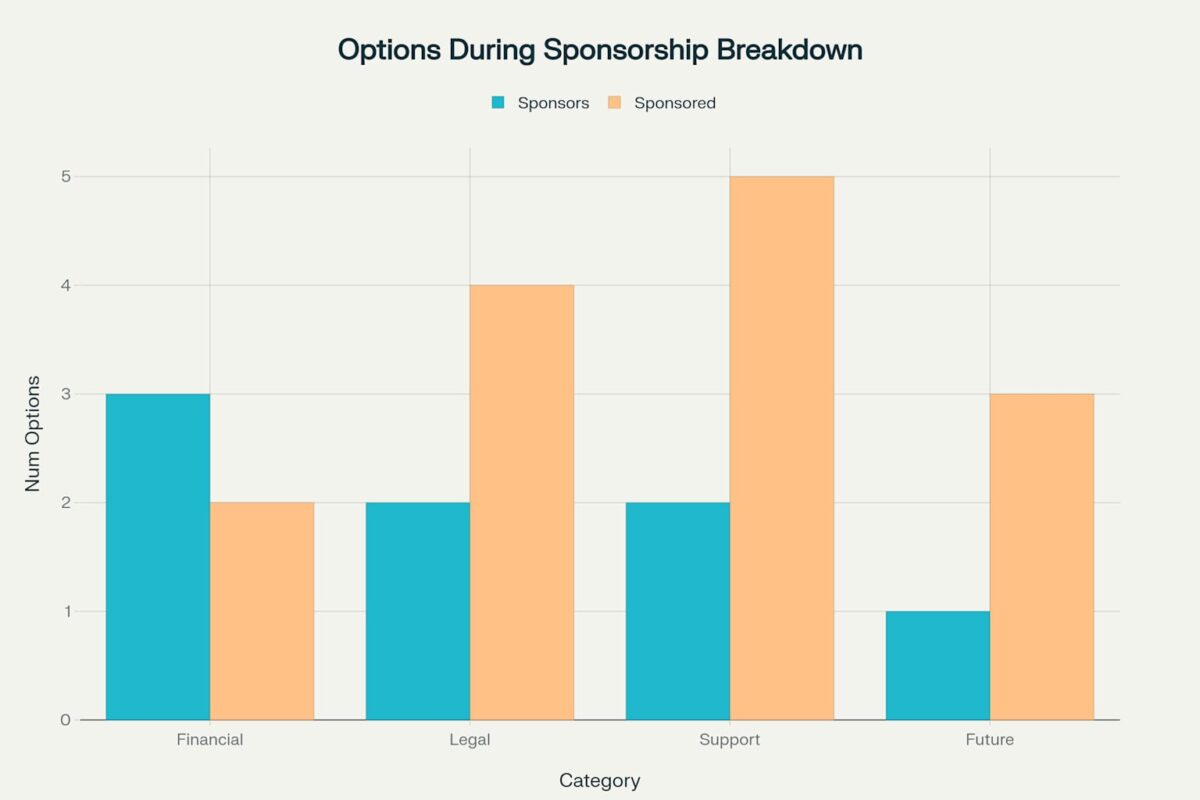
Sponsored persons typically have more legal and support options available during breakdown situations compared to sponsors
Options for Sponsored Persons
Sponsored persons typically have more support options available during breakdown situations, reflecting the vulnerable position they may face. Legal protections ensure that sponsored persons can access necessary assistance while maintaining their immigration status.
- Immediate Safety Options: If facing abuse or violence, sponsored persons can contact emergency services, women’s shelters, or specialized support organizations without fear of immigration consequences. Leaving abusive situations will not affect permanent resident status, and specialized programs exist to support victims of family violence.
- Financial Assistance: When unable to meet basic needs, sponsored persons can apply for social assistance programs. Applications must demonstrate that reasonable efforts were made to obtain support from sponsors, except in abuse situations where direct contact may be dangerous.
- Legal and Settlement Support: Sponsored persons can access free legal aid services, settlement organizations, and community support programs designed specifically for immigrants facing difficulties. These services provide advocacy, information, and practical assistance with navigating complex systems.
Options for Sponsors
Sponsors facing breakdown situations have several approaches available for managing their obligations and minimizing negative consequences. Early intervention often produces better outcomes than waiting until problems escalate.
- Direct Communication: When safe and appropriate, sponsors should attempt direct communication with sponsored persons to resolve issues and resume support. This approach works best when breakdown results from misunderstandings, financial difficulties, or other resolvable problems.
- Government Collaboration: Sponsors can work directly with Ontario Works, ODSP, or other relevant agencies to develop payment arrangements for outstanding debts. Proactive engagement often leads to more manageable repayment terms than waiting for formal collection actions.
- Legal Assistance: Immigration lawyers and legal aid organizations can help sponsors understand their obligations, explore available options, and develop strategies for managing breakdown consequences. Legal advice is particularly valuable when complex family law issues intersect with immigration obligations.
Emergency Action Checklists
When facing sponsorship breakdown, having clear action steps can help both parties protect their interests and access necessary support quickly. These prioritized checklists provide practical guidance for immediate, short-term, and long-term actions.
For Sponsored Persons
| Priority | Action | Timeline |
|---|---|---|
| High | Ensure personal safety (call 911 if in danger) | Immediate |
| High | Secure important documents (PR card, passport, etc.) | Within 24 hours |
| High | Contact legal aid or immigration lawyer | Within 1 week |
| Medium | Apply for social assistance if needed (Ontario Works/ODSP) | Within 2 weeks |
| Medium | Document any abuse or violence with third-party verification | As soon as possible |
| Medium | Contact settlement services organization | Within 1 week |
| Low | Inform IRCC Client Support Centre (1-888-242-2100) | Within 1 month |
| Low | Seek counseling or support services | Ongoing |
| Low | Plan for long-term settlement needs | Ongoing |
Safety First: Your personal safety and that of any children must be the top priority. If you’re in immediate danger, call 911 without hesitation – your immigration status will not be affected by seeking emergency help. Secure your important documents (permanent resident card, passport, identification) as soon as safely possible, as these will be essential for accessing services and proving your legal status.
Legal Protection: Contact legal aid organizations or immigration lawyers within the first week to understand your rights and options. Free legal assistance is available specifically for immigration-related issues, and early legal advice can prevent costly mistakes. Document any abuse or violence with third-party verification from qualified professionals if applicable.
Financial Support: If you cannot meet basic needs independently, apply for social assistance through Ontario Works or ODSP within two weeks. These programs provide essential support while you transition to independence, and receiving assistance will not affect your permanent resident status.
For Sponsors
| Priority | Action | Timeline |
|---|---|---|
| High | Contact sponsored person directly (if safe to do so) | Immediate |
| High | Contact Ontario Works/ODSP office immediately | Within 1 week |
| Medium | Seek legal advice from immigration lawyer | Within 1 week |
| Medium | Calculate potential financial obligations | Within 2 weeks |
| Medium | Negotiate payment arrangement with government | Within 1 month |
| Low | Review impact on future sponsorship eligibility | Ongoing |
| Low | Consider mediation services if relationship issues | As needed |
Immediate Response: Contact the sponsored person directly if it’s safe to do so, attempting to resolve issues through communication before they escalate. Simultaneously, contact Ontario Works or ODSP offices immediately to understand your potential obligations and explore options for managing the situation.
Legal and Financial Planning: Seek advice from immigration lawyers within the first week to understand your legal position and potential consequences. Calculate your potential financial obligations based on the sponsored person’s likely needs and your undertaking period remaining. This information will help you make informed decisions about resolution strategies.
Long-term Strategy: Within one month, negotiate payment arrangements with government agencies if debt has accumulated. Review how breakdown might affect your eligibility for future sponsorship applications and plan accordingly. Consider mediation services if relationship issues contributed to the breakdown and resolution remains possible.
Emergency Resources and Support Services
Knowing where to find help quickly can make a significant difference during sponsorship breakdown situations. Multiple organizations and government services provide specialized support for sponsors and sponsored persons facing difficulties.
| Resource | Contact | When to Use |
|---|---|---|
| Emergency Services | 911 | Immediate danger/emergency |
| IRCC Client Support Centre | 1-888-242-2100 | Immigration status questions |
| Assaulted Women’s Helpline | 1-866-863-0511 | Domestic violence support |
| Kids Help Phone | 1-800-668-6868 | Youth crisis support |
| 211 Information Service | 211 | General community services |
| Legal Aid Ontario | 1-800-668-8258 | Free legal assistance |
| Settlement.org | Online resource | Settlement information |
| Community Legal Clinics | Local listings | Legal advice on sponsorship |
Specialized Support Services
Legal Aid: Legal Aid Ontario provides free legal assistance for low-income individuals facing immigration and family law issues. Community legal clinics throughout Ontario offer specialized services for immigration-related problems, including sponsorship breakdown situations. Many clinics have lawyers who specialize in the intersection of immigration law and family violence issues.
Settlement Services: Organizations funded by Immigration, Refugees and Citizenship Canada provide comprehensive settlement support including crisis intervention, advocacy, and long-term planning assistance. Settlement.org offers extensive online resources and referrals to local services throughout Ontario.
Violence and Abuse Support: Specialized services exist for individuals facing family violence within sponsored relationships. These organizations understand the unique vulnerabilities faced by sponsored persons and provide culturally sensitive support that protects both safety and immigration status.
Debunking Common Myths
Many misconceptions surround sponsorship breakdown, often causing unnecessary fear and preventing people from seeking appropriate help. Understanding the facts can help both sponsors and sponsored persons make better decisions during difficult situations.
| Common Myth | Actual Fact |
|---|---|
| Sponsored person will lose permanent residence | PR status is NOT affected by sponsorship breakdown |
| Sponsor can force sponsored person to leave Canada | Only government can make removal decisions, not sponsors |
| Sponsored person cannot get government help | Eligible for social assistance if in financial need |
| Breakdown means deportation | Breakdown does not affect immigration status |
| Sponsor can withdraw sponsorship anytime | Cannot withdraw after PR is granted – obligations continue |
| Abuse victims must stay to keep status | Can safely leave abusive situations without status loss |
The Truth About Immigration Status
The most dangerous myth is that sponsored persons will lose their permanent residence due to breakdown. Canadian immigration law explicitly protects permanent residents from status loss due to sponsorship issues, recognizing that breakdown often occurs due to circumstances beyond anyone’s control. This protection extends even to situations where sponsored persons need social assistance to meet basic needs.
Understanding Government Support
Another harmful misconception is that sponsored persons cannot access government assistance during breakdown. While sponsored persons must attempt to obtain support from their sponsors first, they have clear rights to social assistance when facing genuine need. The requirement to pursue sponsor support does not apply in abuse situations, where safety concerns override other considerations.
Sponsor Authority Limitations
Some sponsors mistakenly believe they have authority to force sponsored persons to leave Canada or control their immigration status. Only the federal government has authority to make immigration decisions, and sponsors cannot unilaterally affect someone’s permanent resident status. This protection ensures that sponsored persons cannot be threatened or coerced through immigration status manipulation.
Prevention and Early Intervention
While breakdown sometimes cannot be avoided, early recognition of warning signs and proactive intervention can prevent many situations from escalating to formal breakdown. Both sponsors and sponsored persons benefit from understanding how to identify and address problems before they become unmanageable.
Warning Signs to Watch
- Communication Problems: Frequent misunderstandings, cultural conflicts, or inability to discuss problems constructively often signal relationship stress that could lead to breakdown.
- Financial Strain: Sponsors experiencing job loss, reduced income, or unexpected expenses should seek help immediately rather than waiting until they cannot provide adequate support.
- Isolation and Dependency: Sponsored persons who remain socially isolated or entirely dependent on sponsors may be at higher risk if problems develop.
Intervention Resources
- Mediation Services: Professional mediators who understand immigration and cultural issues can help resolve conflicts before they escalate to breakdown.
- Financial Counseling: Organizations providing financial planning and debt management services can help sponsors develop sustainable support strategies.
- Cultural Bridge Programs: Services that help bridge cultural gaps and facilitate better communication between sponsors and sponsored persons.
Moving Forward After Breakdown
Recovery from sponsorship breakdown takes time, but both sponsors and sponsored persons can rebuild their lives and move forward successfully. Understanding the long-term implications and available support can help guide this recovery process.
For Sponsored Persons
Building independence after breakdown involves developing financial stability, social connections, and long-term settlement plans. Employment services, language training, and credential recognition programs help sponsored persons achieve economic independence. Community connections through cultural organizations, volunteer work, and social activities provide essential support networks.
For Sponsors
Sponsors must focus on fulfilling their ongoing financial obligations while learning from the breakdown experience. Developing realistic expectations for future sponsorships, improving cultural competency, and building better support systems can prevent repeated problems. Some sponsors may need to postpone future sponsorship plans until they have resolved outstanding debts and demonstrated financial stability.
Conclusion
Sponsorship breakdown represents a challenging situation that affects thousands of Canadian families each year, but understanding your rights and options can help you navigate this difficult process successfully. Remember that sponsored persons will not lose their permanent resident status due to breakdown, and multiple support services exist to help both sponsors and sponsored persons during this transition.
Whether you’re facing immediate crisis or beginning to see warning signs, taking action early and seeking appropriate help can significantly improve outcomes for everyone involved. The resources, checklists, and information provided in this guide offer starting points for understanding your situation and accessing the support you need.
Most importantly, remember that you don’t have to face this situation alone. Legal aid organizations, settlement services, community groups, and government agencies all provide specialized support for people experiencing sponsorship breakdown. By understanding your rights, accessing appropriate resources, and taking informed action, you can work through this challenging time and build a stable future in Canada.
Related reading: Inland vs Outland Sponsorship: Which Option to Choose — a closer look at this topic.