Lost PR Status: How to Appeal or Reapply
Losing your permanent residence (PR) status can feel devastating, but it’s not the end of your immigration journey . Whether your status was revoked due to residency obligations, document expiration, or other circumstances, you have options to fight back and potentially restore your rights .
This comprehensive guide will walk you through everything you need to know about appealing a lost PR status or starting fresh with a reapplication.
Understanding your rights and the available pathways is crucial for making informed decisions about your next steps . The appeal and reapplication processes vary significantly between countries, with different deadlines, requirements, and success rates.
Acting quickly and preparing thoroughly can make the difference between regaining your status and having to start over completely .
Understanding Why PR Status is Lost
Permanent residence status can be lost for various reasons, and understanding the specific cause in your case is essential for determining your best course of action . The most common reasons include failure to meet residency obligations, where you haven’t spent enough time in your country of residence .
For example, Canadian permanent residents must be physically present for at least 730 days within any five-year period .
Common Reasons for PR Status Loss
| Reason for PR Loss | Canada | Australia | Singapore | United States |
|---|---|---|---|---|
| Residency Obligation Not Met | Less than 730 days in 5 years | Less than 2 years in 5 years | Extended stay abroad without REP | Abandonment presumption |
| Criminal Conviction | Serious criminal offenses | Character failures, criminal convictions | Criminal convictions | Aggravated felonies, deportable crimes |
| Fraud/Misrepresentation | False information in application | Fraudulent application | False documents submitted | Immigration fraud |
| National Security Concerns | Security threats | Security/character concerns | Security concerns | National security violations |
| Voluntary Abandonment | Filed Form to abandon status | Voluntary surrender | Voluntary renunciation | Form I-407 filed |
| Failure to Renew Documents | PR card expired, no renewal | Failed to maintain RRV | REP not renewed/expired | Green card not renewed |
| Extended Absence Without Permit | Over 1 year abroad without travel document | Over 5 years without compelling reasons | Long absence without valid REP | Over 1 year abroad without reentry permit |
| Violation of Conditions | Breach of PR conditions | Visa condition breaches | Failure to fulfill obligations (NS, etc.) | Condition violations |
Criminal convictions represent another significant cause of PR status loss . Serious offenses, particularly those involving fraud, violence, or national security concerns, can trigger revocation proceedings . Additionally, providing false information during your original application can lead to status cancellation years later if discovered .
Extended absences without proper authorization also frequently result in status loss . Many countries require specific travel documents or permits for lengthy stays abroad, and failure to obtain these can be interpreted as abandonment of your permanent residence .
The Appeal Process: Fighting for Your Status
When Can You Appeal?
Not all PR status decisions are appealable, so determining your eligibility is the first crucial step . Generally, you can appeal decisions related to residency obligation failures, family sponsorship refusals, and certain removal orders . However, appeals based on criminal convictions or security concerns may have limited options .
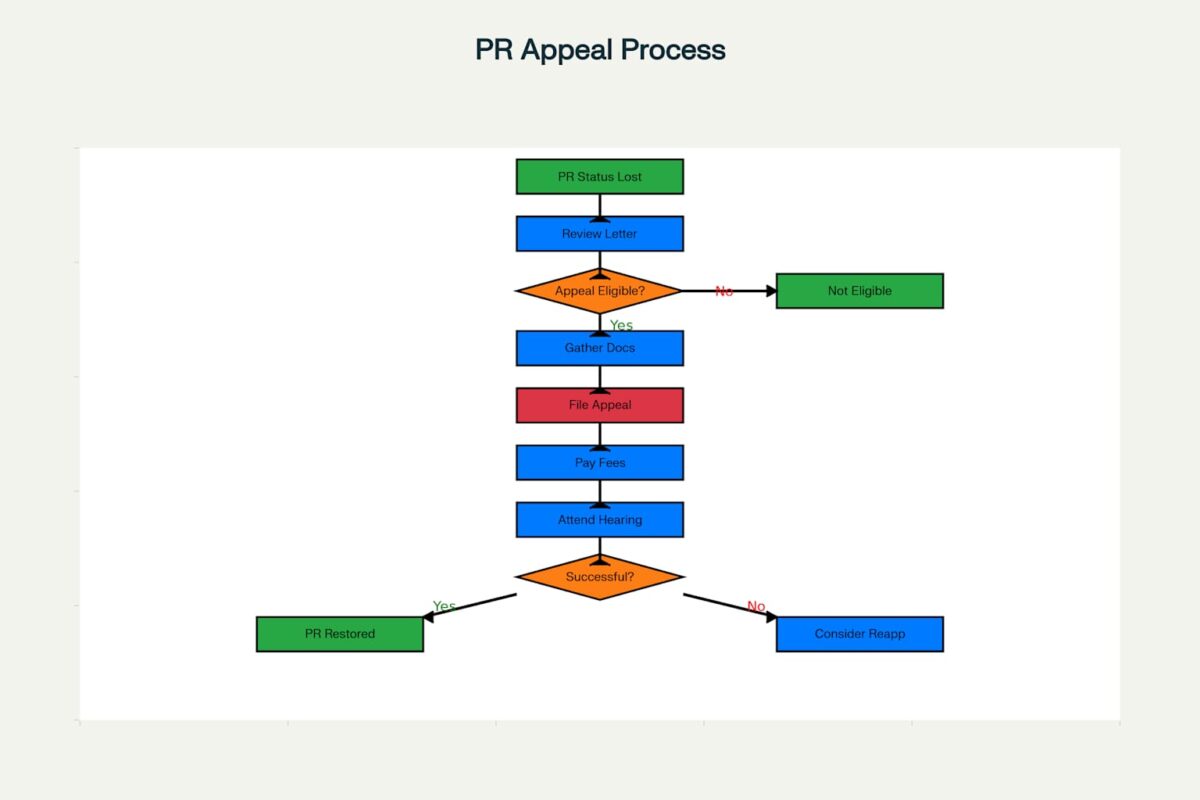

PR Appeal Process Flowchart – Step-by-step guide for appealing lost permanent residence status
The appeal process typically involves presenting your case to an independent tribunal or board . These bodies review both the original decision and any new evidence you provide to determine if the initial ruling should be overturned . Success often depends on demonstrating humanitarian and compassionate grounds or proving that the original decision contained errors .
Critical Deadlines and Timeframes
Time is of the essence when appealing a PR decision, as missed deadlines can permanently close your options . Most countries impose strict timeframes that cannot be extended, making immediate action essential .
| Country | Appeal Deadline | Appeal Authority | Appeal Fees | Success Rate |
|---|---|---|---|---|
| Canada | 30 days | Immigration Appeal Division (IAD) | No fee for family sponsorship appeals | Varies (15-30%) |
| Singapore | 6 months | Immigration & Checkpoints Authority (ICA) | SGD 30 | No official data |
| Australia | 28 days (in Australia), 70 days (outside) | Administrative Review Tribunal (ART) | AUD 3,496 | Varies (7-24%) |
| United States | 30 days (varies by case) | Board of Immigration Appeals (BIA) | USD 110 | Varies (7-15%) |
| United Kingdom | 14-28 days (varies) | First-tier Tribunal | GBP 80-140 | Varies |
| New Zealand | 42 days (varies by type) | Immigration & Protection Tribunal (IPT) | NZD 910 (most cases) | Varies |
Canadian appeals must typically be filed within 30 days of receiving the decision . Singapore offers a more generous six-month window from the rejection date . Australia provides 28 days for appeals filed within the country, but extends this to 70 days for overseas applicants .
Essential Documents for Your Appeal
Building a strong appeal requires comprehensive documentation that addresses the specific reasons for your status loss . Your evidence package should include the original refusal letter, your complete application file, and all supporting documents from your initial submission .
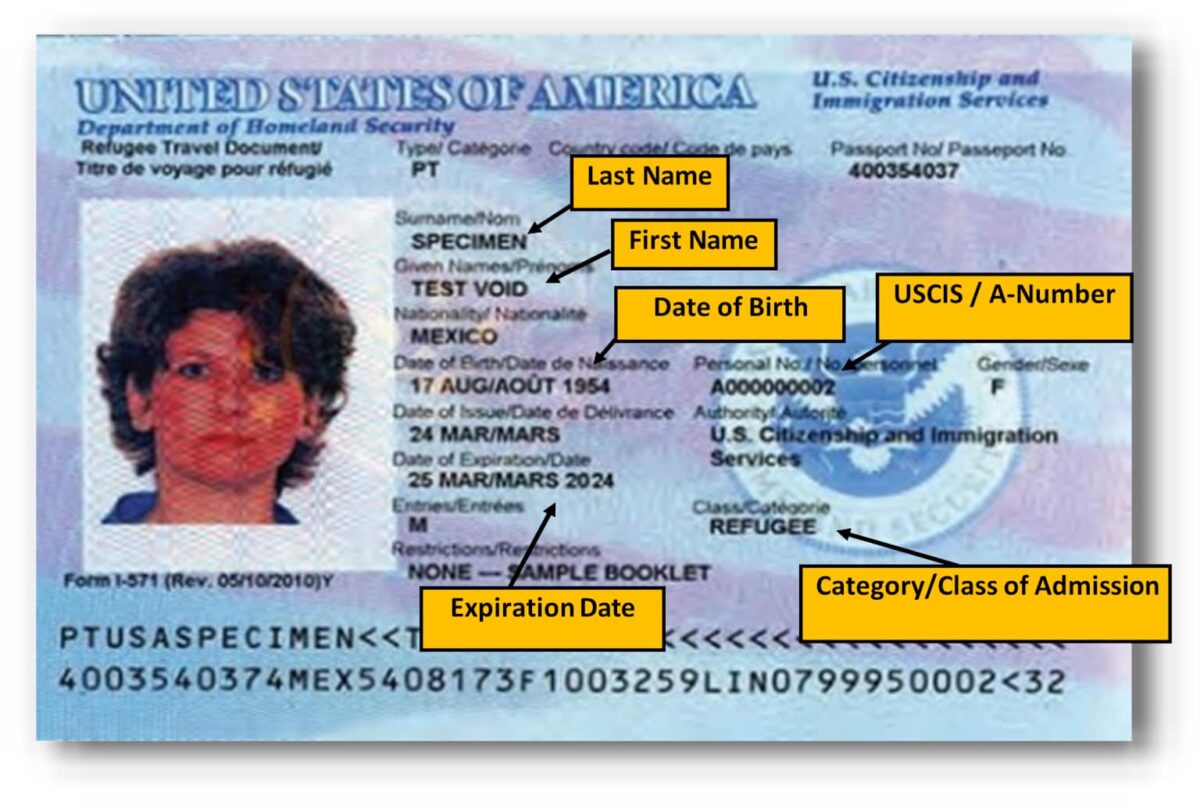
An annotated U.S. Refugee Travel Document (Form I-571) showing key immigration information such as name, date of birth, A-Number, and expiration date
For residency obligation appeals, travel records become particularly crucial . This includes passport stamps, boarding passes, hotel receipts, and any documentation proving your presence in the country . If you were employed by a domestic company while abroad, employment records can help demonstrate that your absence served the national interest .
Medical evidence may be vital if health issues contributed to your inability to meet residency requirements . Similarly, family circumstances affecting children or dependent relatives can provide humanitarian grounds for your appeal .
Preparing Your Appeal: A Step-by-Step Approach
Getting Professional Help
Navigating the appeal process alone can be overwhelming and risky, making professional legal assistance highly recommended . Immigration lawyers understand the nuances of appeal procedures and can identify the strongest arguments for your case .
Legal fees for immigration appeals typically range from £400 to £4,500 depending on complexity, plus additional costs for court fees and expert witnesses . While expensive, professional representation significantly improves your chances of success, particularly for complex cases involving multiple issues .
Your Complete Appeal Preparation Checklist
Systematic preparation is essential for a successful appeal, requiring careful attention to deadlines and documentation requirements . The process typically unfolds over several weeks, with specific tasks that must be completed in order .
✅ IMMEDIATE ACTIONS (Within 24-48 hours)
- Note appeal deadline date from refusal letter
- Secure legal representation if needed
- Gather original application documents and copies
- Review refusal letter thoroughly for specific reasons
- Check eligibility for appeal vs. reapplication
✅ DOCUMENT COLLECTION (Week 1-2)
Core Documents
- Original refusal/decision letter
- Complete application file (original submission)
- Passport and travel documents
- Previous PR cards/permits (if applicable)
- Identity documents (birth certificate, marriage certificate)
Supporting Evidence
- Proof of residence (utility bills, lease agreements, tax returns)
- Employment records (pay stubs, employment letters, tax documents)
- Bank statements (last 6-12 months)
- Medical reports (if health issues involved)
- Character references (from employers, community members)
Residency Obligation Appeals:
- Travel history (passport stamps, boarding passes, hotel receipts)
- Canadian employment records (if working for Canadian company abroad)
- Accompanying citizen spouse documentation
- Humanitarian & compassionate evidence
Family Sponsorship Appeals:
- Relationship evidence (photos, communications, joint accounts)
- Sponsor’s financial documents
- Proof of genuine relationship
✅ LEGAL PREPARATION (Week 2-3)
- Complete appeal forms accurately
- Prepare witness statements if applicable
- Organize evidence chronologically
- Translate foreign documents (certified translations)
- Pay appeal fees within deadline
- Submit appeal before deadline
✅ HEARING PREPARATION (If Applicable)
- Review all submitted documents
- Prepare opening statement
- Practice answering potential questions
- Arrange interpreter if needed
- Confirm hearing date/location
- Prepare additional evidence for hearing
✅ POST-DECISION ACTIONS
If Appeal Successful:
- Obtain written decision
- Apply for new PR card/document
- Update records with immigration authorities
If Appeal Unsuccessful:
- Consider further appeal options (if available)
- Explore reapplication pathways
- Seek additional legal advice
- Plan next steps within any deadlines
📋 IMPORTANT REMINDERS
Deadlines to Remember:
- Canada: 30 days for most appeals
- Singapore: 6 months from rejection
- Australia: 28 days (in Australia), 70 days (outside)
- United States: 30 days (varies by case type)
Key Success Factors:
- Act quickly – don’t delay starting the process
- Be thorough – missing documents can hurt your case
- Stay organized – keep all documents in order
- Be honest – provide accurate information only
- Get help – consider professional legal assistance
- Follow up – track your appeal status regularly
Common Mistakes to Avoid:
- Missing deadlines
- Incomplete documentation
- Inconsistent information
- Failing to address refusal reasons
- Not seeking legal help when needed
- Submitting late or incorrect fees
This checklist is for general guidance only. Specific requirements may vary by country and case type. Always consult with qualified immigration professionals for your specific situation.
The Reapplication Alternative: Starting Fresh
When to Choose Reapplication Over Appeal
Sometimes reapplying for PR status from scratch may be more practical than appealing, particularly if significant time has passed or your circumstances have substantially changed . Reapplication allows you to present an entirely new case based on current qualifications rather than defending past decisions .
The decision between appeal and reapplication often depends on the strength of your original application and the reasons for refusal . If the rejection was based on insufficient documentation that you can now provide, reapplication might offer better prospects .
Reapplication Timelines and Requirements
Most countries don’t impose waiting periods after PR status loss, allowing immediate reapplication if you meet current eligibility criteria . However, the process essentially starts from zero, requiring new assessments, updated documents, and current fee payments .
| Country | Waiting Period After Loss | Reapplication Process | Processing Time | Can Use Previous Application |
|---|---|---|---|---|
| Canada | No specific waiting period | New Express Entry/PNP application | 6-18 months | Limited – need new assessment |
| Singapore | No specific waiting period | Fresh PR application | 6-12 months | No – fresh application required |
| Australia | No specific waiting period | New skilled migration visa | 8-15 months | No – new points test required |
| United States | No specific waiting period | New immigrant petition required | 12-24 months | No – new petition required |
| United Kingdom | Varies by circumstances | New immigration application | 6-12 months | Limited – case by case |
Processing times for reapplications vary significantly by country and immigration program . Canadian Express Entry applications typically take 6-18 months, while U.S. immigrant petitions can require 12-24 months or longer . These timeframes don’t include the initial qualification and invitation stages for points-based systems .
Building a Stronger Reapplication
Learning from your previous refusal is crucial for improving your reapplication prospects . Review the original rejection reasons carefully and address each concern with stronger evidence and documentation.
Updated qualifications, such as improved language scores, additional education, or enhanced work experience, can significantly strengthen your reapplication . Financial stability, community ties, and integration efforts also demonstrate your commitment to permanent residence .
Country-Specific Considerations
Canada: Residency Obligations and Humanitarian Grounds
Canada’s residency obligation requires 730 days of physical presence within any five-year period, but several exceptions exist . Time spent accompanying a Canadian citizen spouse or working for a Canadian company abroad can count toward this requirement .
Humanitarian and compassionate grounds provide additional appeal options for those who cannot meet standard requirements . Factors considered include establishment in Canada, family ties, children’s best interests, and potential hardship from removal .
United States: Abandonment and Returning Resident Visas
U.S. permanent residents face abandonment presumptions after extended absences, particularly those exceeding one year without reentry permits . However, returning resident visas (SB-1) may be available for those with compelling reasons for their absence .
The key to successful U.S. status recovery is demonstrating that you never intended to abandon your residence and maintained substantial ties to the country . Employment, family, and financial connections all serve as evidence of continued commitment .
Australia: Resident Return Visas and Substantial Ties
Australian permanent residents can apply for Resident Return Visas (RRVs) to regain status after extended absences . Requirements depend on how long you’ve been away, with more stringent criteria for absences exceeding five years .
Substantial ties to Australia must be both significant and beneficial to the country . Business investments, family connections, and community contributions all strengthen RRV applications .
Maximizing Your Success Rate
Understanding Success Rates and Outcomes
Appeal success rates vary significantly by country, case type, and individual circumstances . Criminal appeals generally have lower success rates (6-15%) compared to civil immigration matters (14-24%) .
While these statistics might seem discouraging, remember that each case is unique and proper preparation can significantly improve your odds . Professional legal representation, comprehensive documentation, and strong humanitarian arguments all contribute to positive outcomes .
Common Mistakes to Avoid
Many appeals fail due to preventable errors rather than fundamental case weaknesses . Missing deadlines remains the most common and devastating mistake, permanently closing appeal options .
Incomplete documentation, inconsistent information, and failure to address specific refusal reasons also undermine appeal prospects . Taking time to thoroughly prepare and review your submission prevents these costly oversights .
Special Circumstances and Emergency Situations
Lost Documents While Abroad
If you lose your PR card or documents while traveling, immediate action is required to return to your country of residence . Most countries offer emergency travel documents for permanent residents stranded abroad .
Permanent Resident Travel Documents (PRTDs) serve as temporary alternatives allowing return for PR card replacement . These applications require proof of your status and evidence explaining your document loss .
Family Separation Concerns
Appeals involving family separation, particularly those affecting children, receive special consideration under humanitarian grounds . Courts and tribunals must consider children’s best interests when making removal decisions .
Comprehensive evidence of family ties, children’s school enrollment, medical needs, and community connections strengthens these arguments . Expert reports from social workers or child psychologists can provide additional support .
Financial Considerations and Fee Planning
Appeal Costs and Financial Planning
Understanding the full cost of appeals helps in planning and budgeting for the process . Beyond application fees, consider legal representation, document translation, expert witnesses, and potential travel costs for hearings .
Fee waivers or reductions may be available for those facing financial hardship, though eligibility criteria vary by jurisdiction . Legal aid programs sometimes provide assistance for immigration appeals, particularly those involving protection issues .
Cost-Benefit Analysis: Appeal vs. Reapplication
Comparing the total costs of appeals versus reapplication helps determine the most economical path forward . While appeals may seem cheaper initially, unsuccessful appeals often lead to eventual reapplication anyway .
Factor in time costs as well, since lengthy appeal processes can delay resolution and employment authorization . Quick reapplication might restore your status and work rights faster than a prolonged appeal .
Conclusion: Taking Action and Moving Forward
Losing PR status is undoubtedly stressful, but understanding your options empowers you to take effective action . Whether you choose to appeal or reapply, success depends on careful preparation, meeting deadlines, and presenting compelling evidence .
Remember that immigration law is complex and constantly evolving, making professional assistance valuable for maximizing your chances of success . While costs may seem significant, the value of restored permanent residence status typically far outweighs the investment required .
The most important step is taking action quickly while preserving all your options . Every day counts when dealing with immigration deadlines, so begin gathering documents and seeking advice immediately after learning of your status loss . With proper preparation and persistence, many people successfully restore their permanent residence status and continue building their lives in their chosen countries .
Related reading: How to Meet Residency Obligations as a PR: — a closer look at this topic.