
Federal minimum wage rises to $18.15 in April 2026

For minimum wage by province in November, the federal rate is $18.15 per hour for employees working for federally regulated employers, effective April 1, 2026. If the minimum wage where you work is higher, the provincial or territorial rate applies. Compare the federal rate with the local rate to see which applies to your pay.
What is the minimum wage by province in November?
Quick answer: For employees of federally regulated employers, the federal minimum wage is $18.15 per hour from April 1, 2026. If the provincial or territorial minimum wage where you work is higher, that local rate applies. Compare the federal rate with the rate for your work location and use the higher one.
- The federal rate was $17.75 per hour from April 1, 2025, for employees working for federally regulated employers.
- The $18.15 federal rate applies to employees working for federally regulated employers from April 1, 2026.
- The federal minimum-wage rules also apply to interns at federally regulated employers and federally regulated employees under 18.
- If your provincial or territorial rate is higher than the federal rate, use the local rate.
Who is affected
For minimum wage by province in November, a higher provincial or territorial minimum wage applies to a federally regulated employee if it exceeds the federal rate.
The federal rate is $18.15 per hour for employees working for federally regulated employers, effective April 1, 2026. When the local provincial or territorial minimum wage is higher, that local rate applies instead.
Interns working for federally regulated employers and federally regulated employees under 18 are covered by the federal minimum-wage rules.
Key facts
| Federal minimum wage | Effective date |
|---|---|
| $17.75 per hour | April 1, 2025 |
| $18.15 per hour | April 1, 2026 |
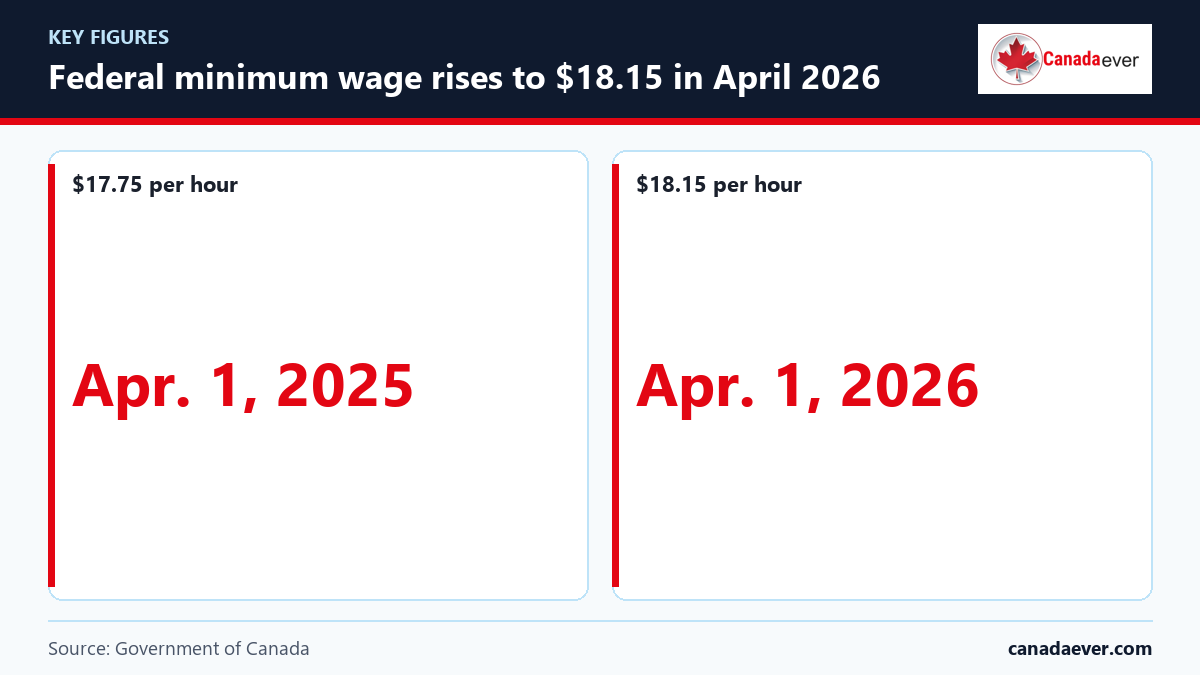
So the federal rate alone may not determine the minimum pay you’re owed. The table’s dates distinguish the earlier federal rate from the rate that takes effect in 2026.
For federally regulated employees, compare the federal rate with the minimum wage in the province or territory where you work. The higher local rate applies when that rate exceeds the federal minimum wage. The announcement gives the federal rates and this comparison rule, but not individual provincial or territorial wage amounts.
The federal minimum-wage rules also cover interns working for federally regulated employers and federally regulated employees under 18. If either applies to you, the same higher-rate rule applies: use the provincial or territorial minimum wage when it is above the federal rate.
The federal rate may rise to account for inflation, with increases based on Canada’s Consumer Price Index for the previous calendar year, as published by Statistics Canada. The comparison depends on where you work, so check the applicable provincial or territorial rate before relying on the federal figure alone.
| Key fact | Source |
|---|---|
| Note: If the 15% of the total amount owed is more than $200, the Labour Program will apply that amount to the Payment Order along with the wages or other monies owed to the employee. | Government of Canada |
| If you report to work at the call of your employer, you must receive wages for at least 3 hours at your regular rate of wages. | Government of Canada |
| If your employment ends and you are owed vacation pay, your employer must pay it within 30 days after your last day of work. | Government of Canada |
| Employers must reimburse reasonable work-related expenses within 30 days after the day on which you submitted the claim for payment. | Government of Canada |
| For more information, please consult IPG-120. | Government of Canada |
| The Labour Program can recover up to 24 months of unpaid wages or other amounts owed. | Government of Canada |
What to do next
To determine which minimum wage applies at a federally regulated workplace, compare the federal rate with the rate where you work.
- Compare the rates. Find the provincial or territorial minimum wage for the place where you work, then compare it with the federal minimum wage.
- Use the higher rate. If the provincial or territorial minimum wage is higher than the federal minimum wage, that provincial or territorial rate applies to you.
See the official page, Pay and minimum wage, deductions, and wage recovery.
Frequently Asked Questions
SEO title: Minimum wage by province November: federal rate rises to $18.15
Key dates and numbers
The federal rates and effective dates for federally regulated employees are:
| Federal minimum wage | Effective date |
|---|---|
| $17.75 per hour | April 1, 2025 |
| $18.15 per hour | April 1, 2026 |
What to do next
If you work for a federally regulated employer, compare the federal minimum wage with the minimum wage where you work.
- Find the provincial or territorial rate for your work location.
- If that rate is higher than the federal rate, it applies to you.
Does overtime pay follow the same minimum wage rate rules?
The federal minimum-wage rules set the applicable minimum rate for federally regulated employees, including when a higher provincial or territorial rate applies.
What happens if my employer pays less than the required minimum wage?
Rules and dates can change; confirm on Canada.ca.