
July 4, 2025: Enhanced GST/HST Credit Payments Begin with 2.7% Increase

The Canada Revenue Agency is preparing to distribute the next round of GST/HST credit payments on July 4, 2025, marking the start of a new benefit year with increased amounts for eligible Canadians . This quarterly payment represents a significant boost for low- and modest-income individuals and families, with amounts increased by 2.7% compared to the previous year .
The Canada Revenue Agency is preparing to distribute the next round of GST/HST credit payments on July 4, 2025, marking the start of a new benefit year with increased amounts for eligible Canadians .
This quarterly payment represents a significant boost for low- and modest-income individuals and families, with amounts increased by 2.7% compared to the previous year .
What’s New for July 2025
Key Changes and Increases
The July 4, 2025 payment introduces several important updates that will benefit millions of Canadians . The 2.7% increase reflects the government’s commitment to helping citizens cope with rising living costs through adjusted benefit amounts . This adjustment follows the Consumer Price Index calculations, ensuring that GST/HST credits maintain their purchasing power .
Important Note: This payment marks the beginning of the 2025-2026 benefit year, meaning all calculations are based on your 2024 tax return information .
Maximum Payment Amounts for 2025
The enhanced payment structure provides increased support across all recipient categories . Single individuals can now receive up to $533 annually, while married couples or those with common-law partners are eligible for up to $698 per year . Families with children benefit from an additional $184 per child under 19 years of age .
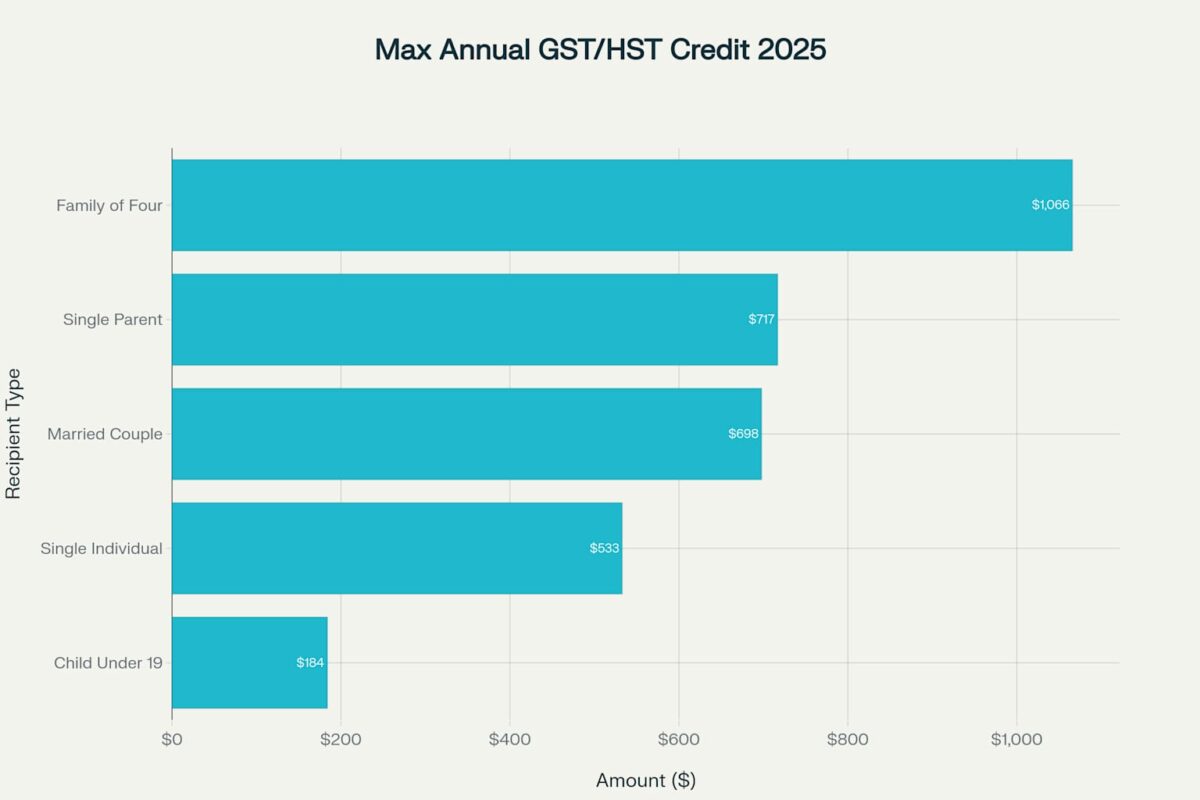

Maximum Annual GST/HST Credit Amounts by Recipient Type for 2025
Here’s the complete breakdown of maximum annual amounts:
| Recipient Type | Annual Maximum | Quarterly Payment | Monthly Equivalent |
|---|---|---|---|
| Single Individual | $533 | $133.25 | $44.42 |
| Married/Common-law Couple | $698 | $174.50 | $58.17 |
| Each Child Under 19 | $184 | $46.00 | $15.33 |
| Single Parent with One Child | $717 | $179.25 | $59.75 |
| Family of Four | $1,066 | $266.50 | $88.83 |
Comparison with Previous Year
The increases represent meaningful financial relief for Canadian households . Single individuals will see their maximum annual benefit increase from $519 to $533, representing a $14 boost .
Married couples experience an $18 increase, with their maximum rising from $680 to $698 annually . The per-child benefit grows from $179 to $184, providing an additional $5 per child .
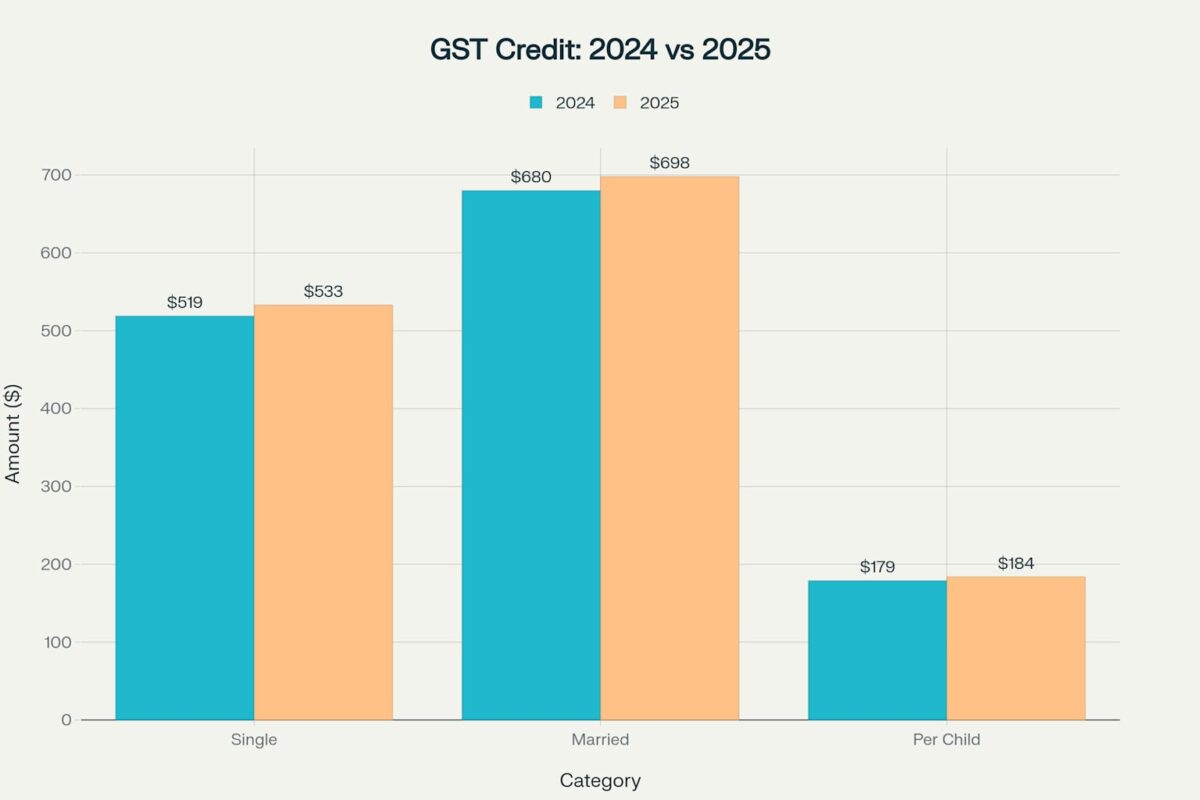
Comparison of GST/HST Credit amounts between 2024 and 2025 showing the increase
Complete 2025 Payment Schedule
Quarterly Payment Dates
The GST/HST credit follows a predictable quarterly schedule throughout 2025 . The Canada Revenue Agency distributes payments on the first business day of January, April, July, and October each year . This schedule helps Canadians plan their finances and budget for regular income supplements .

GST/HST Credit Payment Schedule for 2025 showing quarterly payment dates
2025 Payment Schedule:
- ✅ January 3, 2025 – Q1 payment (completed)
- ✅ April 4, 2025 – Q2 payment (completed)
- 📍 July 4, 2025 – Q3 payment (upcoming – with 2.7% increase)
- 📅 October 3, 2025 – Q4 payment (scheduled)
What Makes July 4th Special
The July 4th payment is particularly significant because it represents the first installment of the new benefit year . All recipients will notice the increased amounts reflecting the 2.7% adjustment . This date also marks when the CRA begins using your 2024 tax return information to calculate eligibility and payment amounts .
Eligibility Requirements Made Simple
Basic Qualification Criteria
To receive GST/HST credit payments, you must meet specific residency and age requirements . Canadian residents aged 19 or older automatically qualify, provided they meet income thresholds . Individuals under 19 can also qualify if they have a spouse, common-law partner, or child .
Essential Requirements:
- Canadian resident for tax purposes
- Age 19+ OR under 19 with spouse/partner/child
- Filed your annual tax return (even with zero income)
- Adjusted family net income below maximum thresholds
Income Thresholds and Phase-Outs
The GST/HST credit uses adjusted family net income to determine eligibility and payment amounts . Benefits begin to reduce when family income exceeds $45,521 annually . Single individuals with incomes above $52,255 typically don’t qualify for the credit .
Income Brackets:
| Income Range | Single Supplement | Credit Reduction |
|---|---|---|
| $0 – $11,337 | Up to $184 additional | None |
| $11,338 – $45,520 | Gradually reduced | None |
| $45,521 – $52,255 | None | Gradual reduction |
| $52,256+ | None | No credit (single) |
| $69,016+ | N/A | No credit (family of 6) |
How to Ensure You Receive Your Payment
Automatic Enrollment Process
Most Canadians don’t need to apply separately for GST/HST credits . The Canada Revenue Agency automatically assesses your eligibility when you file your annual tax return . This automatic system ensures that eligible individuals receive their payments without additional paperwork .
New Residents Application Process
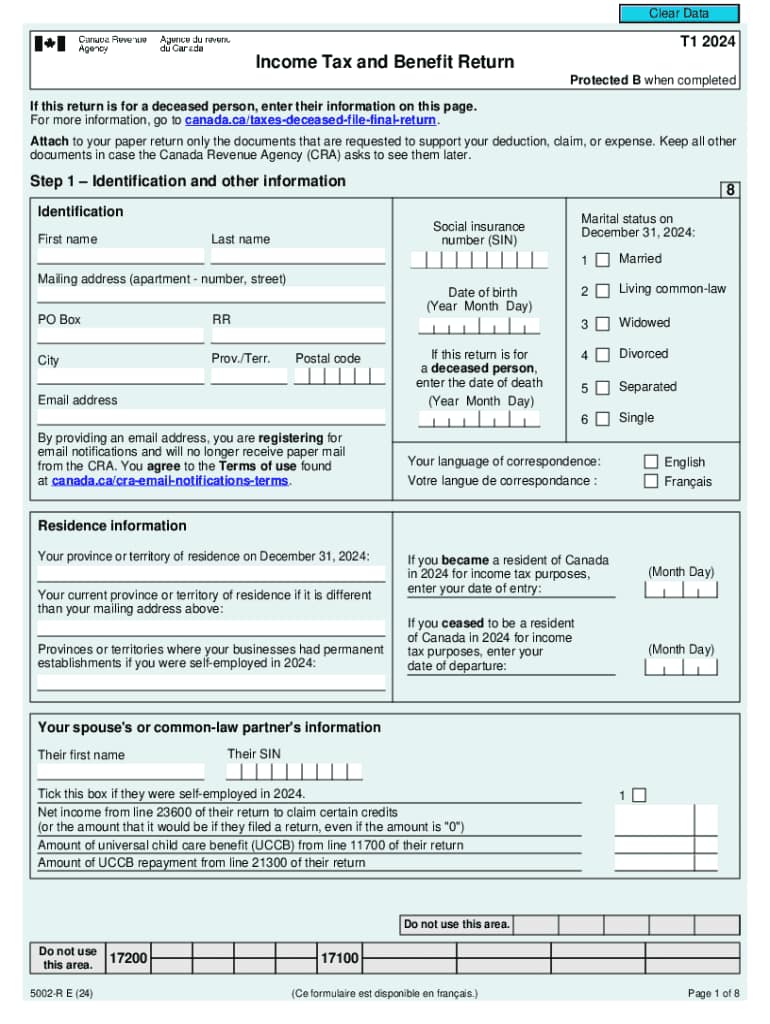
New Canadian residents must complete a separate application process . Those without children can use the online Form RC151 through the CRA website . New residents with children under 19 must download, print, and mail the RC151 form along with required supporting documents .
Setting Up Direct Deposit
Direct deposit ensures faster, more secure payment delivery . You can set up direct deposit through your CRA My Account, participating banks, or by calling the CRA directly . Most major Canadian banks offer streamlined CRA direct deposit registration through their online banking platforms .
Benefits of Direct Deposit:
- Faster payment delivery
- Enhanced security
- No risk of lost or stolen cheques
- Automatic deposits to your chosen account
CRA My Account Management
Your CRA My Account provides essential tools for managing GST/HST credit payments . Regular account monitoring helps ensure your information stays current and payments arrive on schedule . The online portal allows you to update personal information, check payment history, and estimate future payments .
A sign for the Canada Revenue Agency, the organization responsible for tax and benefit administration in Canada
GST/HST Credit Checklist 2025
✅ Pre-July 4th Preparation Checklist
Before the Payment Date
- Verify your tax return filing – Ensure your 2024 tax return has been filed (required for July 2025 payments)
- Update personal information – Check that your address, marital status, and children are current with CRA
- Set up direct deposit – Avoid delays by having payments deposited directly to your bank account
- Confirm eligibility – Use the CRA benefits calculator to estimate your payment amount
- Check CRA My Account – Log in to verify your GST/HST credit status and payment history
New Residents
- Complete Form RC151 – New residents must apply using the GST/HST Credit Application
- Gather required documents – Birth certificates for children, proof of residency
- Submit application early – Allow processing time before payment dates
🏦 Banking & Payment Setup
Direct Deposit Setup
- Bank account verification – Ensure your account details are correct in CRA My Account
- Update banking information – Change bank details if you’ve switched institutions
- Test deposit method – Verify previous payments arrived correctly
Payment Tracking
- Monitor payment dates – Mark quarterly dates in your calendar (Jan 3, Apr 4, Jul 4, Oct 3)
- Track payment amounts – Keep records of received payments for budgeting
- Report issues promptly – Contact CRA immediately if payments are missing or incorrect
📱 CRA My Account Management
Account Maintenance
- Regular login – Access your account every few months to stay updated
- Update contact preferences – Choose email notifications for faster updates
- Review benefit statements – Check annual statements for accuracy
- Security settings – Enable two-factor authentication for account protection
Information Updates
- Marital status changes – Report marriages, separations, or divorces immediately
- Address changes – Update mailing and residential addresses
- Child information – Add newborns or update when children turn 19
- Income changes – Be aware that significant income changes affect future payments
💰 Payment Amount Verification
2025 Maximum Amounts to Expect
- Single individuals: Up to $533 annually ($133.25 quarterly)
- Married couples: Up to $698 annually ($174.50 quarterly)
- Per child under 19: Up to $184 annually ($46 quarterly)
Income Considerations
- Phase-out threshold: Benefits reduce when family income exceeds $45,521
- Single supplement: Available for low-income singles (income under $11,337)
- Family size: Larger families have higher income thresholds
🆘 Troubleshooting & Support
Common Issues
- Missing payments – Check payment dates and contact CRA if overdue
- Wrong amounts – Compare received amounts with benefit statements
- Address issues – Ensure CRA has current mailing address for cheque recipients
- Banking problems – Verify account information if direct deposits fail
Getting Help
- CRA contact information – Save relevant phone numbers and online resources
- My Account messaging – Use secure messaging for non-urgent issues
- Local tax clinic – Find free tax preparation help if needed
- Professional assistance – Consider tax professional for complex situations
📅 Important Dates to Remember
2025 Payment Schedule
- ✅ January 3, 2025 – Q1 payment (completed)
- ✅ April 4, 2025 – Q2 payment (completed)
- 📍 July 4, 2025 – Q3 payment (upcoming – NEW BENEFIT YEAR with 2.7% increase)
- 📅 October 3, 2025 – Q4 payment (scheduled)
Annual Tasks
- File 2025 tax return by April 30, 2026 – Required for continued eligibility
- Review benefit year changes – Check for updates each July
- Annual benefit statement review – Verify accuracy each tax season
This checklist is for informational purposes. Always refer to official CRA resources and consult tax professionals for personalized advice.
Troubleshooting Common Issues
Missing or Late Payments
If your July 4th payment doesn’t arrive on schedule, several factors could be responsible . Address changes, banking information updates, or income reassessments can delay payments . Contact the CRA immediately if your payment is more than five business days late .
Incorrect Payment Amounts
Payment amount discrepancies often result from updated tax assessments or changed family circumstances . The CRA recalculates payments when marital status changes, children turn 19, or income adjustments occur . Review your Notice of Determination to understand any payment changes .
Direct Deposit Failures
Banking information errors cause most direct deposit failures . Verify that your account number, transit number, and institution number are correct in your CRA My Account . Closed accounts or insufficient account permissions can also prevent successful deposits .
Maximizing Your GST/HST Credit Benefits
Keeping Information Updated
Maintaining current information with the CRA ensures accurate payment calculations . Report major life changes like marriage, divorce, new children, or address changes promptly . These updates can affect your eligibility and payment amounts for future quarters .
Understanding Payment Calculations
The CRA uses a complex formula considering your adjusted family net income, marital status, and number of eligible children . Use the official CRA benefits calculator to estimate your payments and understand how changes might affect your benefits .
Planning for Annual Variations
GST/HST credit amounts can vary each benefit year based on your previous year’s tax return . Significant income changes, family size adjustments, or marital status modifications will affect your next year’s payments . Plan your budget accordingly and monitor your CRA My Account for updates .
What to Expect Beyond July 2025
Remaining 2025 Payments
After the July 4th payment, one more GST/HST credit payment is scheduled for 2025 . The October 3, 2025 payment will maintain the same increased amounts established in July . This final quarterly payment completes the 2025 calendar year distribution schedule .
Future Benefit Year Adjustments
The CRA typically announces benefit adjustments each spring for the following benefit year . These adjustments reflect inflation rates and economic conditions affecting Canadian households . Monitor CRA announcements and your My Account for updates about future changes .
Additional Resources and Support
Official CRA Resources
The Canada Revenue Agency provides comprehensive online resources for GST/HST credit recipients . The official website includes calculators, forms, guides, and frequently asked questions . The CRA’s toll-free phone lines offer personalized assistance for complex situations .
Community Support Options
Many communities offer free tax preparation services and benefit assistance . Local libraries, community centers, and volunteer organizations often provide help with CRA applications and account management . These services are particularly valuable for seniors, newcomers, and individuals with limited internet access .