Citizenship Ceremony: What to Expect and How to Prepare
Attending a citizenship ceremony is a momentous milestone that marks the final step in your journey to becoming a naturalized citizen. Whether it’s your first ceremony or you’re helping a loved one prepare, understanding what to expect and how to properly prepare will ensure this special day goes smoothly and meaningfully.
Understanding the Citizenship Ceremony
A citizenship ceremony is the formal event where eligible applicants take the oath of allegiance and officially become citizens of their new country. This ceremony represents the culmination of the naturalization process and transforms permanent residents into full citizens with all associated rights and responsibilities.
Types of Ceremonies
In-Person Ceremonies
Traditional ceremonies take place at government offices, community centers, or public venues like town halls and hotel ballrooms. These events typically include multiple new citizens and their guests, creating a celebratory community atmosphere.
Virtual Ceremonies
Many countries now offer virtual ceremonies conducted through video conferencing platforms like Zoom. These became popular during the pandemic and remain a convenient option for those facing logistical challenges.
Timeline and Process Overview
The citizenship ceremony process follows a structured timeline from application approval to completion. Understanding this timeline helps you plan and prepare appropriately for each stage.
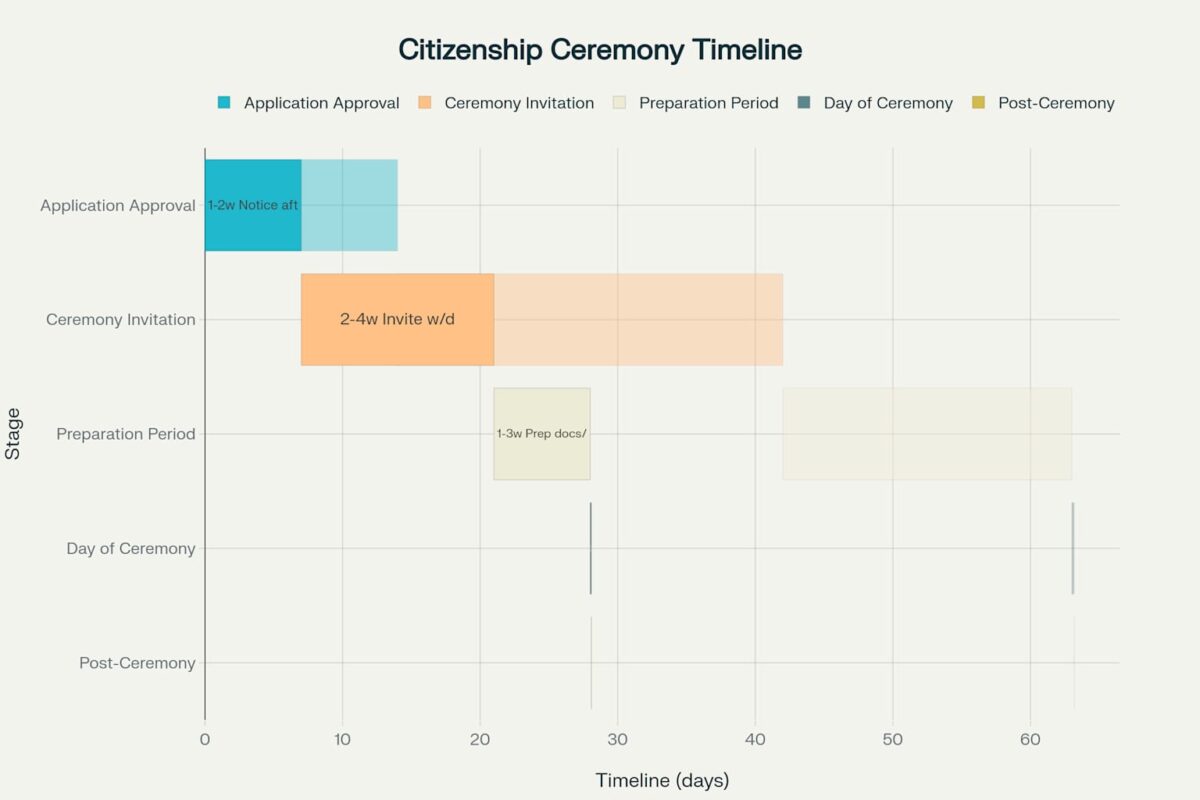

Citizenship Ceremony Process Timeline – From Application Approval to Completion
Pre-Ceremony Phase (3-6 weeks)
After passing your citizenship test and interview, you’ll receive an invitation to attend a ceremony. This invitation typically arrives 1-2 weeks after approval, with ceremony dates scheduled 2-4 weeks in advance.
Preparation Period (1-3 weeks)
Use this time to gather required documents, select appropriate attire, and review the oath of citizenship. Many applicants also use this period to plan celebrations with family and friends.
Day of Ceremony (2-4 hours)
The actual ceremony involves registration, check-in procedures, the formal ceremony with oath-taking, and certificate presentation. Plan for the entire event to take several hours including registration and post-ceremony activities.
What to Expect During the Ceremony
Registration and Check-In
Arrive at least 30 minutes early for registration. Officials will verify your identity, review your documents, and confirm your eligibility to take the oath. During check-in, you’ll receive ceremony materials including welcome packets, American flags (in the US), and informational booklets.
Pre-Ceremony Presentations
Before the actual oath-taking, expect presentations that may include videos, music, and opening remarks from ceremony officials. Special guests such as elected officials, community leaders, or Indigenous participants may also provide welcome speeches.
The Oath of Citizenship
The centerpiece of the ceremony is taking the oath of allegiance. In the United States, the oath reads: “I hereby declare, on oath, that I absolutely and entirely renounce and abjure all allegiance and fidelity to any foreign prince, potentate, state, or sovereignty… that I will support and defend the Constitution and laws of the United States of America against all enemies, foreign and domestic”.
You’ll stand, raise your right hand, and recite the oath aloud with other new citizens. This moment officially transforms you from a permanent resident to a full citizen.
Certificate Presentation
After taking the oath, you’ll be called forward individually to receive your naturalization certificate from the presiding official. This certificate serves as official proof of your citizenship and is essential for applying for a passport.
Closing Activities
Ceremonies typically conclude with the national anthem and closing remarks. Many venues offer photo opportunities and refreshments after the formal proceedings.
Required Documents and Preparation
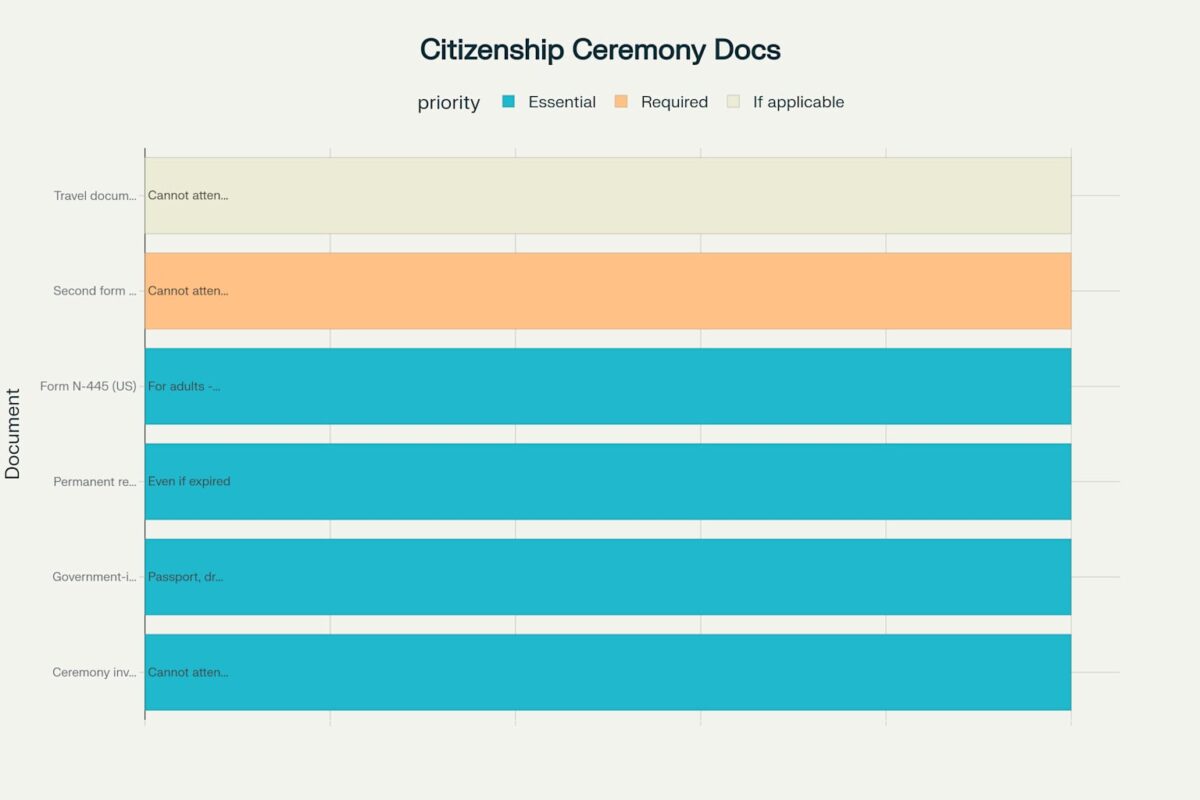
Required Documents Checklist for Citizenship Ceremony by Priority Level
Proper documentation is absolutely critical for ceremony attendance. Missing any required document may prevent you from participating in the ceremony.
Essential Documents Checklist
Universal Requirements:
- Ceremony invitation letter – Cannot attend without this official notice
- Government-issued photo identification – Passport, driver’s license, or state-issued ID
- Permanent resident card (PR card) – Required even if expired
Country-Specific Requirements:
United States:
- Form N-445 (Notice of Naturalization Oath Ceremony) with completed questionnaire if ceremony is not same day as interview
- USCIS-issued travel documents if applicable (re-entry permits, refugee travel documents)
- Second form of government-issued photo ID
Canada:
- Two pieces of identification with photo and signature for adults
- Confirmation of Permanent Residence (IMM5292 or IMM5688) if you don’t have a PR card
United Kingdom:
- Home Office citizenship invitation letter
- One piece of photographic identification such as passport or driver’s license
Pre-Ceremony Preparation Tips
Document Organization:
- Create a checklist and gather all documents at least one week before the ceremony
- Make photocopies of important documents as backup
- Store everything in a secure folder or envelope for easy transport
Review Ceremony Materials:
- Read your invitation letter thoroughly for specific instructions and requirements
- Familiarize yourself with the oath of citizenship text
- Review any ceremony booklets or materials provided with your invitation
Dress Code and Etiquette Guidelines
Citizenship ceremonies are formal, dignified events that require appropriate attire and behavior. Dress codes help maintain the solemn and respectful nature of this important milestone.
Appropriate Attire
Recommended Clothing:
- Business casual to formal attire – The most widely accepted approach
- Suits and ties for men, dresses or business suits for women
- Traditional or cultural clothing – Often welcomed and encouraged
- Religious head coverings – Generally permitted, though you may need to remove face coverings briefly for identification
What to Avoid
Inappropriate Items:
- Jeans (prohibited in most jurisdictions)
- Shorts and flip-flops (specifically banned by many authorities)
- Sports wear, beach wear, or casual t-shirts
- Bare feet or rubber thongs
- Offensive clothing or graphics
Etiquette Guidelines
Behavioral Expectations:
- Arrive on time or early – lateness may result in exclusion from the ceremony
- Turn off mobile devices or put them on silent mode
- Remain seated and quiet during formal portions of the ceremony
- Stand when instructed for the oath and national anthem
- Be respectful during speeches and presentations
Guest Policies and Limitations
Most citizenship ceremonies allow new citizens to bring a limited number of guests to share in this special moment.
Guest Restrictions
- Most countries limit guests to 1-2 people per new citizen
- Children policies vary – some venues discourage bringing young children due to the formal nature and length of ceremonies
- Guest registration may be required in advance
Guest Preparation
- Inform guests about dress code expectations and ceremony duration
- Provide guests with arrival time and location details
- Explain ceremony etiquette and behavioral expectations
Virtual Ceremony Considerations
Virtual ceremonies have become increasingly common and require specific technical and environmental preparations.
Technical Requirements
- Stable internet connection and compatible device with webcam
- Supported web browsers (typically Chrome or Safari)
- Zoom software or other specified video conferencing platform
- Quiet, well-lit environment with minimal distractions
Virtual Ceremony Process
- Join the call using the link provided in your invitation
- Wait for admission – larger ceremonies may require waiting up to 30 minutes
- Identity verification during private registration session
- Cut your PR card with scissors when instructed
- Take the oath while visible on camera
Common Mistakes to Avoid
Understanding frequent errors can help ensure your ceremony experience goes smoothly without unnecessary complications.
Critical Errors
- Missing the ceremony without notice – May result in application denial and require starting the process over
- Arriving without required documents – Will prevent participation in the ceremony
- Failing to complete Form N-445 questionnaire (US applicants) – Required if ceremony is not same day as interview
Preparation Mistakes
- Not checking invitation details carefully – Missing important instructions or requirements
- Inappropriate dress – May be denied entry or asked to change
- Bringing unauthorized items – Some venues restrict cameras, food, or large bags
Administrative Errors
- Not updating contact information – May miss important ceremony communications
- Assuming ceremony format – Confirm whether your ceremony is in-person or virtual
Accommodation and Special Circumstances
Citizenship authorities provide accommodations for individuals with disabilities or special needs to ensure equal access to the ceremony process.
Available Accommodations
- Mobility assistance – Wheelchair accessible venues and assistance
- Visual impairments – Large print materials, Braille documents, or audio formats
- Hearing impairments – Sign language interpreters or assistive listening devices
- Medical conditions – Home visits for those unable to travel due to serious medical conditions
Requesting Accommodations
Contact the office handling your ceremony as soon as you receive your invitation to request any needed accommodations. Provide documentation of your disability or medical condition and specify the type of assistance required.
Rescheduling and Special Situations
Sometimes circumstances beyond your control may require rescheduling your ceremony. Understanding the policies and procedures can help you navigate these situations properly.
Valid Reasons for Rescheduling
- Medical emergencies – Hospitalization or serious illness affecting you or immediate family members
- Death of immediate family member – Requires death certificate documentation
- Military deployment – For service members with orders
Rescheduling Process
- Contact authorities immediately – Don’t wait until the last minute
- Provide documentation – Medical notes, death certificates, or military orders as proof
- Submit written request – Email or letter explaining circumstances and requesting new date
Important Warnings
- Limited rescheduling opportunities – Most authorities only allow one or two reschedule requests
- Non-emergency travel is typically not accepted – Personal vacation or business trips don’t qualify for rescheduling
- Three-month deadline – In some countries, you must attend a ceremony within three months of invitation or lose your application
After the Ceremony: Next Steps
Your journey doesn’t end with receiving your citizenship certificate. Several important steps should be completed promptly after your ceremony.
Immediate Actions (Within 1 Week)
- Apply for passport – Your green card is collected during the ceremony, making a passport essential for travel
- Update Social Security information – Remove work authorization restrictions from your Social Security card
- Secure your citizenship certificate – This document is difficult to replace if lost
Within One Month
- Register to vote – Many venues offer voter registration at the ceremony or shortly after
- Update driver’s license – Change your license to reflect your new citizenship status
- Notify employers – Update employment records to reflect your citizenship status
Ongoing Considerations
- Understand citizenship responsibilities – Including jury duty, tax obligations, and civic participation
- Learn about passport renewal procedures – Understand future renewal requirements and timelines
Cost Considerations
While the ceremony itself may be included in your application fee, additional costs may apply depending on your situation and preferences.
Included Costs
- Standard group ceremony – Usually included in the citizenship application fee
- Basic ceremony materials – Welcome packets, certificates, and informational materials
Additional Fees
- Private ceremonies – Can cost £150 in the UK or similar amounts in other countries
- Professional photography – Many venues offer paid photo services
- Express passport services – Expedited passport processing for urgent travel needs
Conclusion and Final Tips
The citizenship ceremony represents the culmination of your journey to become a naturalized citizen. Proper preparation, understanding requirements, and knowing what to expect will help ensure this milestone moment proceeds smoothly and memorably.
Final Preparation Checklist
- Confirm all required documents are gathered and organized
- Review ceremony invitation for specific instructions and requirements
- Plan appropriate attire following dress code guidelines
- Arrange transportation and arrive early on ceremony day
- Prepare for post-ceremony steps including passport application
Remember that this ceremony is not just a bureaucratic requirement but a celebration of your commitment to your new country. Take time to appreciate the significance of this moment and the rights and responsibilities that come with citizenship.
The oath you take during the ceremony represents a solemn promise to uphold the laws and values of your new nation. Embrace this responsibility with pride and continue contributing positively to your community as a new citizen.
Whether your ceremony is in-person or virtual, formal or intimate, this day marks the beginning of a new chapter in your life. Congratulations on reaching this important milestone in your citizenship journey!