How to Get a Work Permit in Canada: Complete Guide 2026

Canada continues to be one of the world’s most attractive destinations for foreign workers, offering excellent career opportunities, competitive wages, and a pathway to permanent residency. With over 834,010 temporary resident applications approved in the first quarter of 2025 alone, Canada’s immigration system remains robust and welcoming to skilled professionals from around the globe.
This comprehensive guide will walk you through everything you need to know about obtaining a Canadian work permit in 2025, including recent policy changes, application processes, and essential requirements.
Understanding Canadian Work Permits
What is a Canadian Work Permit?
A Canadian work permit is an official document issued by Immigration, Refugees and Citizenship Canada (IRCC) that authorizes foreign nationals to work legally in Canada for a specific period. Most foreign nationals require a work permit to work in Canada, with some exemptions for specific categories.


Types of Work Permits Available in 2025
Canada offers several types of work permits to accommodate different employment scenarios and applicant profiles. Understanding these distinctions is essential for choosing the right application path.
| Work Permit Type | Job Offer Required | LMIA Required | Employer Flexibility | Typical Duration | Primary Use Case |
|---|---|---|---|---|---|
| Employer-Specific Work Permit | Yes | Usually Yes | Single Employer | Up to 4 years | Regular employment |
| Open Work Permit | No | No | Any Employer | Varies | Special circumstances |
| Post-Graduation Work Permit (PGWP) | No | No | Any Employer | Up to 3 years | Recent graduates |
| International Experience Canada (IEC) | No | No | Any Employer | 1-2 years | Young professionals |
| Spousal Open Work Permit | No | No | Any Employer | Same as spouse | Spousal support |
| LMIA-Based Work Permit | Yes | Yes | Single Employer | Up to 4 years | Labour shortage roles |
| LMIA-Exempt Work Permit | Yes | No | Single Employer | Up to 4 years | Skilled worker programs |
Employer-Specific Work Permit
An employer-specific work permit allows you to work for one specific employer at a designated location for a predetermined duration. This type of permit includes specific conditions such as the employer’s name, work location, and permit validity period. Before applying, your employer must provide either a Labour Market Impact Assessment (LMIA) or an offer of employment number for LMIA-exempt positions.
Open Work Permit
An open work permit provides significantly more flexibility, allowing you to work for any employer in Canada except those listed as ineligible or those offering adult entertainment services. You can only obtain an open work permit in specific situations, such as being a spouse of a skilled worker, recent graduate, or refugee claimant.
Canadian Work Permit Application Checklist 2025
Pre-Application Assessment
✅ Step 1: Determine Your Eligibility
- Confirm you need a work permit (not a Canadian citizen/PR)
- Check if you meet basic eligibility requirements
- Verify you’re not planning to work for ineligible employers
- Assess your criminal background and security clearance needs
✅ Step 2: Choose Work Permit Type
- Employer-Specific Work Permit: Have specific job offer
- Open Work Permit: Meet special circumstances criteria
- Post-Graduation Work Permit: Recent graduate from Canadian DLI
- International Experience Canada: Young professional (18-35)
- Spousal Open Work Permit: Spouse of worker/student
Document Preparation Checklist
📄 Identity & Travel Documents
- Valid passport (minimum 6 months validity)
- Two recent passport-style photos
- Previous Canadian permits (if applicable)
📄 Employment Documents
- Job offer letter from Canadian employer
- Signed employment contract
- LMIA document (if required)
- Offer of employment number (for LMIA-exempt)
- Professional licenses/certifications (if required)
📄 Financial Documents
- Bank statements (last 4 months)
- Proof of funds for stay and return travel
- Pay stubs from current employer
- Investment statements (if applicable)
📄 Education & Qualifications
- Educational credentials assessment (if required)
- University/college transcripts
- Professional certifications
- Training certificates
📄 Background & Medical
- Police clearance certificate (home country + countries lived >6 months)
- Medical examination results (if required)
- Military service records (if applicable)
📄 Family Documents (If Bringing Family)
- Marriage certificate
- Children’s birth certificates
- Custody documents (if applicable)
- Spouse’s educational credentials
- Family photos together
📄 Application Forms
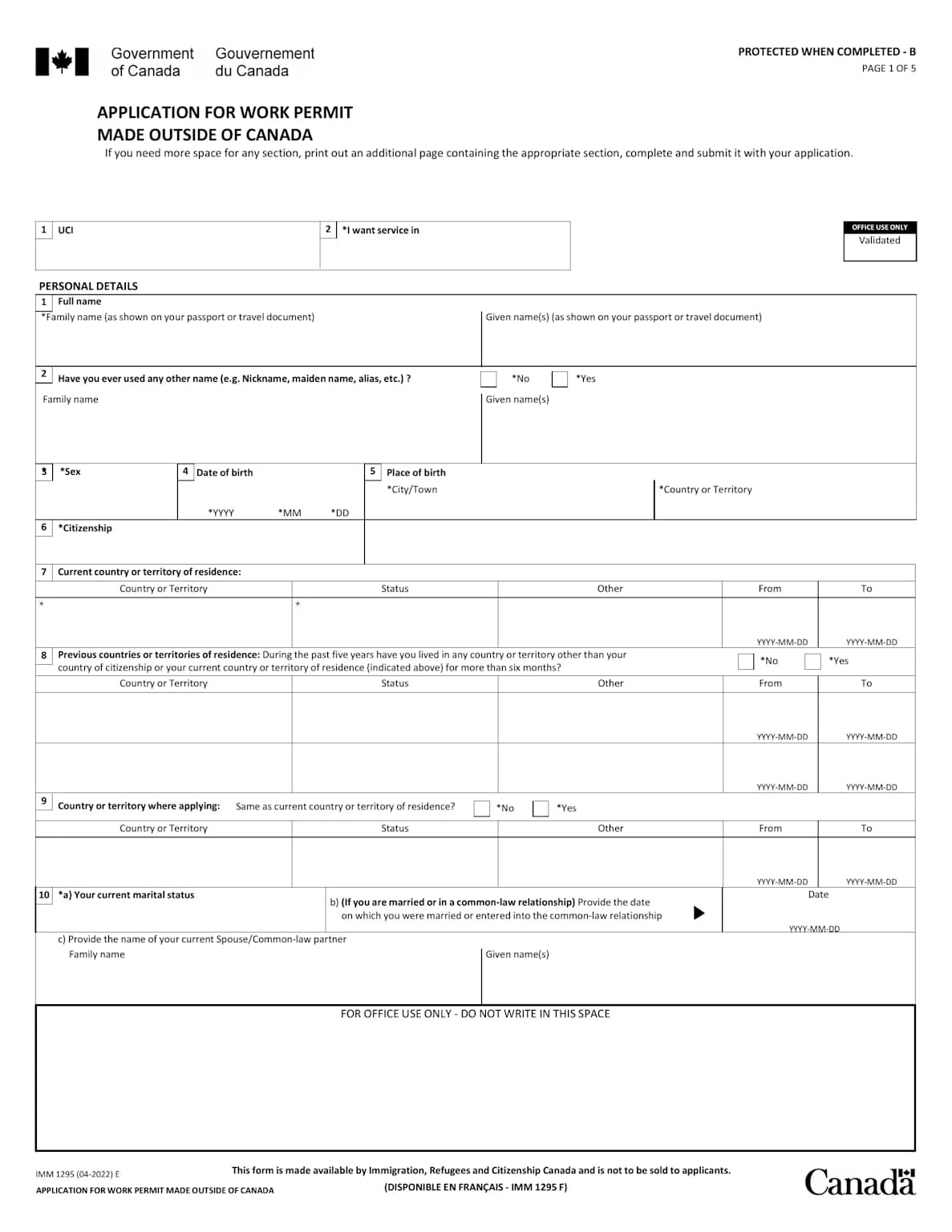
- IMM 1295 – Application for Work Permit
- IMM 5645 – Family Information Form
- IMM 5476 – Use of Representative (if using agent)
- Schedule 1 – Application for Temporary Resident Visa (if required)
Special Requirements by Province
Quebec (CAQ Required)
- Québec Acceptance Certificate (CAQ) for work
- Application for temporary selection completed
- Contract of employment in French
- Authorization letter from employer
Other Provinces
- Provincial Nominee Program letter (if applicable)
- Provincial requirements verification
Financial Requirements Checklist
💰 Application Fees (2025 Rates)
- Work permit application fee: $155 CAD
- Open work permit holder fee: $100 CAD (if applicable)
- Biometrics fee: $85 CAD (individual) / $170 CAD (family max)
- IEC work permit: $179.75 CAD (if applicable)
💰 Proof of Funds
- Calculate required funds based on family size
- Bank statements showing sufficient balance
- Letter from bank confirming account standing
Application Submission Checklist
🌐 Online Application
- Create IRCC online account
- Complete application form accurately
- Upload all documents in correct format (PDF preferred)
- Pay all required fees online
- Submit application and print confirmation
📍 Biometrics Appointment
- Receive Biometric Instruction Letter (BIL)
- Book appointment at Visa Application Centre
- Attend biometrics appointment within 30 days
- Bring BIL and passport to appointment
🏥 Medical Examination (If Required)
- Receive medical examination request
- Book appointment with panel physician
- Complete medical exam within timeframe
- Ensure results are sent directly to IRCC
Post-Application Checklist
📧 After Submission
- Save application confirmation number
- Link application to online account
- Monitor email for IRCC communications
- Respond promptly to any requests for additional information
📱 Track Application Status
- Check processing times on IRCC website
- Use online tracking system
- Keep contact information updated
✈️ Prepare for Travel (Once Approved)
- Receive work permit approval letter
- Print all approval documents
- Book travel to Canada
- Prepare documents for border entry
- Research housing and settlement services
Timeline Management
⏰ Important Deadlines
- Submit application before current status expires
- Provide biometrics within 30 days of BIL
- Complete medical exam within specified timeframe
- Respond to IRCC requests within deadlines
⏰ Processing Time Estimates
- Standard processing: 1-9 months
- After biometrics: 8-12 weeks
- Priority processing: 2 weeks (Global Skills Strategy eligible)
- LMIA processing: 7-235 business days (varies by stream)
Common Mistakes to Avoid
❌ Application Errors
- Incomplete or inaccurate forms
- Missing required documents
- Insufficient proof of funds
- Expired documents
- Wrong permit type selected
❌ Timing Issues
- Applying too late (current status expires)
- Missing biometrics deadline
- Not responding to IRCC requests promptly
Emergency Contacts
📞 Important Numbers
- IRCC Client Support Centre: 1-888-242-2100
- Local VAC contact information
- Immigration consultant/lawyer contact
- Canadian embassy/consulate in your country
Final Checklist Before Submission
- All documents collected and organized
- Forms completed and reviewed for accuracy
- Fees calculated and payment method ready
- Application timeline planned
- Backup copies of all documents made
- Support person/representative identified (if needed)
Note: This checklist is for guidance only. Always consult the official IRCC website and consider professional immigration advice for your specific situation. Requirements may vary based on your country of residence and individual circumstances.
Major Changes to Canadian Work Permits in 2025
Family Member Work Permit Restrictions
As of January 21, 2025, significant changes have been implemented regarding open work permits for family members of foreign workers. Only spouses or common-law partners of high-skilled workers and certain international students remain eligible for open work permits under this measure. Dependent children and their dependent children are no longer eligible for open work permits under this policy.
Low-Wage LMIA Suspension in High Unemployment Areas
From April 4 to July 10, 2025, LMIA applications for low-wage positions will not be processed in Census Metropolitan Areas where unemployment rates reach 6% or higher. This temporary measure affects 24 metropolitan regions across Canada, including major cities like Toronto, Vancouver, Montreal, and Calgary.
Technology and Process Improvements
The Canadian government has introduced several technological enhancements to streamline the work permit process in 2025. AI-powered application screening is expected to reduce initial review times by 30%, while new real-time application tracking systems provide applicants with better visibility into their application status. Express processing streams have also been introduced for critical occupations.
Suspended LMIA Cities
| City/Region | Unemployment Rate | Province |
|---|---|---|
| Peterborough, ON | 9.9 | Ontario |
| Windsor, ON | 9.3 | Ontario |
| Toronto, ON | 8.6 | Ontario |
| Kitchener-Cambridge-Waterloo, ON | 8.5 | Ontario |
| Red Deer, AB | 8.4 | Alberta |
| Oshawa, ON | 8.0 | Ontario |
| Drummondville, QC | 8.0 | Quebec |
| Calgary, AB | 7.8 | Alberta |
| Saint John, NB | 7.7 | New Brunswick |
| St. Catharines-Niagara, ON | 7.7 | Ontario |
| St. John’s, NL | 7.6 | Newfoundland and Labrador |
| Barrie, ON | 7.5 | Ontario |
| Edmonton, AB | 7.3 | Alberta |
| Hamilton, ON | 7.3 | Ontario |
| Brantford, ON | 7.2 | Ontario |
| Kingston, ON | 7.2 | Ontario |
| Kamloops, BC | 7.1 | British Columbia |
| Fredericton, NB | 6.9 | New Brunswick |
| Montreal, QC | 6.7 | Quebec |
| Kelowna, BC | 6.7 | British Columbia |
| Vancouver, BC | 6.6 | British Columbia |
| Guelph, ON | 6.2 | Ontario |
| Abbotsford-Mission, BC | 6.2 | British Columbia |
| Nanaimo, BC | 6.0 | British Columbia |
Eligibility Requirements for All Applicants
Regardless of where you apply or which type of work permit you seek, you must meet several fundamental eligibility requirements. You must prove to an immigration officer that you will leave Canada when your work permit expires and demonstrate sufficient financial resources to support yourself and any family members during your stay.
Additionally, you must have no criminal record, not pose a security threat to Canada, and maintain good health with medical examinations if required.
Additional Requirements Based on Application Location
If applying from outside Canada, anyone can submit an application before entering the country, though specific visa office requirements may apply depending on your country of residence. However, if you’re applying from inside Canada, you can only do so under specific circumstances, such as having a valid study or work permit, being eligible for a post-graduation work permit, or waiting for a permanent residence decision.
Step-by-Step Application Process
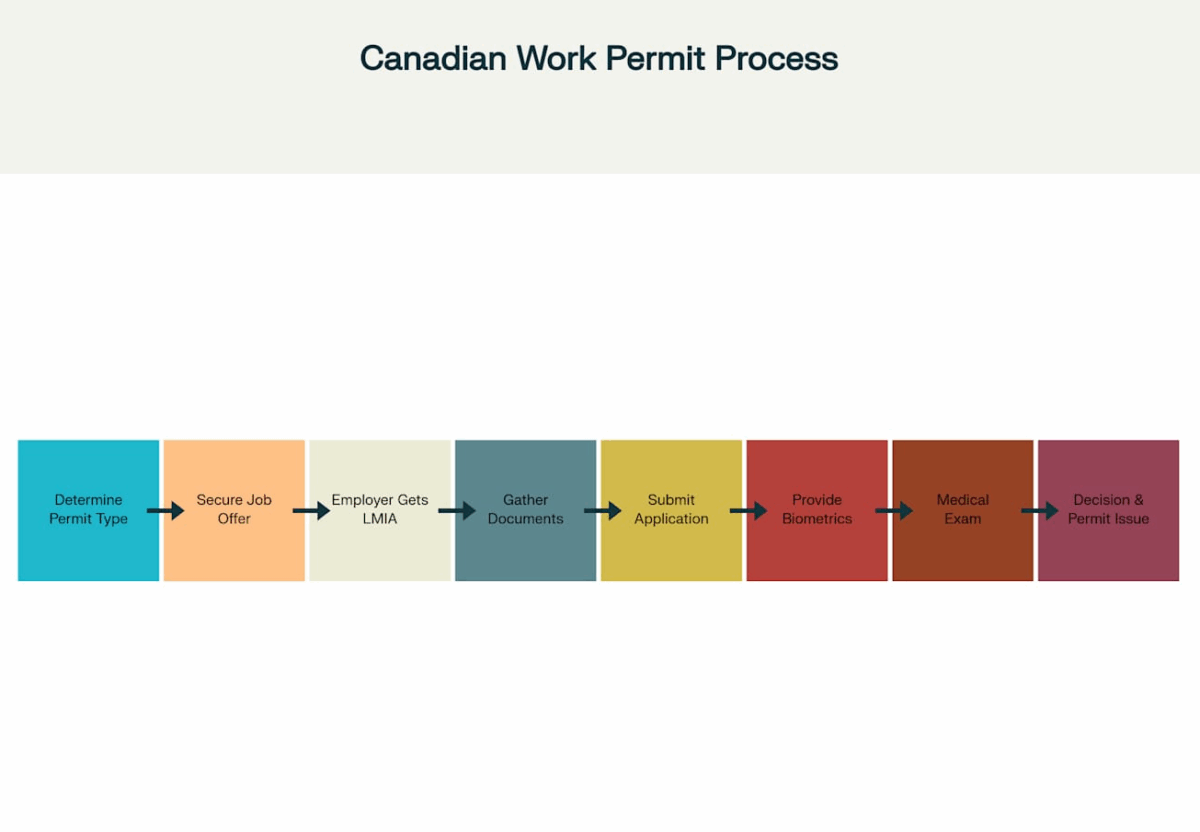
Step 1: Determine Your Work Permit Type and Eligibility
Begin by assessing which type of work permit best suits your situation and ensure you meet all eligibility requirements. Consider factors such as whether you have a job offer, your employer’s LMIA status, and your long-term immigration goals.
Step 2: Secure Employment Documentation
For employer-specific work permits, obtain a job offer letter and signed employment contract from your Canadian employer. If required, your employer must first obtain a positive LMIA from Employment and Social Development Canada. For LMIA-exempt positions, your employer must provide an offer of employment number through the Employer Portal.
Step 3: Gather Required Documents
Compile all necessary documentation according to your specific permit type and circumstances. This comprehensive process requires careful attention to detail and varies based on your country of residence and intended work location.
| Document Category | Required Documents | When Required |
|---|---|---|
| Identity Documents | Valid passport, Two passport photos | Always |
| Employment Documents | Job offer letter, Employment contract, LMIA (if required) | For employer-specific permits |
| Financial Documents | Proof of funds, Bank statements | Always |
| Background Checks | Police clearance certificate | Usually required |
| Medical Documents | Medical examination results (if required) | Case-dependent |
| Education/Qualifications | Educational credentials, Professional certifications | For skilled positions |
| Family Documents | Marriage certificate, Birth certificates of children | If bringing family |
| Application Forms | IMM 1295 form, Document checklist | Always |
Step 4: Submit Your Online Application
Complete your application through the IRCC online portal, ensuring all forms are accurately filled out and all supporting documents are uploaded in the correct format. You must apply online for most work permits, with paper applications only accepted in exceptional circumstances.
Step 5: Provide Biometrics
Most applicants must provide biometrics (fingerprints and photo) at a Visa Application Centre within 30 days of receiving the Biometric Instruction Letter. Biometrics help confirm your identity and assess your application.
Step 6: Medical Examination (If Required)
Some applicants may need to complete a medical examination with an IRCC-approved panel physician. This requirement depends on factors such as your country of residence, intended duration of stay, and type of work.
Step 7: Application Decision
IRCC will review your application and make a decision based on all submitted information and supporting documentation. If approved, you’ll receive a work permit or letter of introduction depending on your application location.
Required Documents and Fees
Essential Documents for All Applicants
Every work permit application requires certain core documents regardless of the permit type. These include a valid passport with at least six months remaining validity, two recent passport-style photographs, and completed application forms including IMM 1295.
Employment-Related Documentation
For employer-specific permits, you’ll need comprehensive employment documentation including your job offer letter, signed employment contract, and either an LMIA or offer of employment number. Professional certifications and educational credentials may also be required depending on your intended occupation.
Financial and Background Documents
Demonstrate your financial capacity with bank statements from the last four months, proof of funds for your stay and return travel, and current employment verification. Background checks typically require police clearance certificates from your home country and any country where you’ve lived for more than six months.
Application Fees for 2025
Understanding the fee structure helps you budget appropriately for your application. The standard work permit application fee is $155 CAD, with an additional $100 CAD open work permit holder fee if applicable. Biometrics cost $85 CAD for individuals or a maximum of $170 CAD for families applying together.

Processing Times and LMIA Requirements
Current Processing Times
Work permit processing times vary significantly based on several factors including your country of residence, application completeness, and current application volumes. As of 2025, standard processing ranges from 1-9 months, with most applications processed within 8-12 weeks after biometrics submission.
LMIA Processing Times by Stream

If your employer requires an LMIA, processing times vary considerably by stream and current demand. The Global Talent Stream offers the fastest processing at just 7 business days for highly skilled tech workers, while other streams range from 8 days for seasonal agricultural workers to 235 days for permanent resident streams.
Priority Processing Options
Certain occupations qualify for priority processing under the Global Skills Strategy, potentially reducing processing times to just two weeks. These typically include positions that perform or support essential services and roles facing critical labour shortages.
Special Provincial Considerations
Working in Quebec
Quebec has unique requirements for foreign workers due to its distinct immigration agreements with the federal government. Before applying for a federal work permit, you must obtain a Québec Acceptance Certificate (CAQ) from the provincial government. This process involves submitting an Application for temporary selection through Quebec’s immigration ministry.
Provincial Nominee Programs
Several provinces offer enhanced pathways for work permit holders seeking permanent residence. Under time-limited public policies, eligible Provincial Nominee Program applicants can apply for open work permits if supported by their province or territory.
Healthcare Benefits by Province
Work permit holders may be eligible for provincial healthcare coverage depending on their location and circumstances. In Ontario, work permit holders can qualify for comprehensive OHIP coverage after meeting residency requirements including 153 days of physical presence and full-time employment lasting at least six months.
Pathways to Permanent Residence
Express Entry System
The Express Entry system manages applications for three federal economic immigration programs: the Federal Skilled Worker Program, Canadian Experience Class, and Federal Skilled Trades Program. Work permit holders can leverage their Canadian work experience to improve their Comprehensive Ranking System scores and increase their chances of receiving an invitation to apply for permanent residence.
Canadian Experience Class
Foreign workers with at least one year of skilled work experience in Canada may be eligible for the Canadian Experience Class. This pathway is particularly valuable for work permit holders who have successfully integrated into the Canadian labour market.
Provincial Nominee Programs
Many provinces and territories can nominate Express Entry candidates through their Provincial Nominee Programs to meet local labour market needs. A provincial nomination provides additional points in the Express Entry system.
Common Mistakes to Avoid
Application Errors
Ensure your application is complete and accurate before submission. Common mistakes include selecting the wrong permit type, providing insufficient proof of funds, submitting expired documents, and incomplete or inaccurate form completion. These errors can lead to significant delays or application refusal.
Timing Issues
Submit your application well before your current status expires to avoid gaps in your legal status. Missing important deadlines such as biometrics appointments or failing to respond promptly to IRCC requests can severely impact your application.
Document Quality
Ensure all documents are properly translated if not in English or French, and that they meet IRCC’s specific requirements. Poor quality photos, illegible documents, or missing translations are common reasons for application delays.
Next Steps After Approval
Preparing for Arrival
Once your work permit is approved, prepare for your arrival in Canada by researching housing options, understanding your rights and responsibilities as a work permit holder, and familiarizing yourself with Canadian workplace culture. Ensure you have all necessary documents for border entry including your passport, work permit, and job offer letter.
Extending Your Work Permit
If you wish to continue working in Canada beyond your permit’s expiry date, apply for an extension at least 30 days before expiration. You may be eligible to continue working under implied status while your extension application is processed.
Building Toward Permanent Residence
Use your work permit period to build the foundation for permanent residence by gaining Canadian work experience, improving your language skills, and potentially securing a provincial nomination. Many work permit holders successfully transition to permanent residence through various immigration programs.
Conclusion
Obtaining a Canadian work permit in 2025 requires careful planning, thorough documentation, and understanding of current immigration policies. While the process may seem complex, Canada’s commitment to welcoming skilled foreign workers means that well-prepared applicants have excellent chances of success.
Stay informed about policy changes, ensure your application is complete and accurate, and consider seeking professional immigration advice if needed. With proper preparation and the right documentation, your Canadian work permit can serve as the first step toward a successful career and potential permanent residence in one of the world’s most welcoming countries.
Remember to regularly check the IRCC website for the most current information and processing times, as immigration policies and procedures can change. Whether you’re seeking temporary work experience or planning a permanent move to Canada, understanding the work permit process is essential for achieving your immigration goals.
Related reading: LMIA-Exempt Work Permits: Complete List and Requirements — a closer look at this topic.